Colorado: Adventure in Your Own Backyard

Every season provides the opportunity for adventure. Summer brings the chance to travel to exotic lands. Winter is the season of holiday trips to visit family. Spring beckons us to escape winter’s grasp with getaways to lush, tropical lands.

But Fall, in my opinion, caters to a different kind of adventure. The kind that doesn’t require vacation days or piles of cash saved for months and earmarked for travel. For me, fall is best spent traveling in my own backyard, in the mountains of Colorado.

Most travelers set off to view beauty or experience the diversity of another place, somewhere other than their hometowns. The arrival of the fall season brings both of those pleasures right to your front door.

As you look out your window, you see the world wholly transform itself. The solid green of the trees blooms before your eyes into a dazzling array of yellows, oranges, reds, purples, and browns. Every day the view is different. One day a golden patch of aspen trees may be brighter than the day before, or it may disappear altogether the day after.

The majesty of the newness surrounding you mirrors that in your heart when you look upon a new place for the first time.

Yellow Fall Colors at Maroon Bells Colorado
Maroon Bells, CO – Dusk

As fall progresses, the trees lose their leaves, creating piles of intrigue that need to be explored. The citrus hues of the cottonwoods mix with the reddish-purples of fallen maples, swarming together and bidding your feet to explore. You yield to the temptation and kick into the pile. The swoosh of flying leaves brings a smile to your face, the same smile that adorned your lips the moment you saw the Taj Mahal or Machu Picchu.

This feeling intoxicates you, fuels your desire for more. So, you venture forth to find an even bigger pile of leaves. You jump in that one too, reveling in the crunch beneath your feet and the lift in your spirit. This simple act of childhood provokes amazement at how awesome the world is, from the grandest view of the Great Wall of China to the discarded leaves that make way for a new season.

This year one of our backyard adventures took place at Snowmass Mountain, a ski resort not far from where we live. This summer marked the opening of the Lost Forest, a brand-new adventure park on top of the mountain. We boarded the gondola and took in the views of the mountain peaks surrounding us. No matter how many times I ride a gondola or chairlift the views never cease to amaze me. It’s something about the change in perspective when you can suddenly see the peaks of every mountain for miles around.

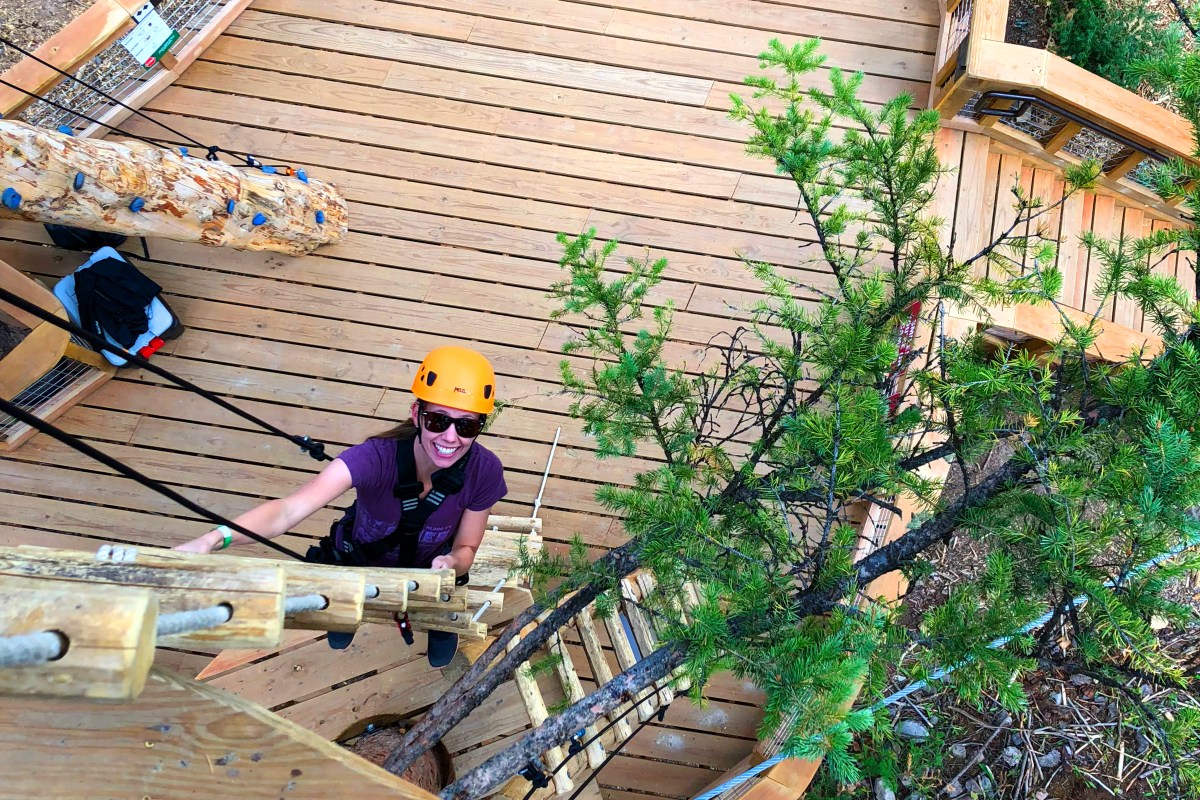
At the top, we got harnessed up and took an orientation class for the Treeline Adventure Course, a challenge course with ziplines and other suspended obstacles hanging high up in the trees. The area presented five routes of increasing difficulty, each with different elements that you had to navigate to get from tree to tree.

Couple in Climbing Harnesses Zip Lining in Colorado

Since we fancy ourselves to be quite athletic, we started at the middle level course, completed it with ease, and skipped to the hardest challenge. Level 5 was the highest course, around thirty feet in the air, and it was no easy task maneuvering through the course. At times, I found myself clinging onto the ropes for dear life hoping the next move wouldn’t bring disaster. The exhilaration of the Treeline Challenge Course had pasted unfaltering smiles on both our faces.

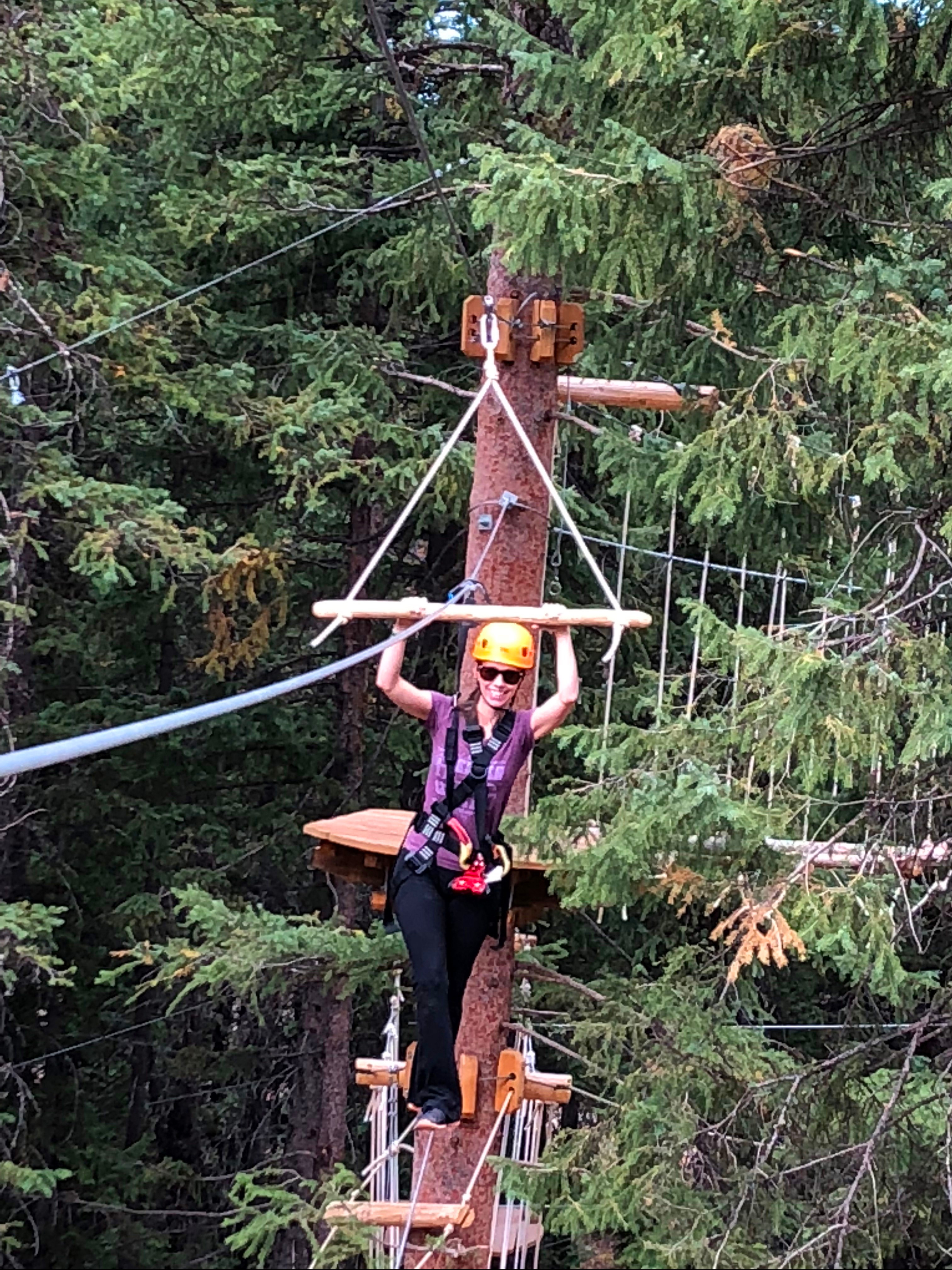
Man on Zip Line Course in Snowmass Colorado
Woman on Zip Line Course in Aspen Colorado

The next stop in our backyard adventure was the Breathtaker Alpine Coaster, a sleek alpine slide that barreled down through the trees between ski runs at top speeds. We decided to ride together, chatting patiently as the coaster slowly pulled us to the top of the course.
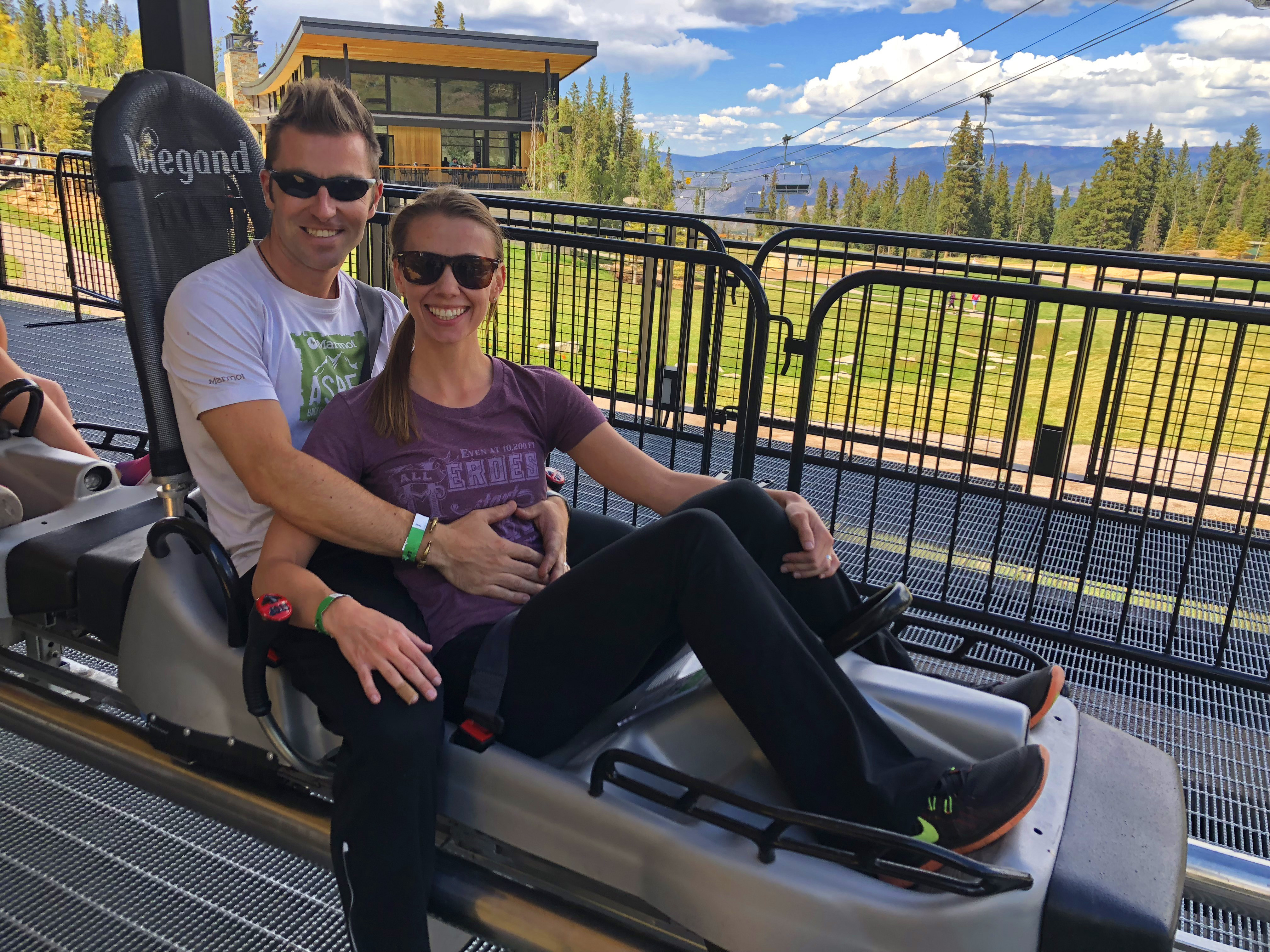
Couple on Alpine Roller Coaster in Snowmass Colorado

As the sled crested the top and we started to descend, the butterflies in my stomach fluttered with excitement. The sled accelerated much faster than I expected and before I knew it the coaster had taken on a life of its own. The wind whipped across our skin as the sled jerked us back and forth. It felt as though we could be tossed from the sled at any moment. Aaron laughed and I screamed the entire way down. By the time we reached the bottom, we knew that we would have to ride it again.

We rode the Alpine Coaster five times, feeling more and more like little kids each time.

I kept thinking to myself: This is like something we would do on a vacation! I came to realize that this is exactly the point. It’s important to remember to enjoy the opportunities to explore in your own backyard. You don’t always have to travel great distances to generate the excitement of vacation-like experiences.

Fall is often thought of as the season where “everything dies” but to me it’s the time of the year when the “newness” that travelers are addicted to comes to our very own doorstep.

-Annie, Your Friend at Orange Backpack Travel
Ecuador: You did WHAT in the Amazon?

“You did what in the Amazon?” my mother asked, her eyebrows sky-high as we regaled my parents with tales of our honeymoon.

In a spur-of-the-moment decision, we had chosen Ecuador as our honeymoon destination. The country hadn’t even crossed our minds until I stumbled upon an irresistible trip through Travelzoo, a travel deal watch list I subscribe to. The trip was an eight-day guided tour of the central part of Ecuador via Gate 1 Travel. I reviewed the trip itinerary, proposed the idea to my fiancé, and we booked the trip the next day.

To start the trip, we flew from Denver to Miami, where we spent the first night of our honeymoon sleeping on the airport floor. It was not the ideal way to start a vacation, let alone a honeymoon, but I must confess we planned it that way. Our flight arrived late in the evening in Miami, and our next flight left at 6:00am. We agreed to save a bit of money and camp out in the terminal. We did not anticipate, however, that we would arrive too late in the evening to get through security to sleep at our gate. Our dreams of airport chairs without armrests vanished, and we made do with the cold, hard linoleum floor just outside the ticketing counter.

The next morning, we boarded the plane as two very tired and somewhat cranky newlyweds. After a brief layover in Bogota, Columbia, we finally arrived in Quito, Ecuador’s capital city.

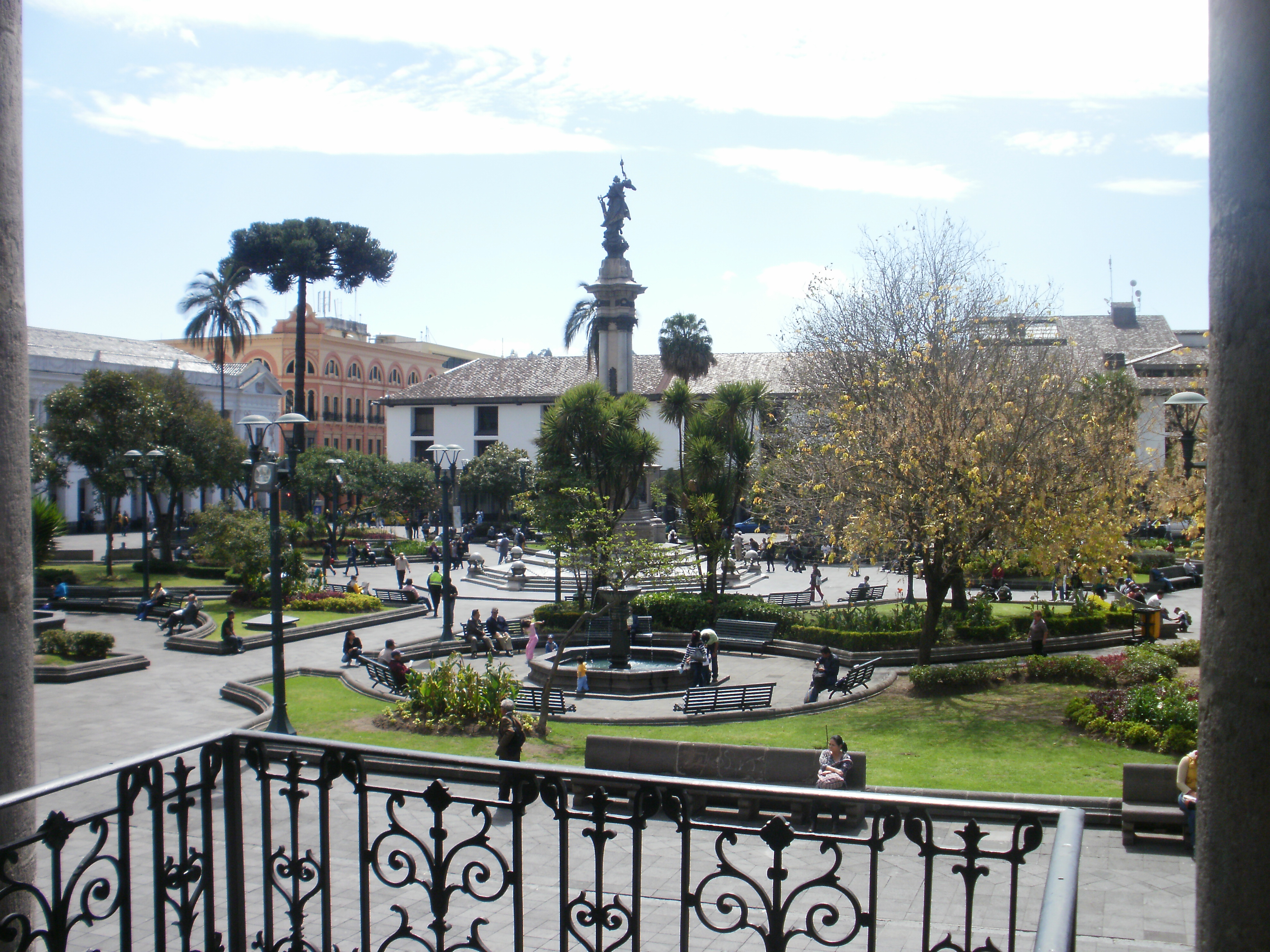
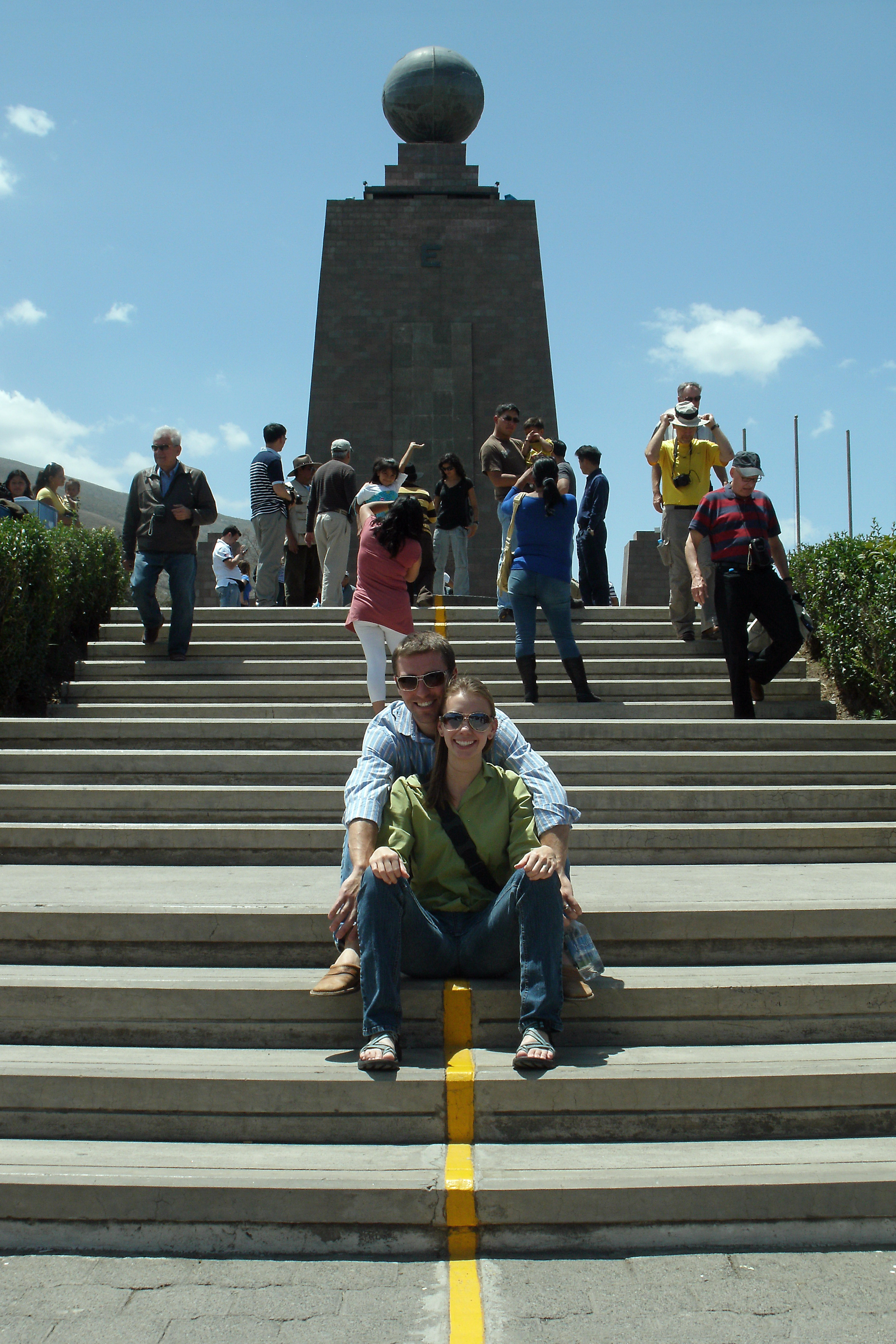
The city sits high up in the monolithic Andes, a mountain range dotted with active volcanoes and filled with the rich history of the Incan Empire. We went on a city tour to explore the Plaza de la Independencia, the historic main square, and Compania de Jesus, a gilded Jesuit church, to learn a bit about the Spanish Conquistadores who conquered the Incan people in the 1500s. We also took a trip to the Middle of the World to straddle the Equator, placing one foot in the northern hemisphere and the other in the southern hemisphere.

Plaza de la Independencia in Quito Ecuador
Plaza de la Independencia, Quito, Ecuador
Couple Sitting on Equator at Middle of the World Monument in Ecuador
Middle of the World: At the Equator

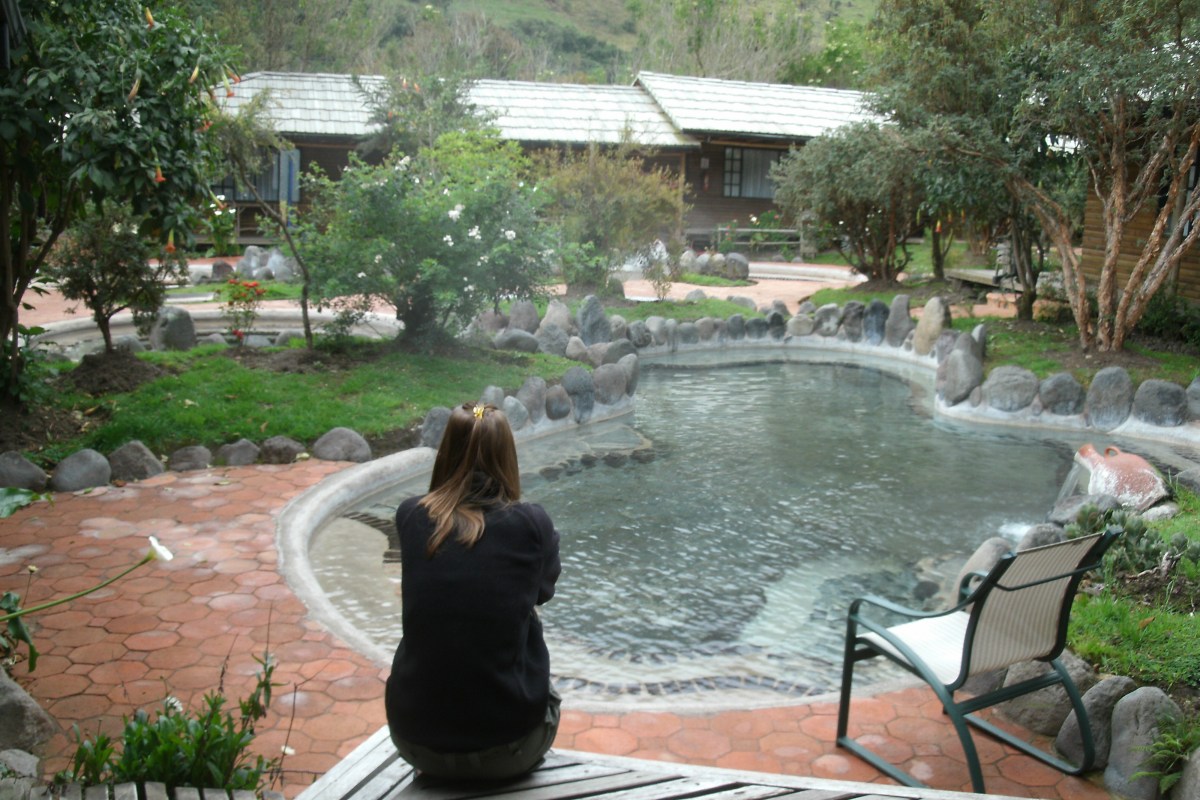
Next, we headed to Otavalo, a small lakeside town with a famous handicrafts market where we purchased several alpaca wool blankets. The third day of our trip, the tour took us through the Cloud Forest to Papallacta, an intimate resort built over a natural hot spring and nestled high in the Andes. We relaxed in the thermal pools and got a couple’s massage, finally participating in what seemed like a typical honeymoon activity.

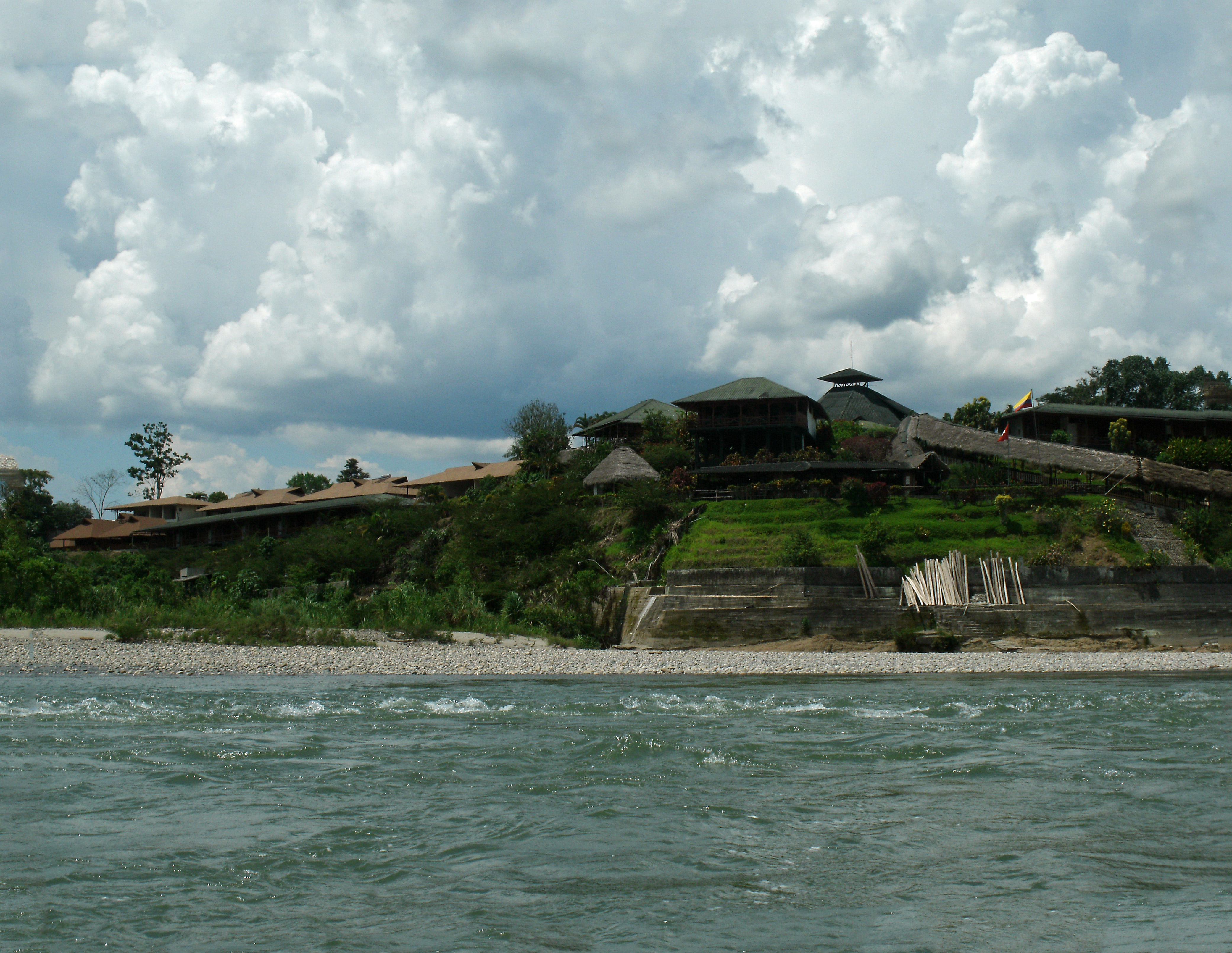
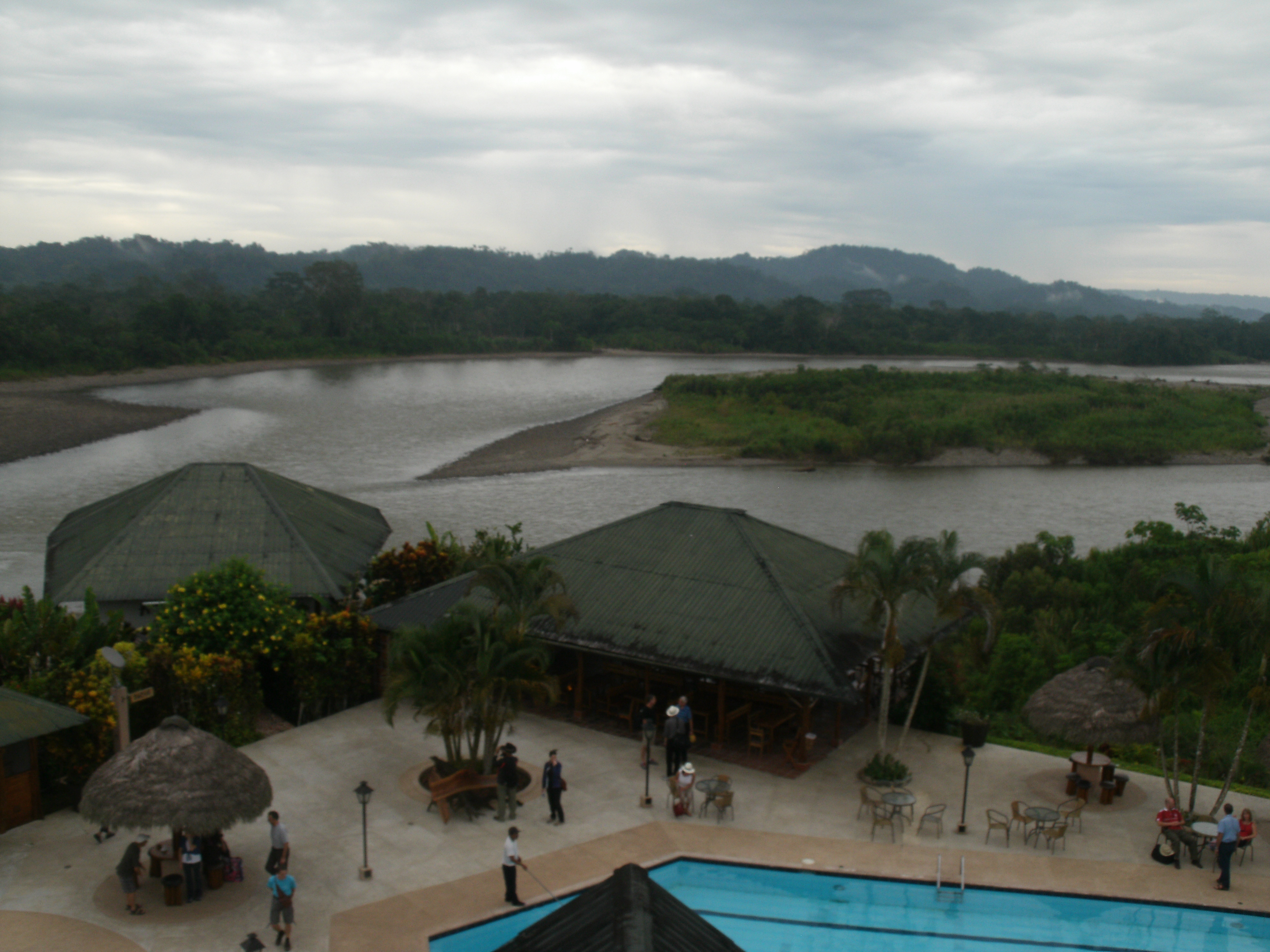
The highlight of the trip was our stay in Casa del Suizo, an eco-lodge on a private rainforest reserve deep in the Amazon. The only way to access the lodge was by boat via the Napo River, a tributary to the Amazon River. The lodge was surrounded by jungle so dense that a person would easily lose all sense of direction within ten feet of entering the underbrush.

Casa del Suizo Lodge on Napo River in Ecuador Amazon
Casa del Suizo, Ecuadorian Amazon

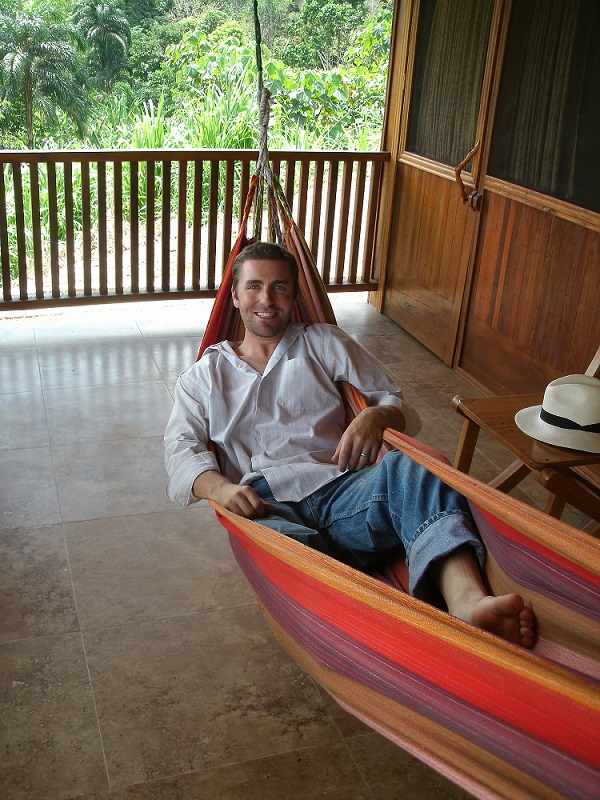
Our tour guide went above and beyond and got us the luxury suite since it was our honeymoon. This deluxe room turned out to be a private cabin at the very edge of the hotel complex, complete with mosquito nets, vaulted ceilings, and screens for windows. We even had our own veranda with a hammock overlooking the river. It sure beat sleeping on the floor of Miami International Airport.

By now we were convinced that Ecuador was a hidden gem in South America. It’s geographic diversity and the rich culture of its people, both modern and indigenous, were incomparable to anything we had experienced before. To put it simply, Ecuador had it all.

Man Relaxing in Hammock in Ecuador Amazon
Aaron in the Amazon

That evening, the rainforest lived up to its name, and the sky unleashed a deluge. We fell asleep listening to the sounds of the jungle compete with the rain.

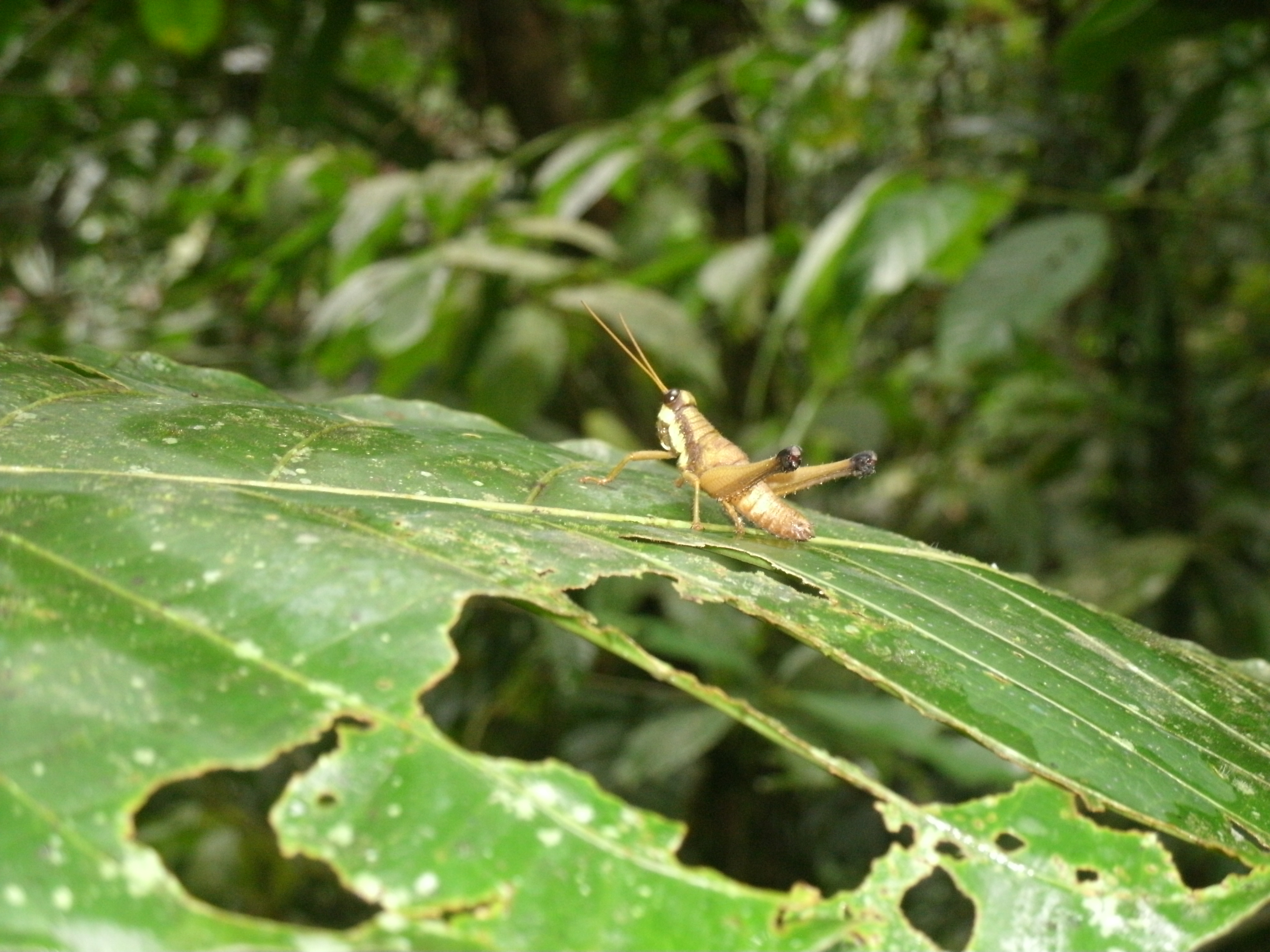
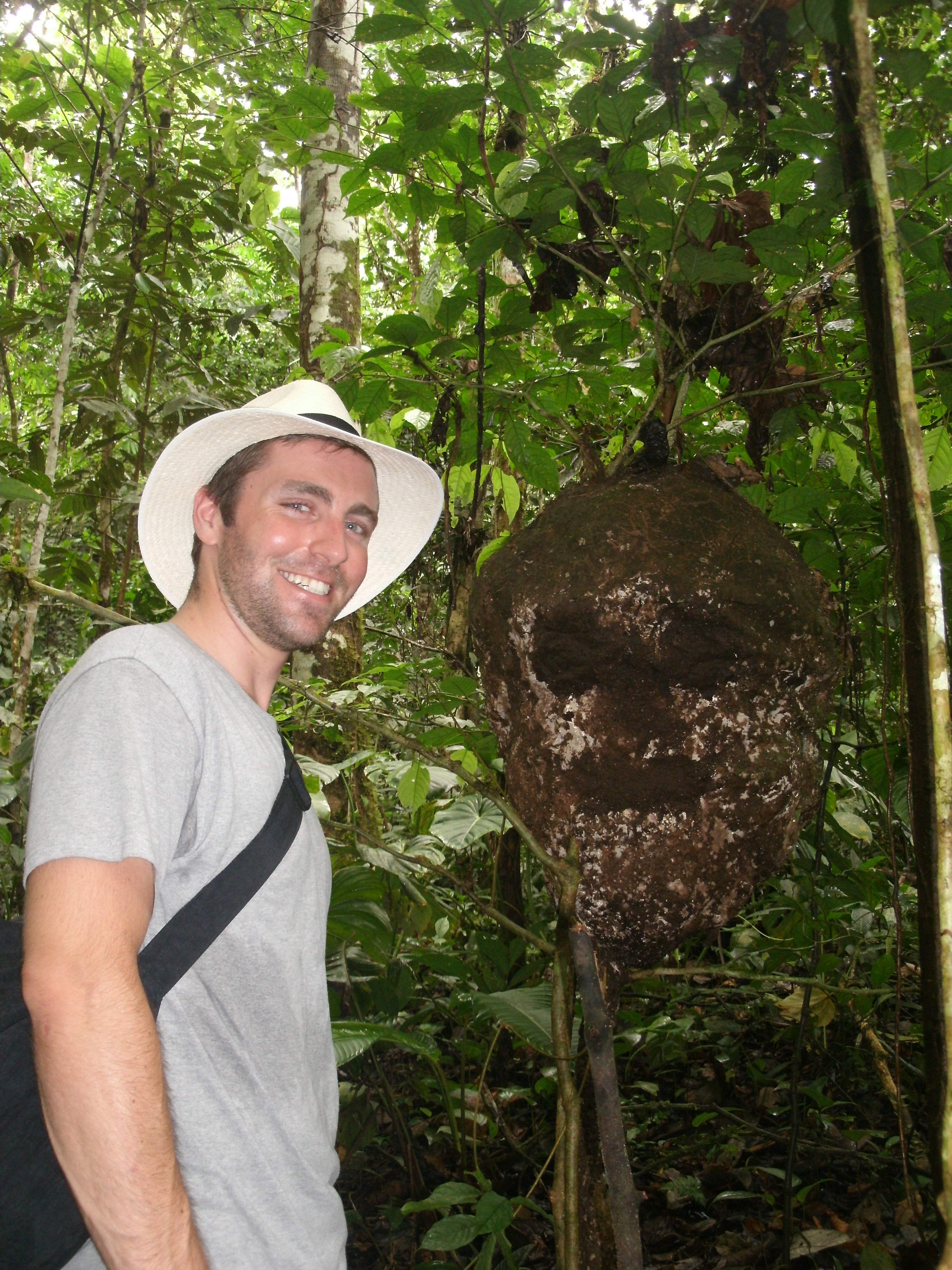
The next morning, we took a boat upriver and participated in a guided walk through the rainforest. From the moment we got off the boat, the earth’s abundance and diversity were inescapable. I had never before experienced an environment where every inch of space was occupied. Plants grew on top of each other and trees grew extra roots to shift their position in the jungle, all to compete for precious sunlight. Insects and birds zoomed through the air unconcerned with our presence. Enormous termite nests hung along the path. A small brown tree frog watched as we passed by. Monkeys skittered through the canopy above.

We, as human beings, were superfluous in the Amazon. That much was clear.

Grasshopper in Amazon Rainforest Ecuador
Grasshopper
Man Next to Large Termite Nest Amazon Rainforest
Giant Termite Nest

Our rainforest tour concluded with a raft trip back down the river on traditional balsa wood rafts which were constructed by loosely strapping several logs together with rope.

We climbed aboard the raft with a couple of our tour mates, sat down on the logs, and drifted out into the current. Our combined weight forced the rudimentary raft to sink about six inches below the water, which meant that our legs and hips went underwater as well. It was a rafting experience unlike any I had had before. It felt more like rafting through the river than on the river.

Five minutes into the float, we heard a shout and watched one of our tour mates jump into the river, declaring that he would swim back to the hotel. Everyone looked at the gentleman like he was crazy. The river was in fact a tributary to the Amazon!

Our guide, however, seemed unconcerned. She explained that the rain the previous evening had caused the river to rise about ten feet, meaning there was little chance of getting stuck on something underwater. She also said that most of the deadly river predators preferred still or slow-moving water and were not likely to be swimming in this rushing torrent.

That was all Aaron needed to hear. He took off his shoes, handed me his hat and dove in. I watched in disbelief, plagued with horrific thoughts of piranhas, giant anacondas, and unknown Amazonian river beasts. Aaron, on the other hand, was frolicking like he was in a swimming pool, hollering to the wild with a joyful smile on his face.

The river’s current started to pull Aaron faster than the slow-moving balsa raft. In dramatic fashion, I thought to myself, “I don’t want to lose my husband. If we die in the Amazon, so be it.”

So, I jumped in too.

Pushing all thoughts of piranhas from my mind, I swam to catch up to Aaron. As we floated down the river, we held hands and grinned like fools. This was what a honeymoon was meant to be! A memorable life-or-death adventure taken together!

The river was indeed moving tremendously fast, and within ten minutes we were swimming for the beach in front of the lodge. The rest of the tour group finally caught up to us at the lodge, all exclaiming their disbelief at our bravery.

View of Napo River from Casa del Suizo Ecuador Amazon Rainforest
Napo River, Amazon

When we later recounted this story to my parents, they also struggled to believe we went swimming in the Amazon: “You did what in the Amazon?!”

It was an unforgettable honeymoon indeed!

Our takeaway from the Amazon: Sometimes you just have to go for it!

-Annie, Your Friend at Orange Backpack Travel
Cambodia: Mysteries of Forgotten Temples and Fallen Empires

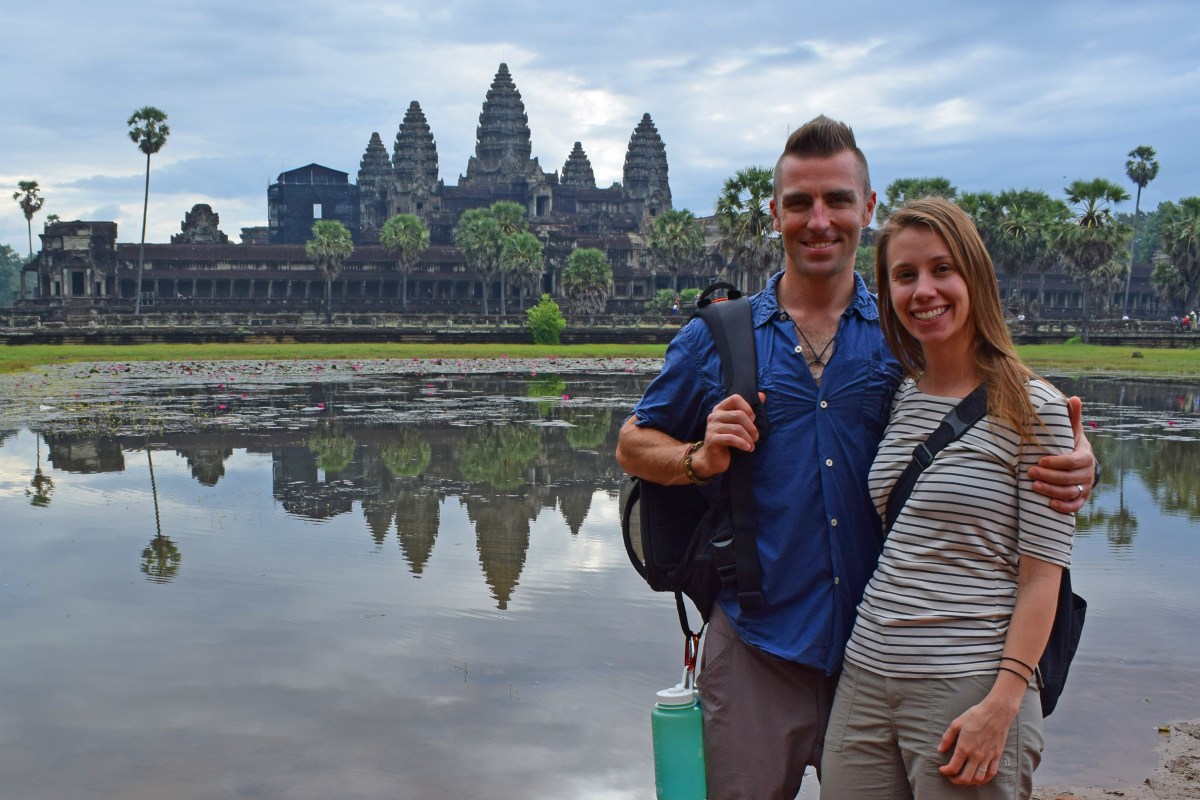
“Why Cambodia?” – We were asked this question multiple times before our trip. The short answer is that we wanted to visit Angkor Wat, the mysterious temple and mausoleum built by the Khmer King Suryavarman II from 1112 A.D. to 1152 A.D.

The long answer is that we wanted to go on an archaeological adventure to uncover the history of the forgotten Khmer Empire (802 A.D. to 1432 A.D.) and the monumental temples they left behind. As we researched Cambodia before the trip, we couldn’t believe we knew so little about the rich history of the Khmer Empire and that modern Southeast Asia owes much of its development to the Khmers.

At its height, the Khmer Empire covered modern day Cambodia, and much of Thailand, Laos and Vietnam. The Khmer were master builders, capable of taming the jungle and corralling the mighty rivers into vast irrigation systems. They constructed magnificent highway networks and impressive religious structures in honor of their deities. The Khmers, in essence, formed the Roman Empire of their time.

The Angkor temples and the people who built them fascinated us and sparked our desire to explore the ruins of this great civilization.

On our first morning in Siem Reap, the city adjacent to Angkor Wat, we awoke long before sunrise thanks to severe jetlag. We decided to take advantage of the early hour and begin our exploration of the temples by witnessing sunrise over Angkor Wat. We left the hotel and immediately hailed a tuk-tuk driver, despite the early hour, who agreed to drive us around for the day. As we rushed through the dark streets, accosted by mingling scents of heady jungle and dense air pollution, we couldn’t help but be intoxicated with anticipation of the archaeological wonders that awaited us.

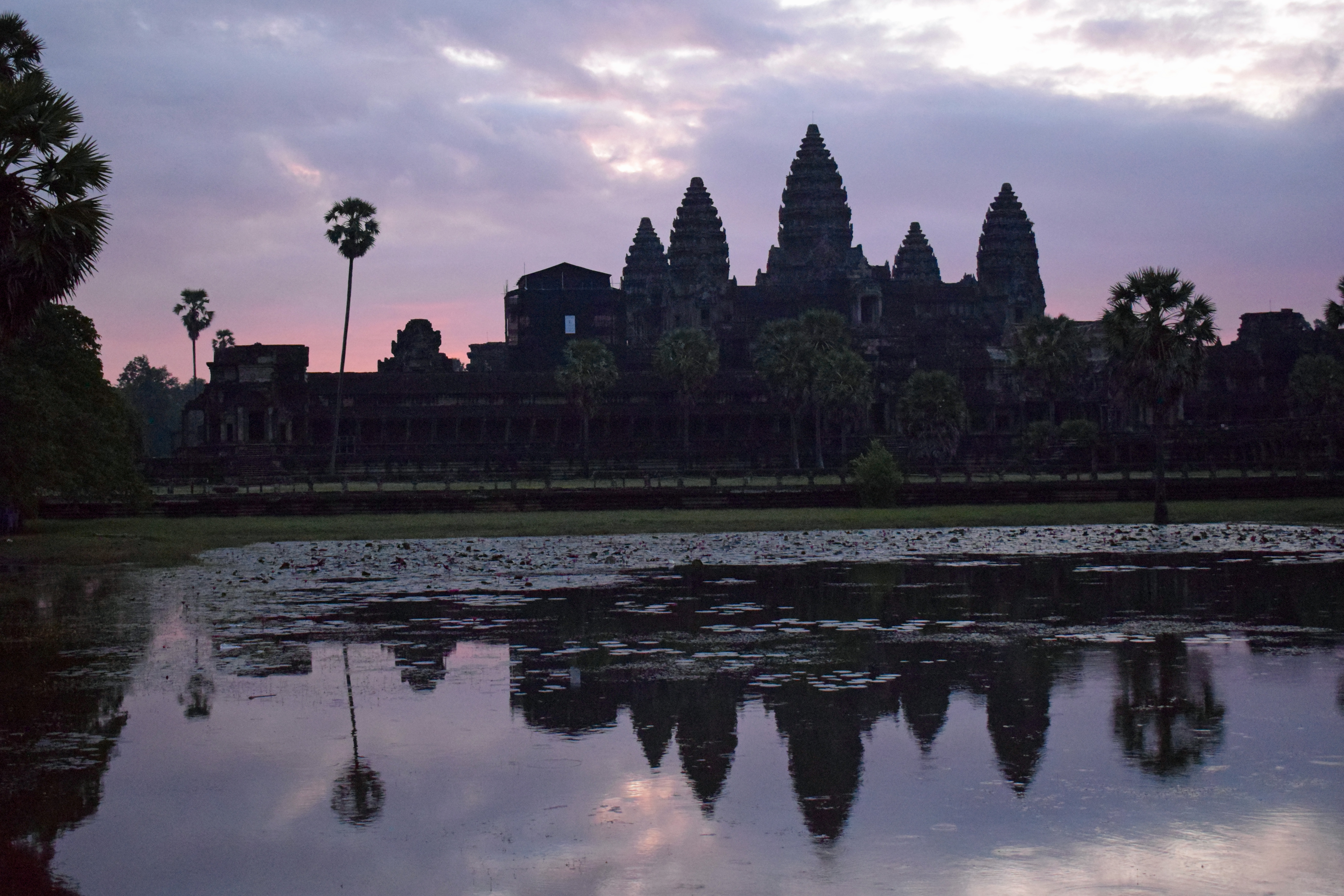
We arrived at Angkor Wat and joined hordes of tourists stumbling through the pre-dawn inky blackness. We waited, cameras poised, for the sun to rise above the temple. As the sky lightened to a pale pink hue, we were finally able to make out the magnificent complex around us. The remnants of the Khmer Empire seen up close were more impressive than we could have imagined.

Huge towers rose above the temple, drawing the eye skyward over impossibly steep stairs with no hand railings to be found. Our shoulders brushed the walls as we ducked beneath arches that were built by stacking stone blocks closer and closer together until they met in the middle. The great Khmer architects had not discovered the structural advantages of a keystone at the top of the arch, which made their construction feats all the more impressive. Intricate statues and bas-relief stone carvings decorated the temple depicting famous battles and religious stories revered throughout the Khmer Empire. A large, perfectly square, man-made canal surrounded the temple, adding to the mystery of how these structures could have been built within such thick jungle centuries before the dawn of modern industrialization.

Angkor Wat at Sunrise in Cambodia
Angkor Wat at Sunrise

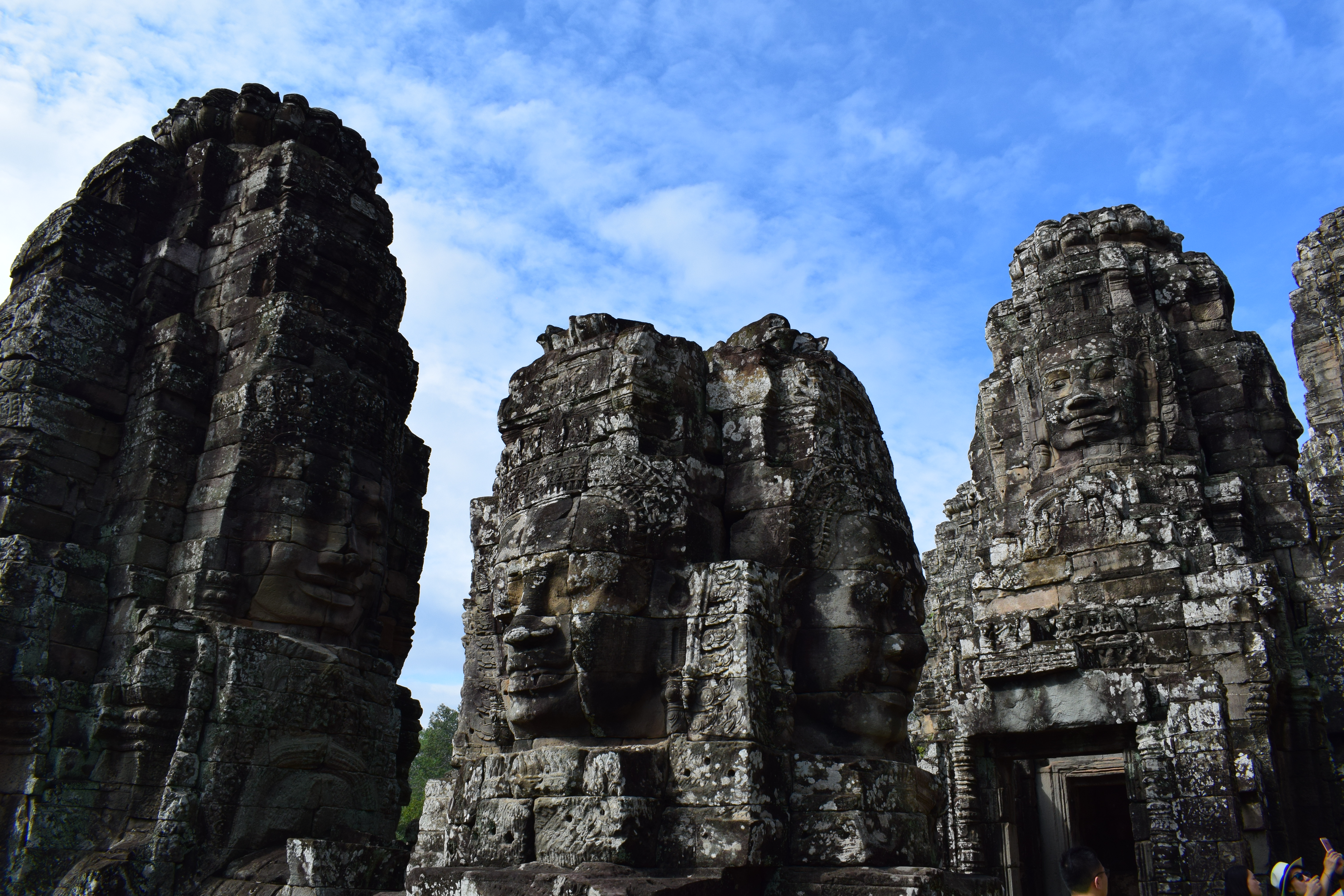
Next, we visited Bayon, a mysterious temple at the heart of Angkor Thom decorated with over two hundred giant faces, all closely resembling the king who commissioned the temple.

Faces at Bayon Temple in Angkor Thom Cambodia
Bayon Temple – Angkor Thom

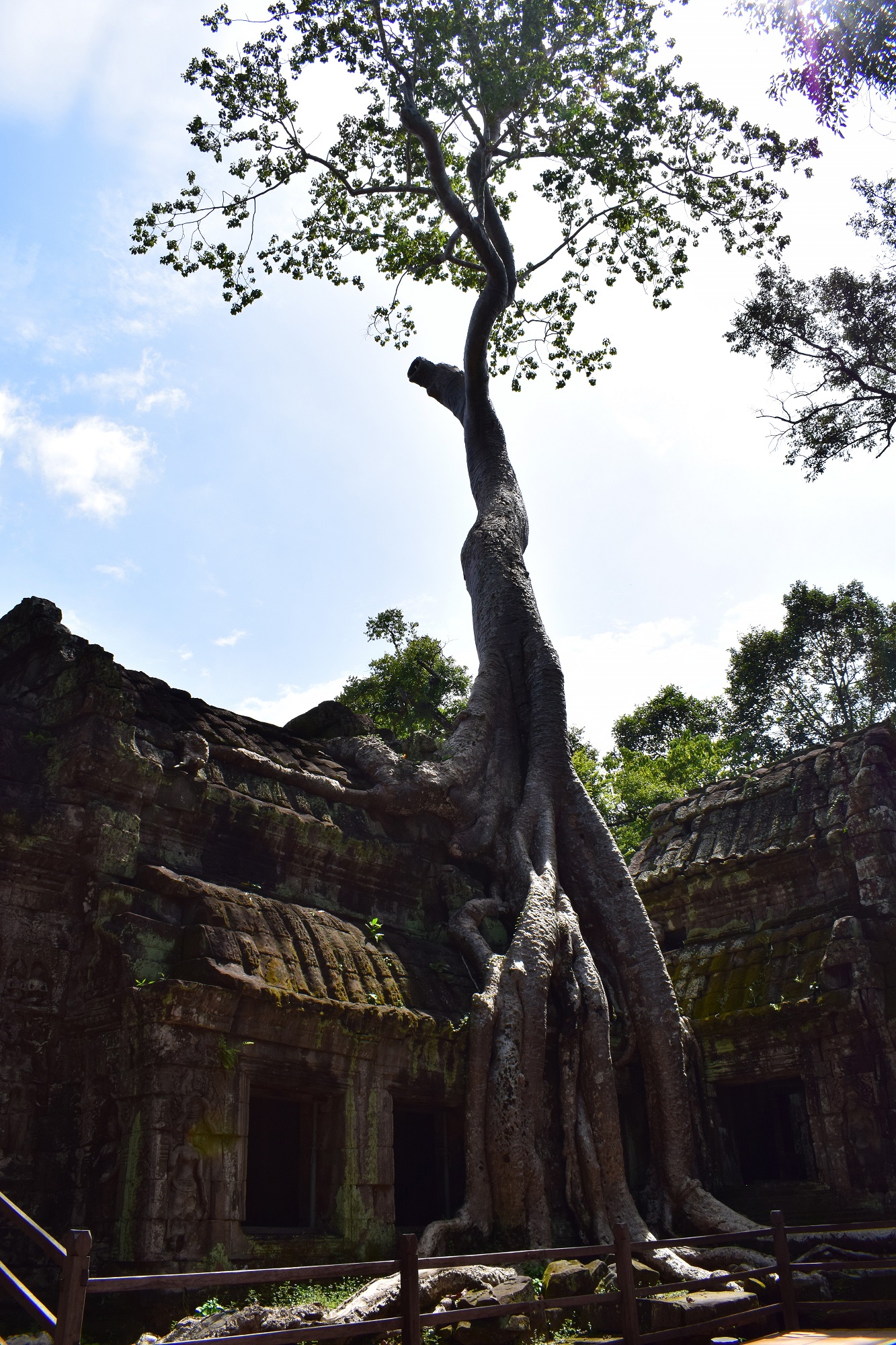
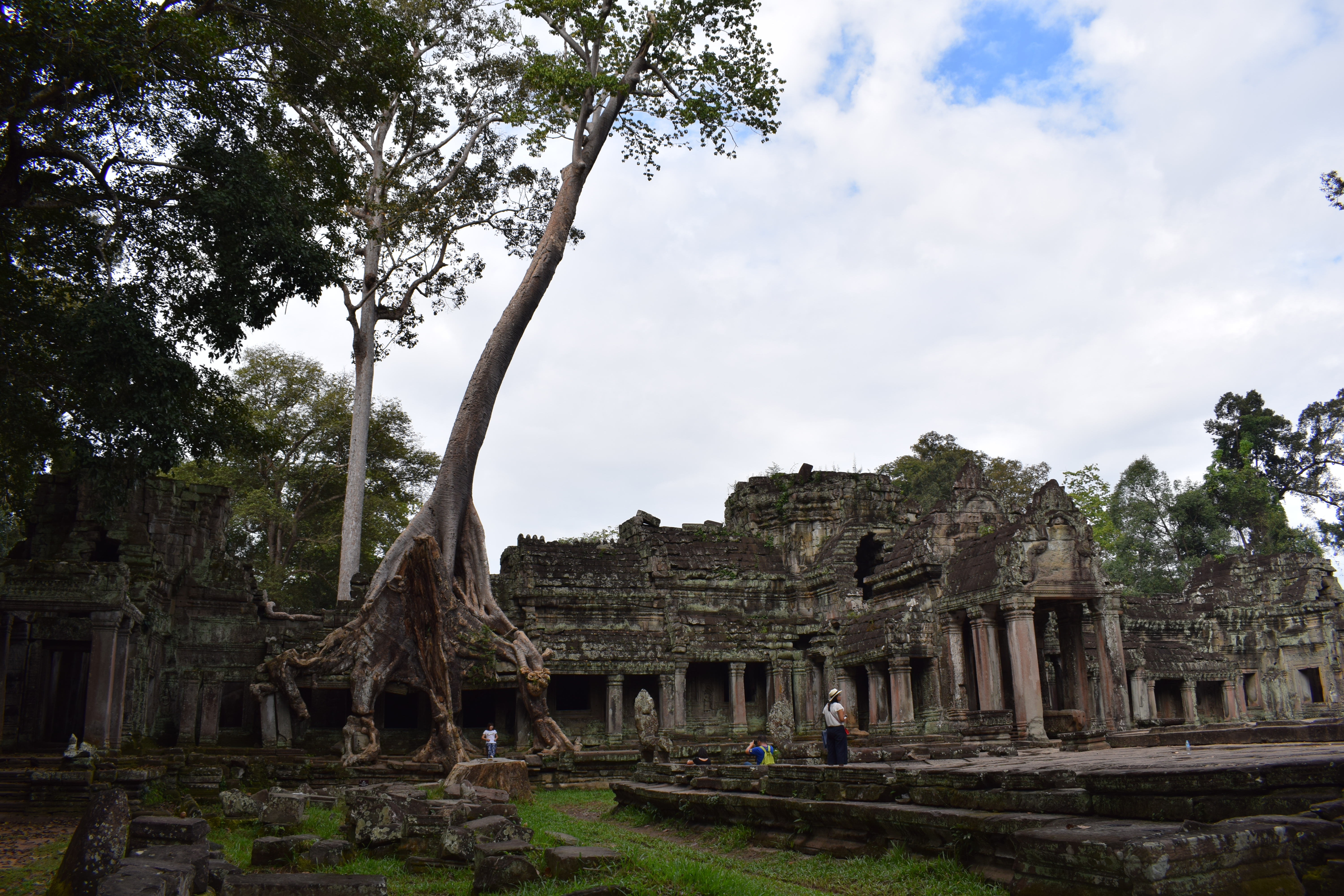
Our final stop was Ta Prohm, the famous “Tomb Raider” temple that appears to have been swallowed by the jungle. Enormous trees shoot toward the sky, their roots crushing the temple walls. The beauty here served as a blunt reminder of the power of nature. Not even formidable stone temples, marvels of engineering at the time of their construction, could withstand the jungle’s encroachment over the centuries.

Ta Prohm Temple Tomb Raider Temple Cambodia

Our trip was in November, just on the cusp of monsoon season, and boy, was it hot! The temperatures hovered around 100°F and the sky remained stubbornly cloudless. The stifling humidity had us sweating through our tee shirts in minutes. We were hot and sticky, but thrilled to be exploring such exotic temples, half forgotten and reclaimed by the jungle.

It quickly dawned on us that Cambodia’s climate was not conducive to a non-stop itinerary. Built-in rest between sight-seeing was necessary here.

By mid-afternoon of our first day at the Angkor complex, we were exhausted. We asked our tuk-tuk driver to bring us back to the hotel where we lounged the afternoon away by the pool sipping ice cold mojitos. Life was blissful.

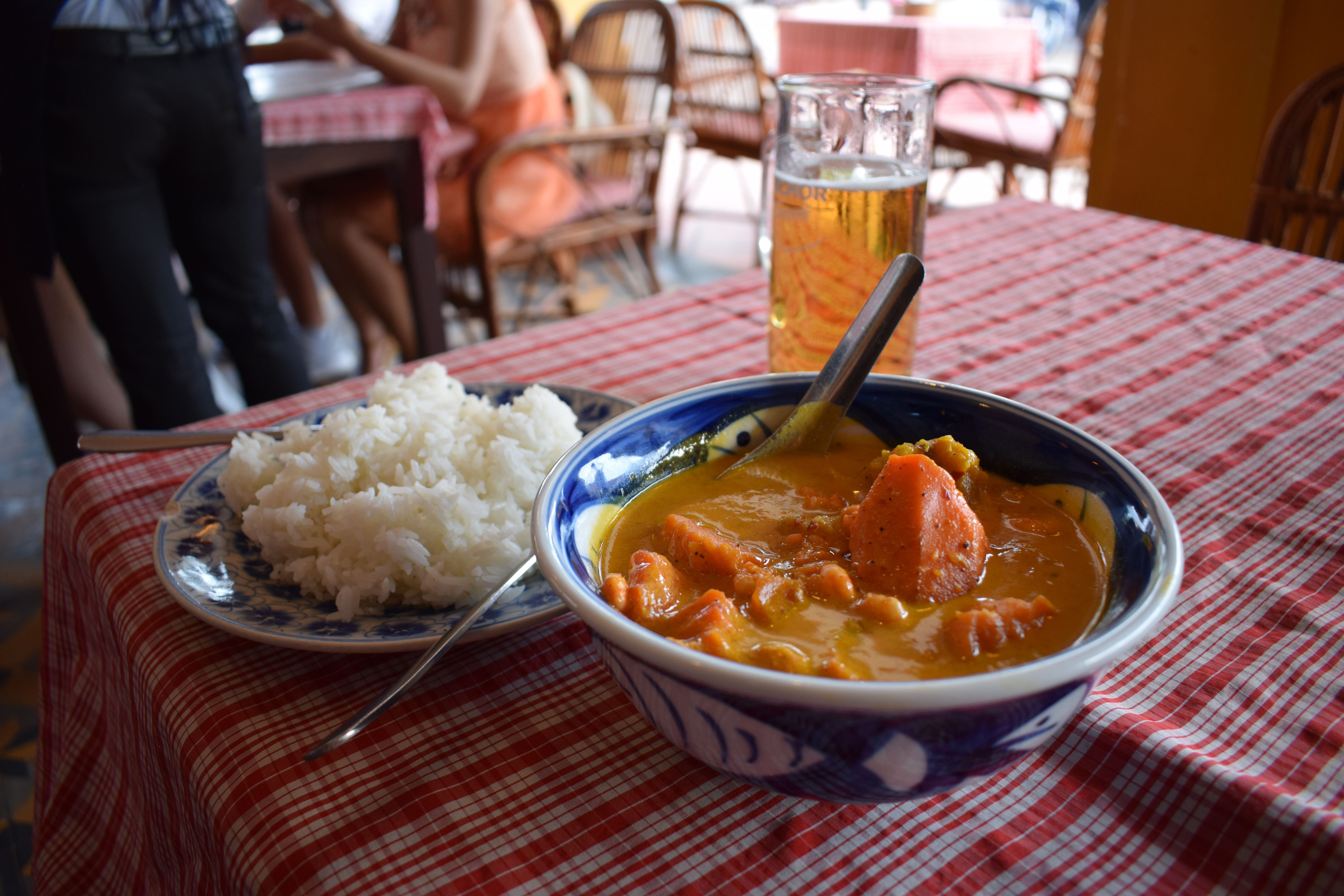
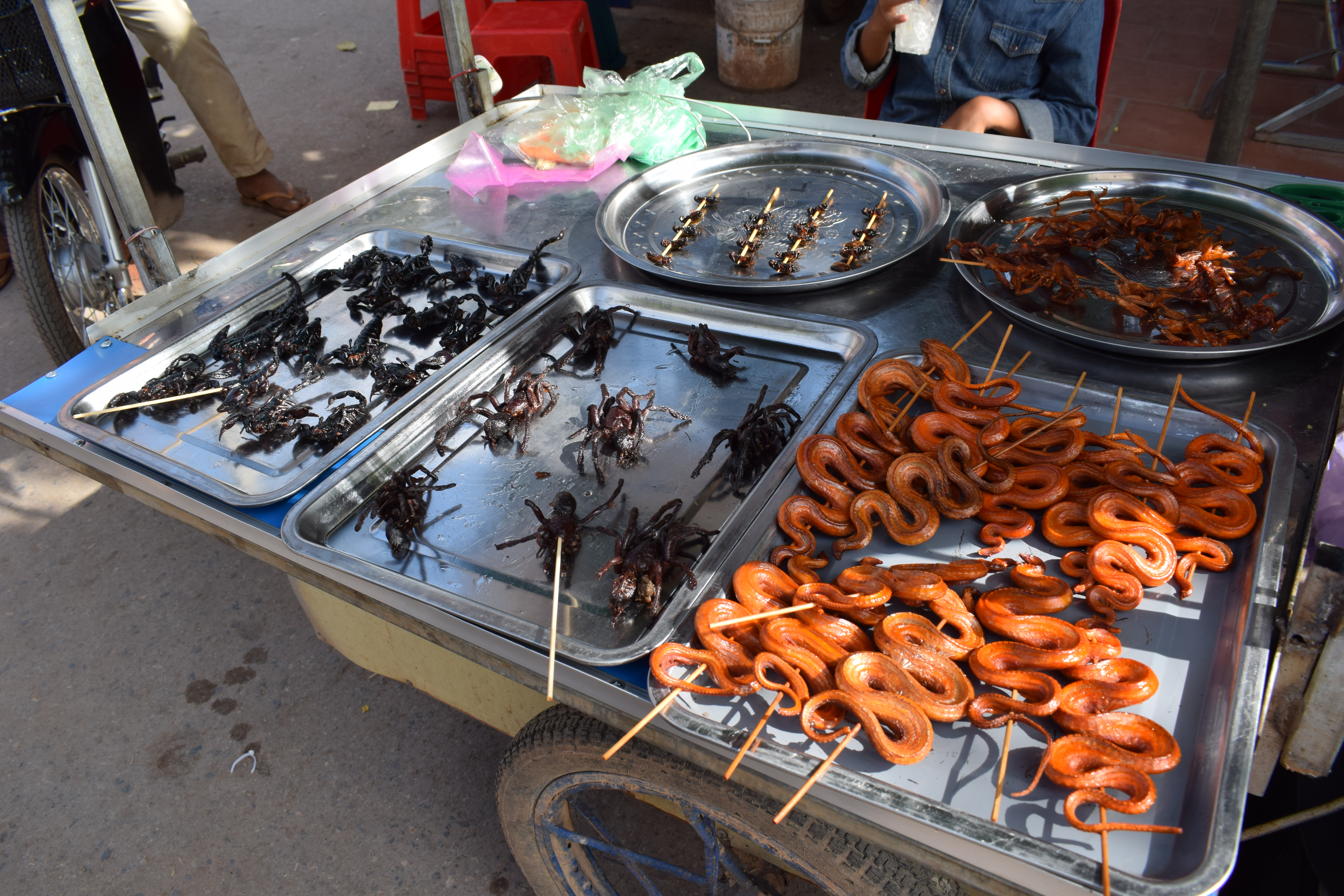
That evening, after the temperature dropped considerably, we jumped into another tuk-tuk and swerved in and out of traffic until we reached the downtown. Siem Reap’s center is relatively compact, with many restaurants and markets within walking distance of the Siem Reap River. We selected a small restaurant serving traditional Cambodian cuisine, mostly flavorful, curry-based soups with rice, vegetables, and either chicken or fish. Our table had a lovely view of the bustling street, where vendors and tourists alike provided us with free entertainment. The highlight of the evening was observing tourists’ reactions to the trays of scorpions, snakes, and tarantulas on a stick for sale as delectable snacks. Locals do in fact eat these delicacies, but we were not brave enough to try them.

Cambodian Cuisine in Siem Reap, Cambodia
Food Street Vendor Selling Snakes Scorpions and Tarantulas in Siem Reap Cambodia

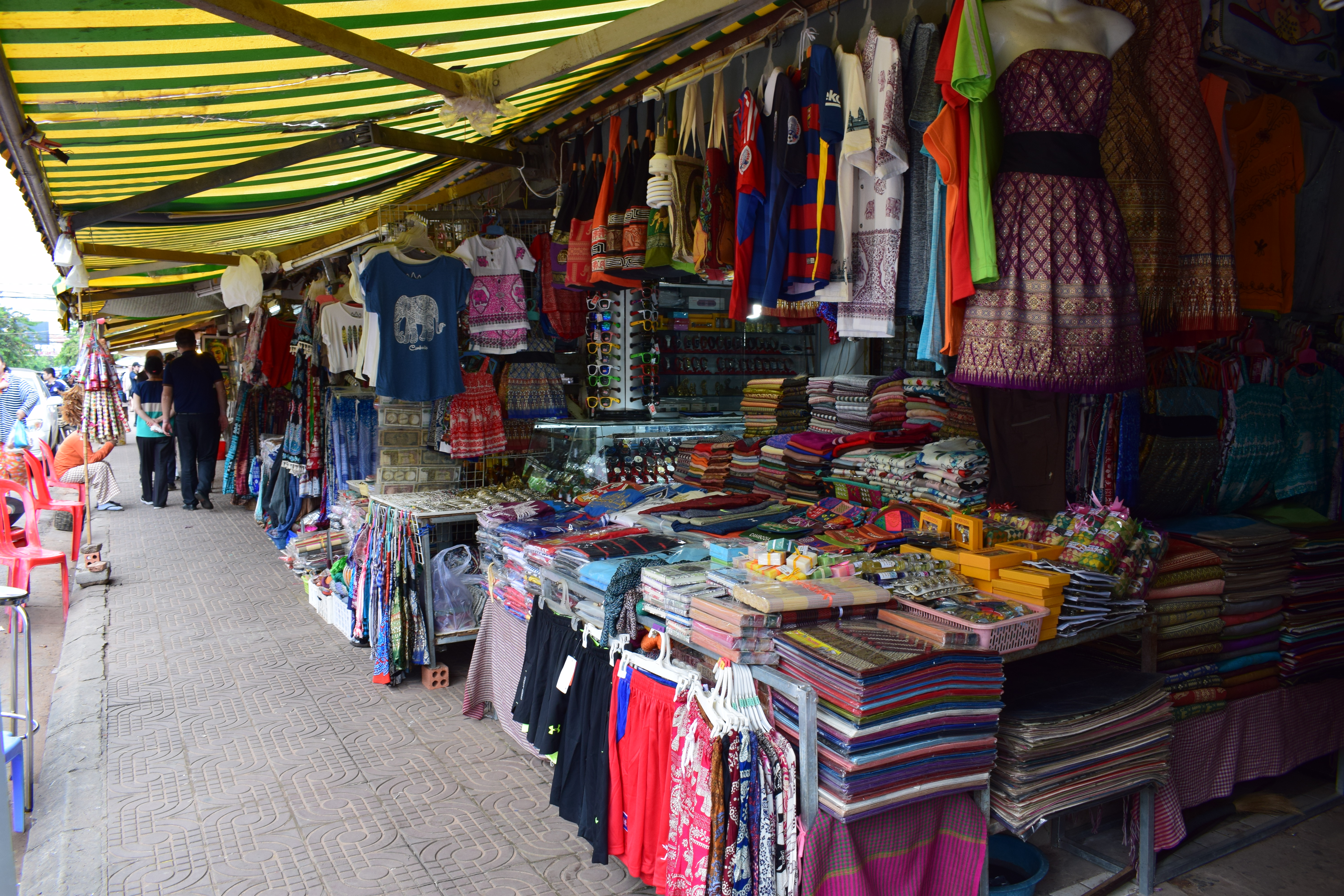
After dinner we meandered through the local market, browsing stalls piled high with colorful produce and bargaining with shrewd business owners for souvenirs. The pungent smell of freshly gutted fish permeated the enclosed space. Back out on the street, the nightlife of Siem Reap picked up after dark. Night clubs blared their music over the constant din of cars, tuk-tuks, and motorbikes on the streets below.

Psar Chaa Old Market Downtown Siem Reap Cambodia
Psar Chaa – Old Market – Downtown Siem Reap

On our second and third days, we repeated the pattern of the first day’s adventuring: sightseeing in the early morning, relaxing by the pool in the heat of the afternoon, and dinner out on the town.

The second morning of exploring consisted of the “big” loop temples: Preah Khan, Neak Pean, Ta Som, East Mebon and Pre Rup. These temples were more impressive than Angkor Wat and Angkor Thom in the sense that they were more rugged and wild, with less of a manicured feel than the those on the main tourist track. We felt as though we were part of Henri Mouhot’s team in 1860 “discovering” these ruins for the first time in modern history.

Preah Khan Temple in Siem Reap Cambodia
Preah Khan

Archaeologists still battle the jungle today to keep it from overgrowing the excavated stone. Much of the Angkor complex has yet to be uncovered due to limited resources which must be divided between holding the jungle at bay in the excavated temples and uncovering new ones.

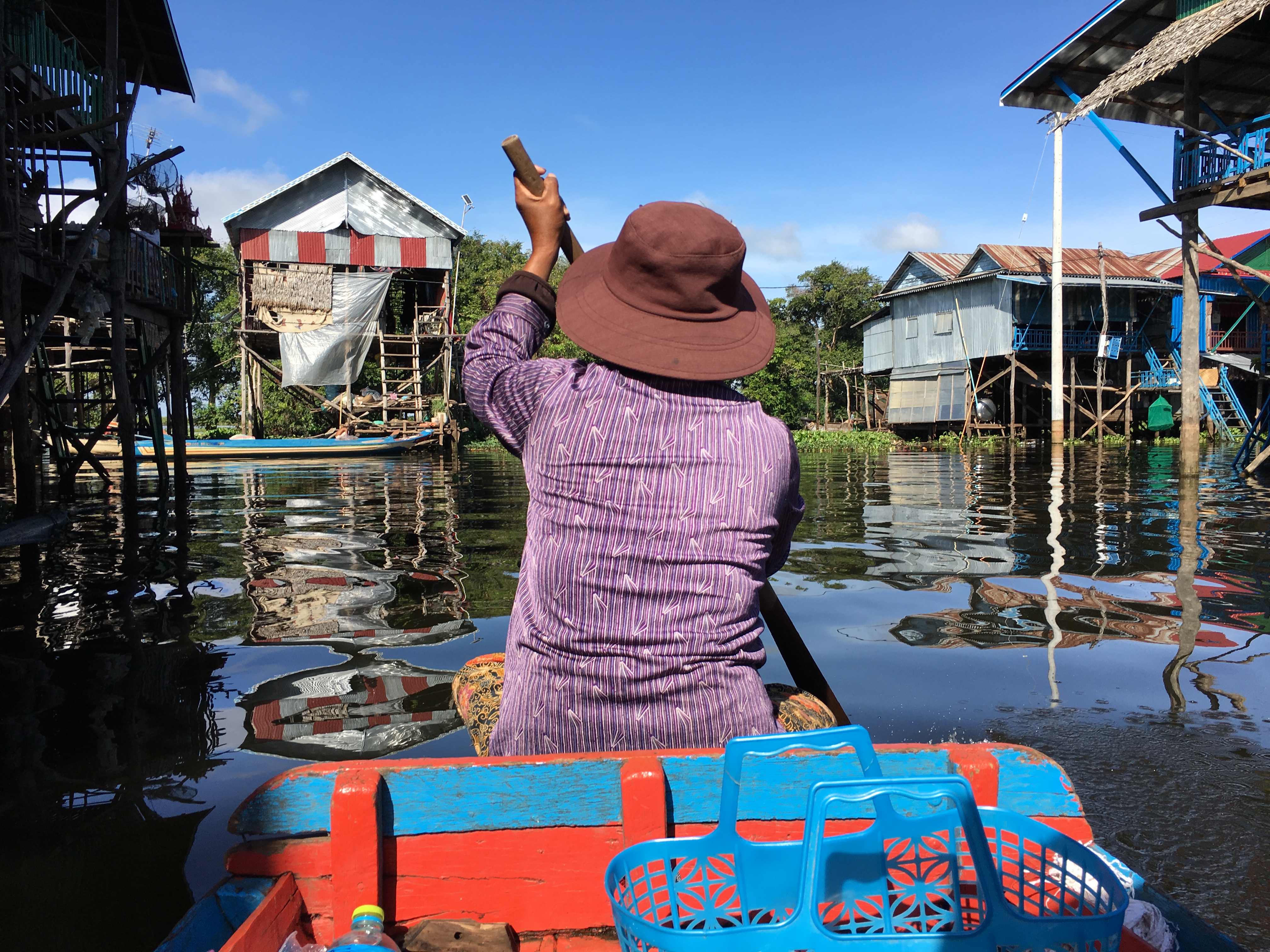
The third morning we hired a boat to take us on a tour of the floating villages on the edge of the Tonle Sap Lake, the largest fresh water lake in Southeast Asia. Inhabitants of these floating villages and the rural communities on the edge of the lake have depended on its natural resources for thousands of years.

At the lake’s outskirts, we boarded a large boat which deftly navigated the swamps to reach the area’s famed floating villages. From here we jumped on a small canoe piloted by a local guide. Time slowed as our canoe drifted out over the water. The shade of the freshwater mangrove trees cooled the air, bringing a stillness of contentment and peace.

It was not difficult to imagine why the Khmer ruled their empire from this lush, abundant region. We loved it here too.

Floating Villages on Tonle Sap Lake Cambodia
Floating Villages – Tonle Sap Lake

Our takeaway from our time in Cambodia: It is rare in the world of tourism to feel like you are discovering something for the first time. That sense of excitement at discovery and the yearning to uncover the mystery before you are gifts that Cambodia has remarkably preserved.

-Annie, Your Friend at Orange Backpack Travel
Woman Paddling Boat on Tonle Sap Lake Cambodia
Boat Tour on Tonle Sap Lake

Italy: Lost in the Vatican

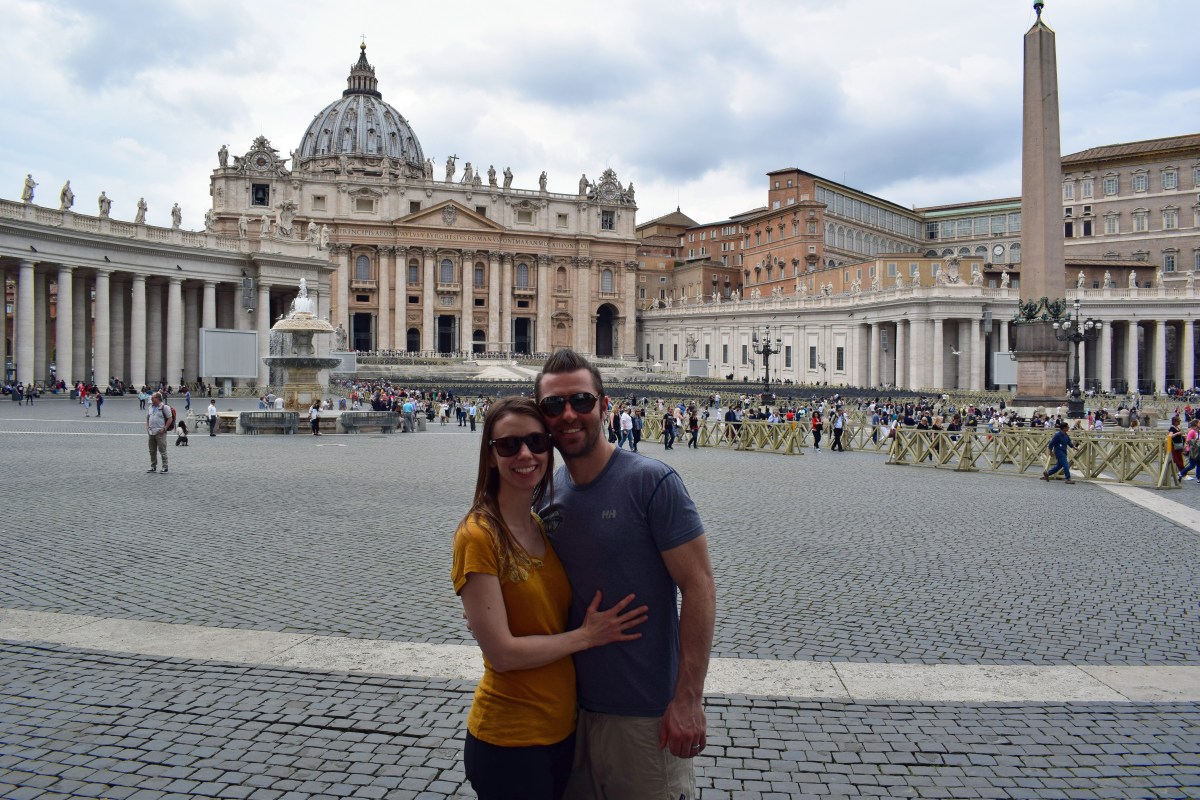
Vatican City, the smallest sovereign nation in the world, was a not-to-be-missed site on our trip to Rome, Italy. Aside from the site’s historical and spiritual draw as the home of the Pope and the formidable center of Roman Catholicism, the Vatican boasts a phenomenal collection of art and historical artifacts in the Vatican Museums, the crown jewel being Michelangelo’s Sistine Chapel. It also houses St. Peter’s Basilica, one of the largest cathedrals in the world, built on the site where Peter, one of Jesus’ disciples, was crucified upside down and where his sanctified bones remain today. For believers, the Vatican is one of the most holy pilgrimage sites in the Christian world. For non-believers, it is an impressive tourist attraction, designed to show off the wealth of the Holy See, that has shaped much of the Western world for centuries.

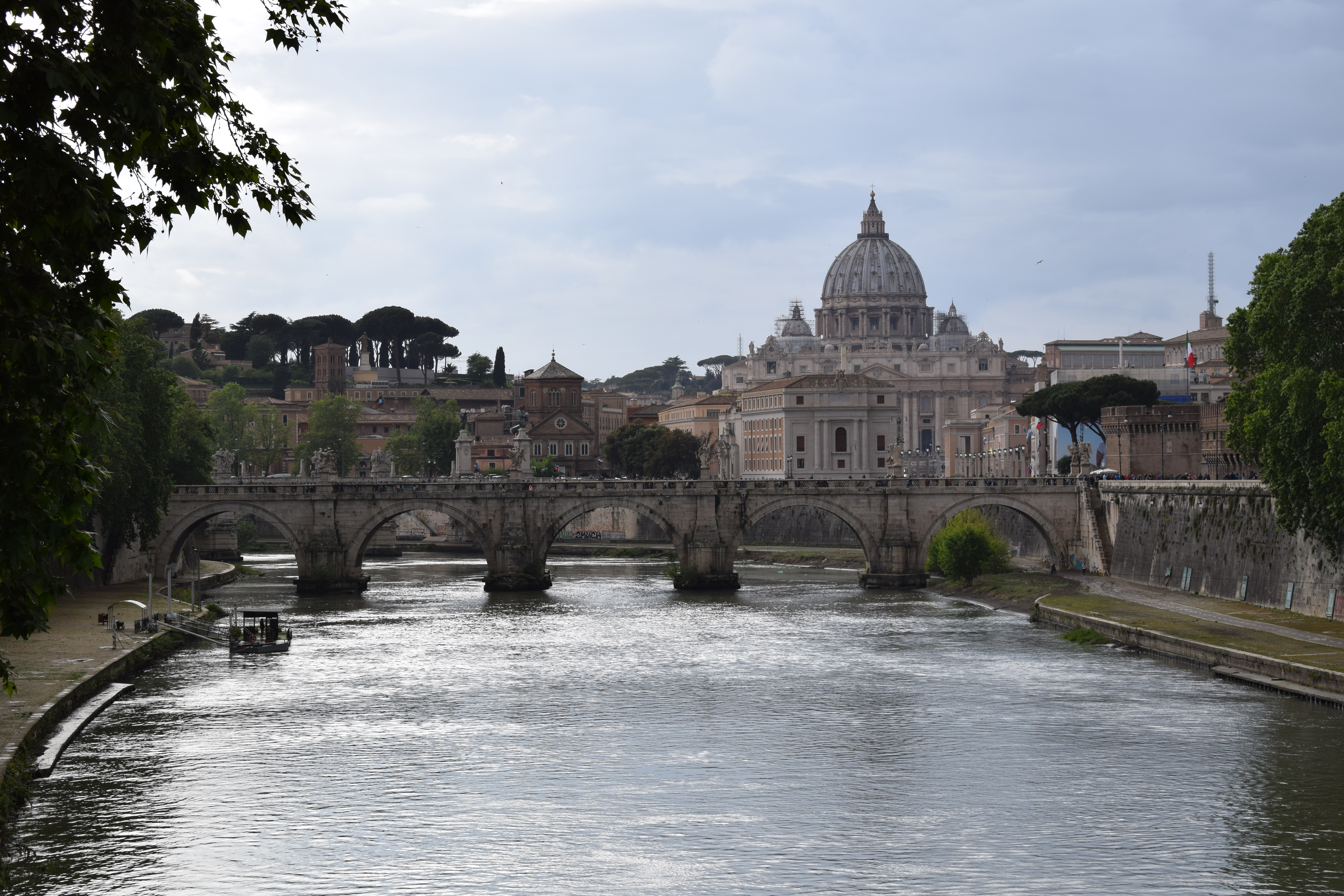
View of St. Peter's Basilica from Tiber River Rome Italy
View of St. Peter’s Basilica from the Tiber River

From a practical standpoint, we decided to book tickets to the Vatican Museums in advance to avoid waiting in a lengthy queue. We discovered that the only way to facilitate this for the day we wanted to visit was to buy a combo package: a ticket to the museums plus breakfast inside the Vatican. The tickets were more expensive, but we figured eating a meal at the Vatican sounded like a unique experience. Plus, the combo ticket gave us the added benefit of early entrance to the museum before it opened to the public.

On the day of our reservation, we felt pretty good waltzing up to the front of the long line and gaining early admittance. The breakfast was a decadent spread of pastries, eggs, breakfast sausage and bacon, croissants, and endless espresso, which we ate with gusto, gearing up for the next few hours of touring.

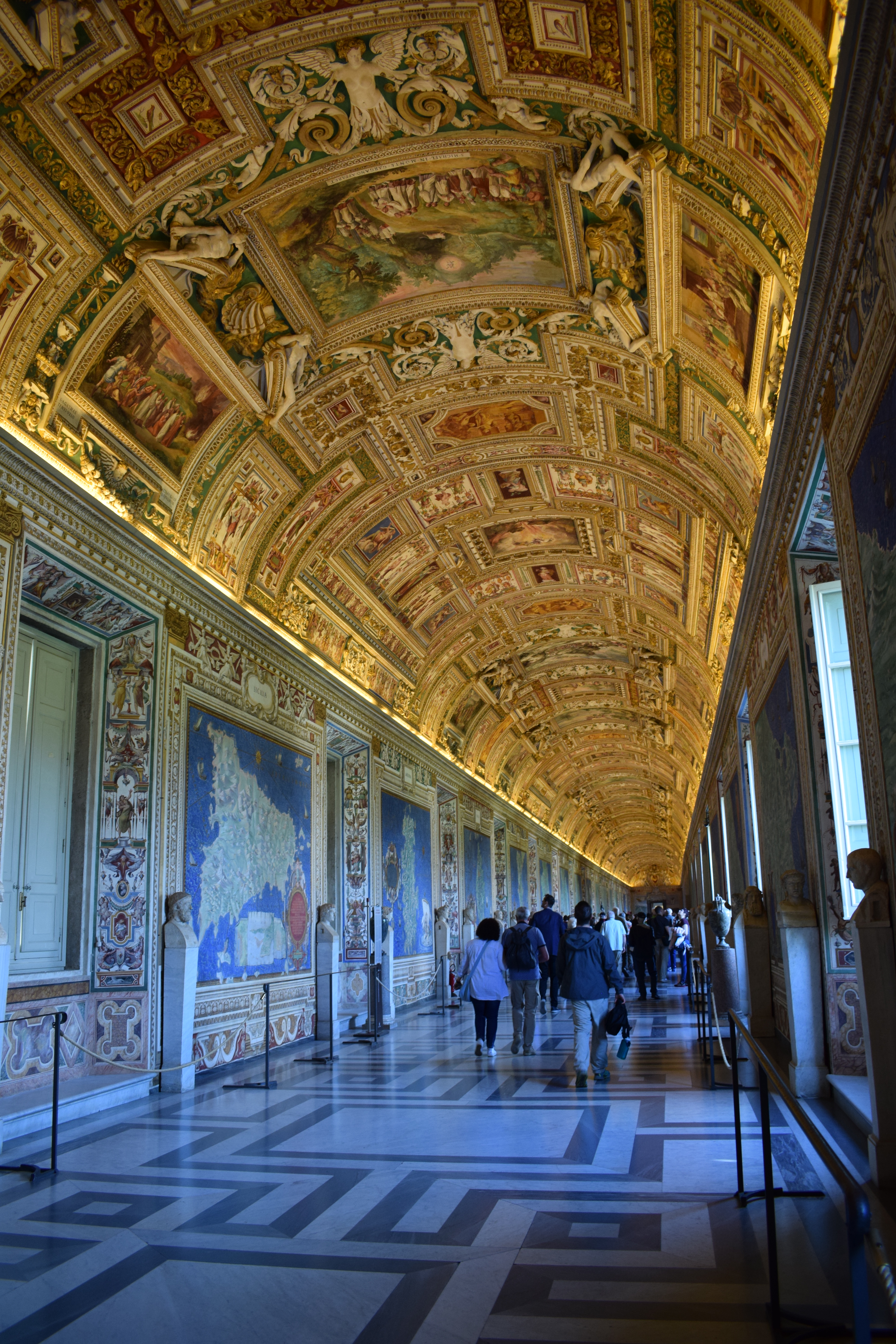
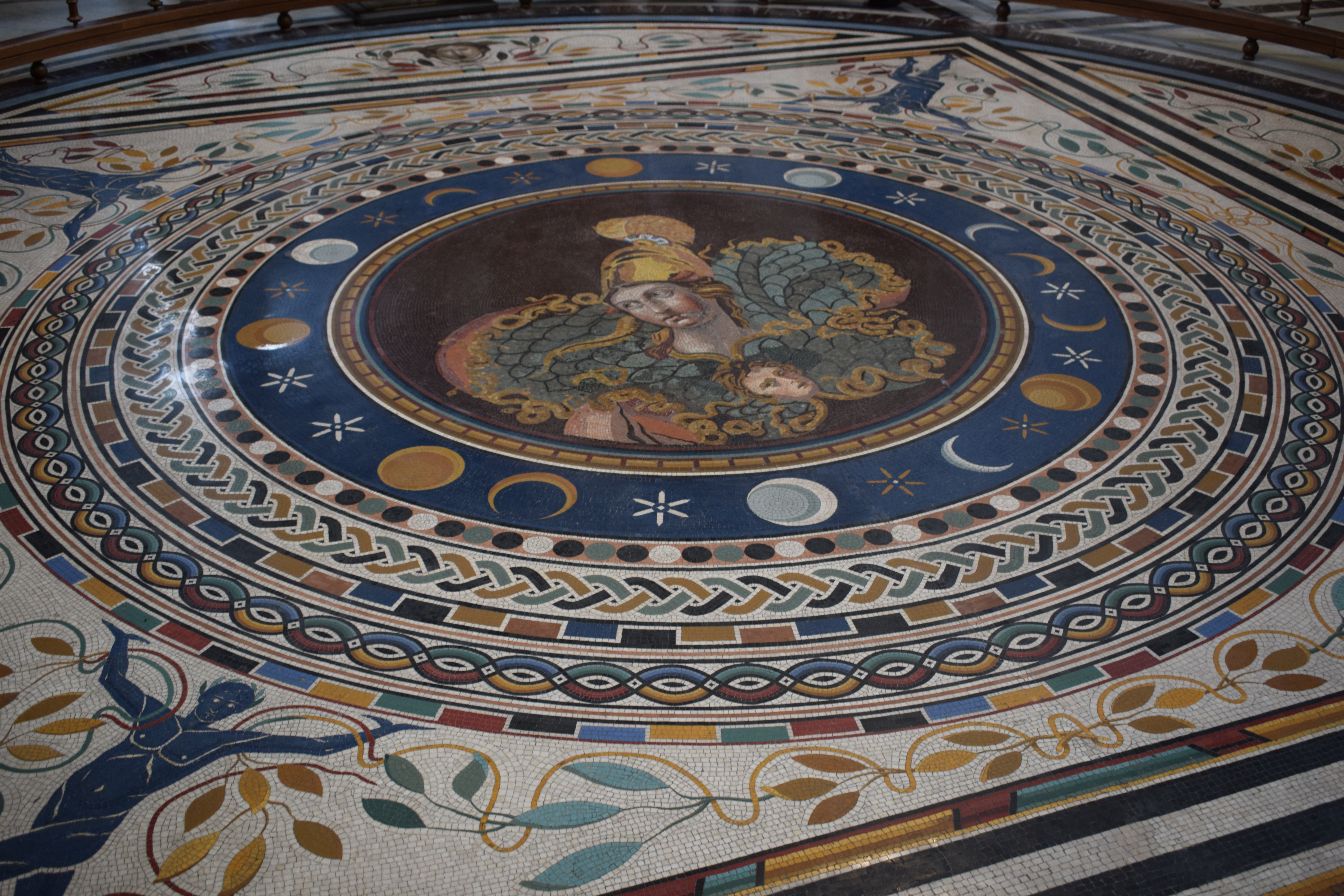
After breakfast, we began walking through the opulent rooms, ogling at the wealth and beauty surrounding us. Gold trim framed the windows and ceilings, marble in all colors covered the floors, and fabulous paintings, maps, and statues decorated each room.

Inside the Vatican Museums Rome Italy
Inside the Gilded Halls of the Vatican Museums
The School of Athens Painting by Raphael in the Vatican Rome Italy
The School of Athens by Raphael
Inside the Vatican Museums Rome Italy
Mosaic Floor in the Vatican Museums

Ten minutes into our tour, Aaron informed me that he needed to use the restroom, so we picked up the pace, following signs to the nearest facilities. Along the way, I paused to take a few photos but made sure to keep Aaron in sight. He arrived at the restrooms about thirty steps ahead of me. Since we were there, I ducked into the ladies’ room, taking advantage of the facilities as well.

When I came out, Aaron was no where in sight, so I assumed he was still indisposed. I waited in the room just outside for thirty minutes before losing my patience. I sent a tour guide into the men’s room to make sure my husband was alright. To my dismay, the tour guide came out and informed me that there was no one in the restroom.

It was then that the first flutters of panic arose in my stomach. Aaron had left me. But why? Where was he? Then the more frightening thought occurred: I was alone.

Now, logically, I knew that the Vatican was extremely safe and had a world-class security system. I also knew that it was small in area, which meant that we would find each other eventually as long as we stayed within the Vatican Museums. This was easier said than done.

By this time, the museums had opened to the public and throngs of people surrounded me. My fear of losing my husband quickly turned to anger. Before we got separated, the Vatican was relatively empty, allowing us to stroll through at a leisurely pace, but now, I could barely move through the crowded halls. Why hadn’t he just waited outside the restroom?!

I decided the Sistine Chapel was the most logical place to wait for my husband to find me, since everyone eventually passed beneath Michelangelo’s masterpiece on their Vatican tour. So, I reluctantly joined the crowds and followed them there. I also turned my cell phone on and tried to call Aaron. No luck.

Twenty minutes later, after gazing steadfastly toward the heavens and marveling at every inch of Michelangelo’s artistic genius, we finally connected via phone, and Aaron agreed to meet me in the Sistine Chapel. It was our very own Vatican miracle.

Many of you are probably wondering why it took so long for us to find each other. The short answer is that I didn’t turn on my phone sooner because I believed Aaron was taking his sweet time in the bathroom. Obviously, I was wrong.

In the hour or so that we were separated, Aaron had called me over twenty times. It turned out that when he came out of the restroom and didn’t see me, he assumed that I had continued on. It never occurred to him that I had gone into the restroom as well.

Aaron had spent the next hour running, literally, through the vast museum halls looking for me. He canvassed the whole area asking guards along the way if they had seen a lost woman looking either put-out or on the verge of tears. He even left the museums to search for me in the crowds out front and had to talk his way back inside since his ticket had already been used. He feared that I had been kidnapped, a belief that was only reinforced by the fact that I wasn’t answering my phone.

After hugging for a long time in the Sistine Chapel, we decided to walk through the museum again since neither of us had really seen it yet. We held hands the entire time. We also bumped into one of the security guards who had helped Aaron in his search. Upon seeing us, a smile broke across his face as he excitedly exclaimed, “Oh good. You found her!”

At the end of our second pass through, Aaron led me to a side exit out of the Sistine Chapel that led straight into St. Peter’s Basilica, allowing us to bypass the lengthy queue to enter the church. This little shortcut was a brilliant discovery Aaron made while frantically trying to find me. It was perhaps the greatest benefit of getting “lost” in the Vatican.

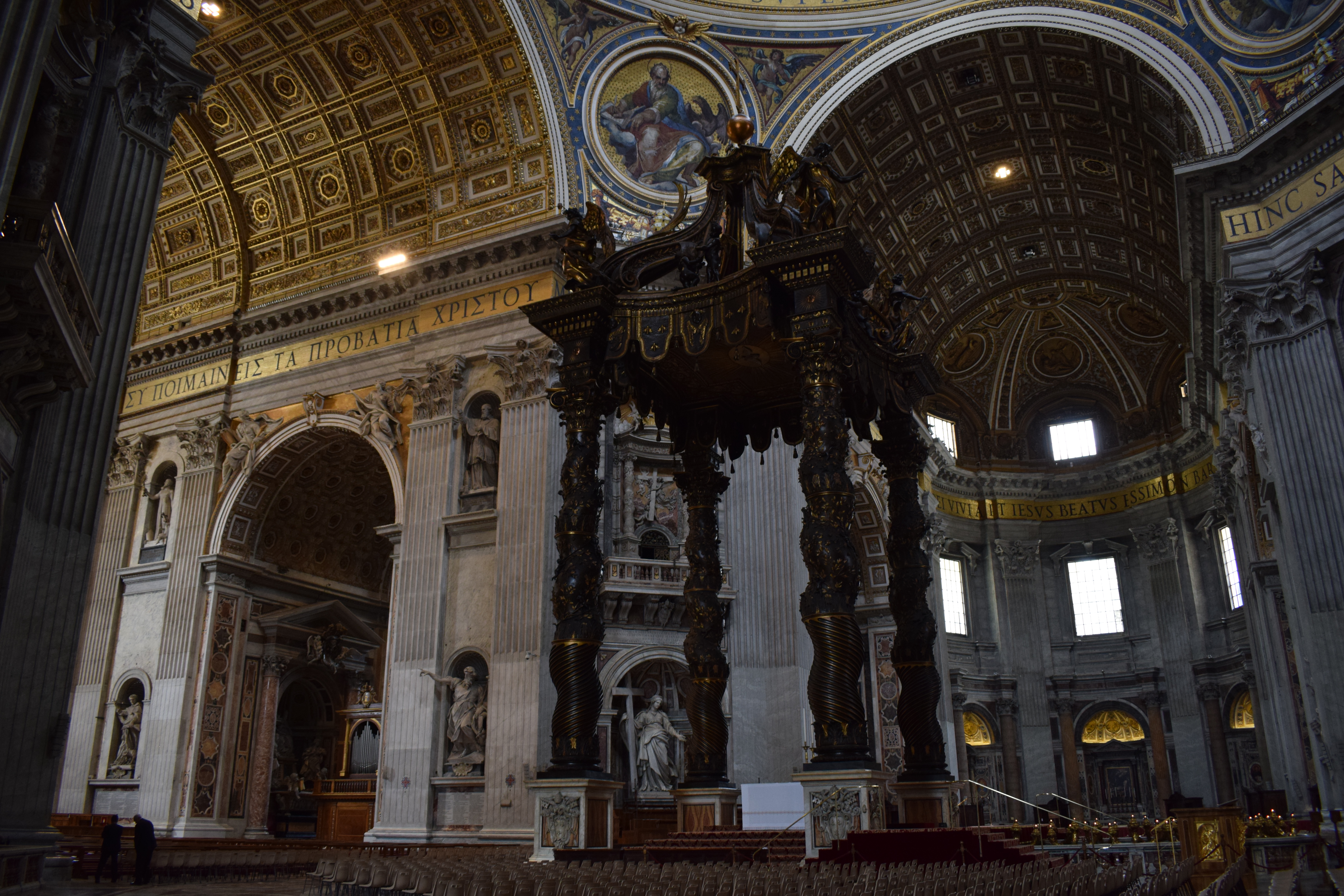
Main Altar inside St. Peter's Basilica Rome Italy
Main Altar Inside St. Peter’s Basilica
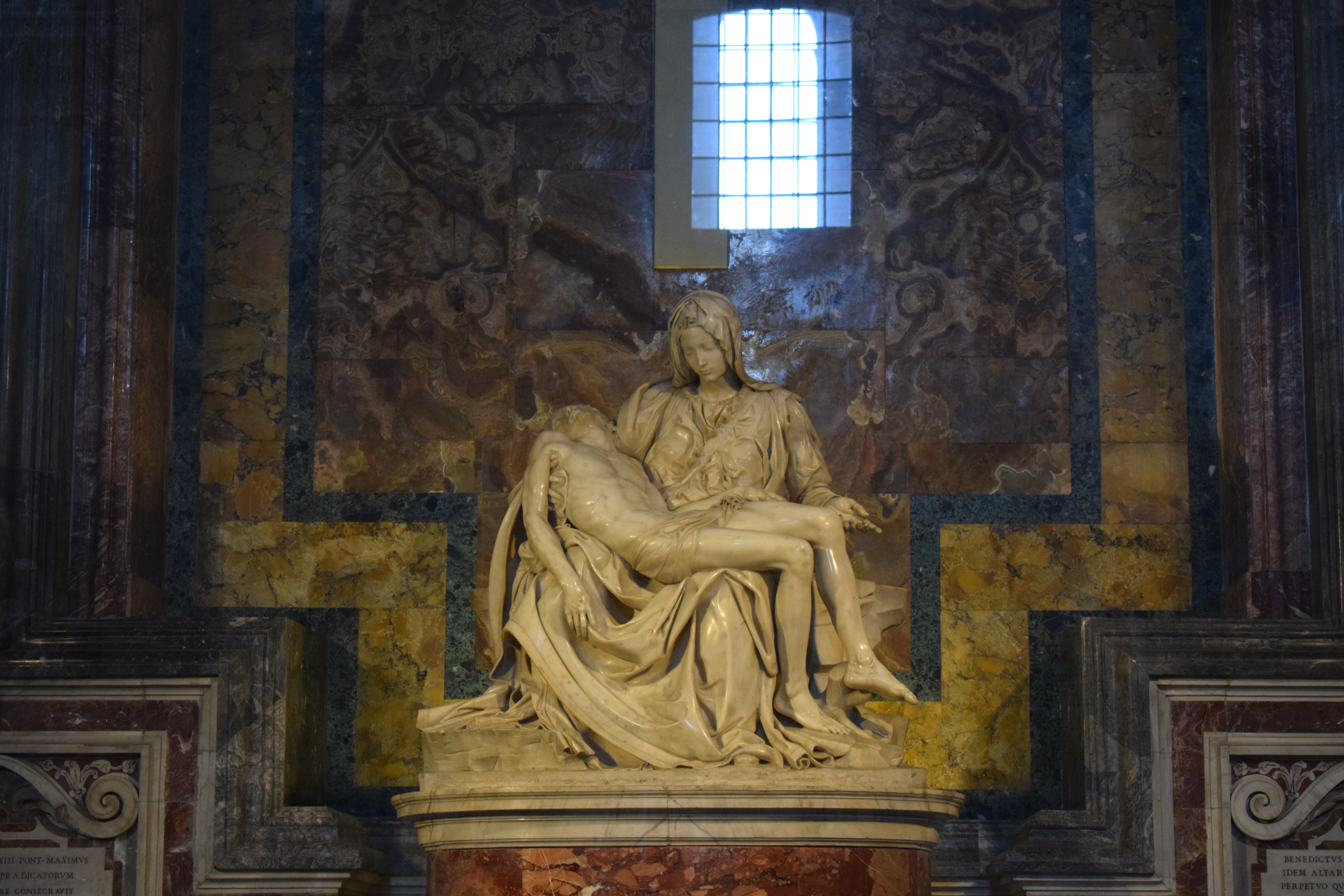
Michelangelo's Pieta Inside St. Peter's Basilica Rome Italy
Michelangelo’s Pietà Inside St. Peter’s Basilica

Our takeaway from this experience: Always establish a meeting point at each site you visit in case you get separated. And, it wouldn’t hurt to keep your phones on either!

-Annie, Your Friend at Orange Backpack Travel
The Story Behind Our Blog’s Name

“Travel Bug” – It’s a phrase almost everyone has heard. It is a phrase that has a wide range of connotations. It conjures images of many different desires relating to travel: from the dreamer who longs for the warmth and sunshine of the beach but can never quite align the stars to make the vacation happen, to the adventurer who dons an enormous down coat and sets off on a trek to Antarctica.

For some, travel is an essential part of life. It inspires the soul and invigorates one’s passions for knowledge, experience, and adventure. For others, it is a nice escape from the every day routine but not essential to a fulfilling life.

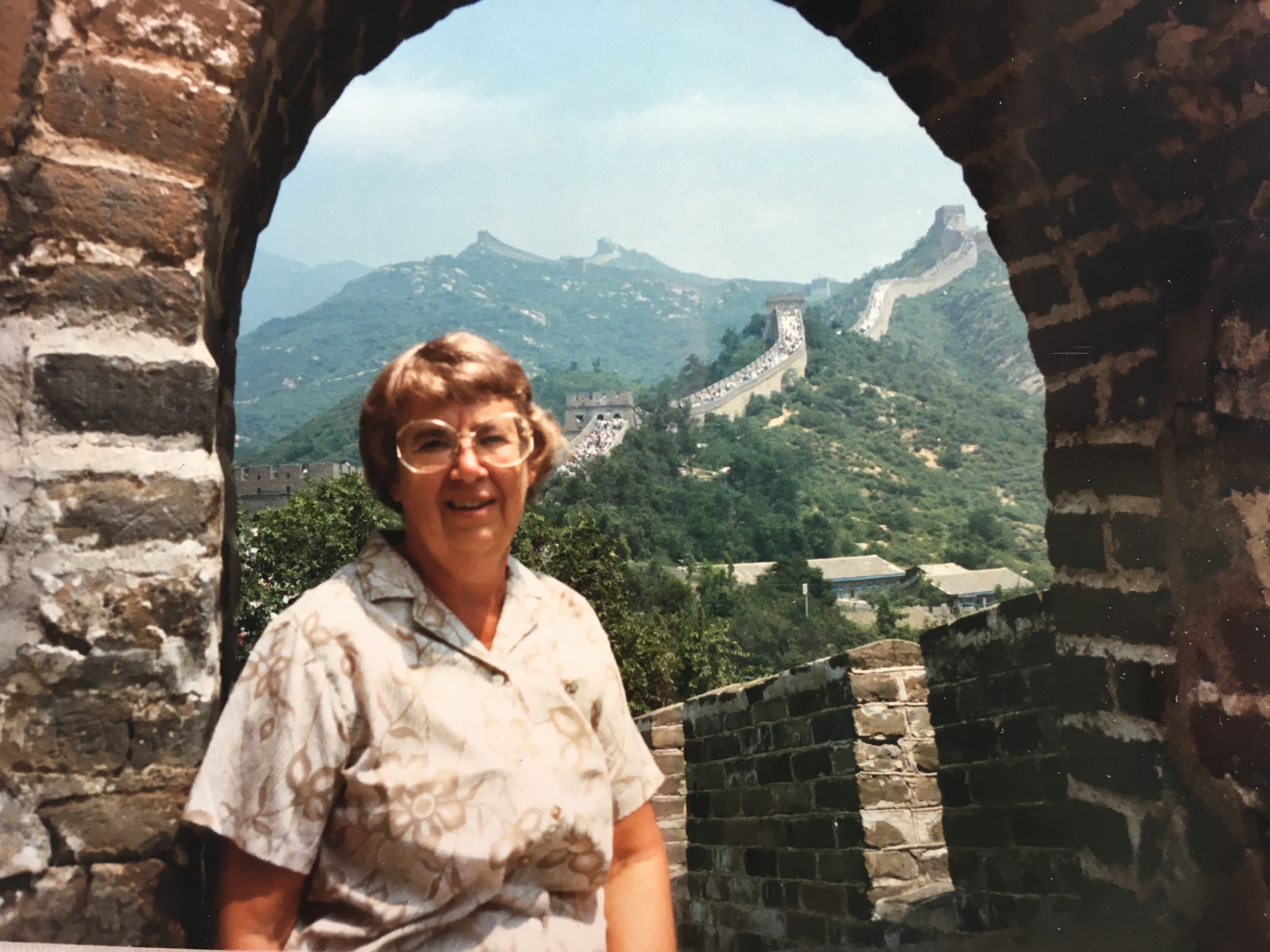
I was raised by a family who lived and breathed for travel. My grandmother traveled so much that my dad likes to say she traveled around the world, not once but twice.

Grandma at Great Wall of China
My Grandma – Great Wall of China

My parents were both avid travelers in their own right as well. My mom spent extensive time backpacking across Europe, soaking in the sites from Ireland to Turkey. My dad spent two years hitchhiking through Europe, spending much of his time in Sweden, Paris, and Greece.

My parents traveled extensively together too. They embarked on countless road trips around the continental United States and spent a month touring the Hawaiian Islands.

Clearly, there is a long history of “travel bugs” in my family.

My parents love to regale us with stories from their travel experiences. Sometimes the stories border on the unbelievable, like the one where my mother hitchhiked from Munich to London by herself. Or the fact that my dad lived in a roofless stone hut for months in Mykonos, Greece. One of my personal favorites has to be where they boast about sleeping in their rental car for the entire month they were in Hawaii!

Often their stories relate to how different traveling was “back then”. My parents reminisce on how hitchhiking was the norm and felt perfectly safe. They describe youth hostels that cost less than a dollar a day. Some provided stellar accommodations. Others forced you to leap across a giant water puddle to reach the bed.

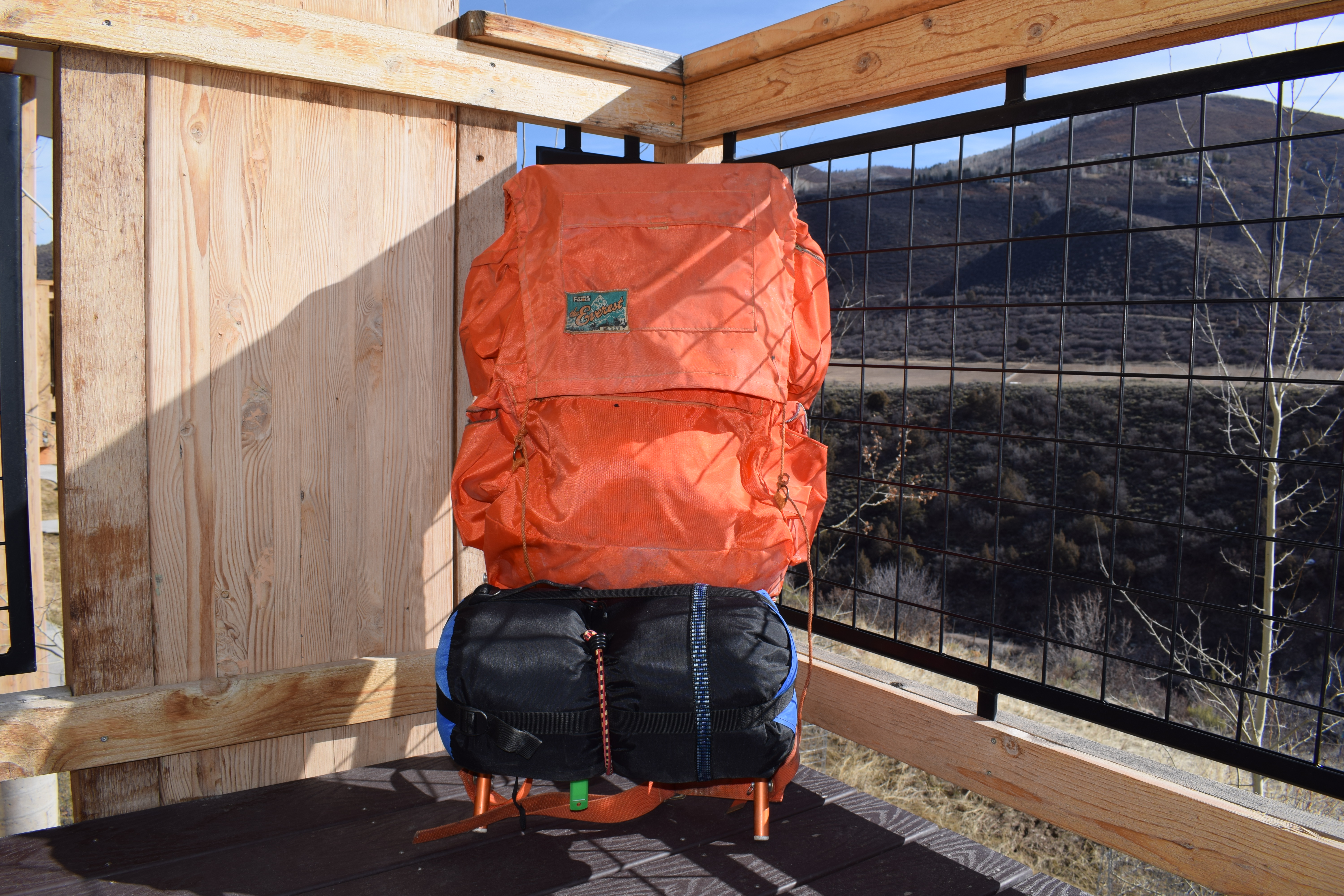
One aspect of my dad’s stories that captured my attention was the one travel accessory that accompanied him on all his adventures: an orange backpack.

He loves to tell the story of how his old backpack broke during the course of his travels, forcing him to acquire a new one. He intended to purchase a forest green or an ocean blue pack to blend in with the environment. However, when he went to buy a new one, the only color option was bright orange.

At first, he was unsure of the bold color but quickly came to love it. Now, he says, he will never choose a color other than that fateful orange hue.

So, in honor of my dad and the insatiable “travel bug” passed down through the generations, we decided to name our travel blog “Orange Backpack Travel.”

Orange Backpack with Sleeping Bag

We hope that we can channel our family’s travelling spirit to inspire others and pass the “bug” down to the next generation.

-Annie, Your Friend at Orange Backpack Travel
Bali: The Art of Capturing Authentic Cultural Experiences

Often people travel to carefully chosen destinations because they boast a monument, museum, or view that has been dubbed a “must see” by travel guides and tour operators world-wide. Almost all of these highlights have become tourist traps for a reason – they’re worth it!

That being said, many guidebooks and tour companies are shifting their focus to incorporate more authentic experiences, such as cooking classes or traditional dance lessons, to allow travelers to dive deeper into the local culture.

While finding these authentic experiences may seem like the obvious thing to do, our experience in Bali, Indonesia taught us that where you decide to vacation can single-handedly determine whether you partake in authentic local culture or just skim the surface with the well-rehearsed tourist package.

We decided to spend the first week of our vacation in Ubud, a small city in the center of the island known as the cultural heart of Bali.

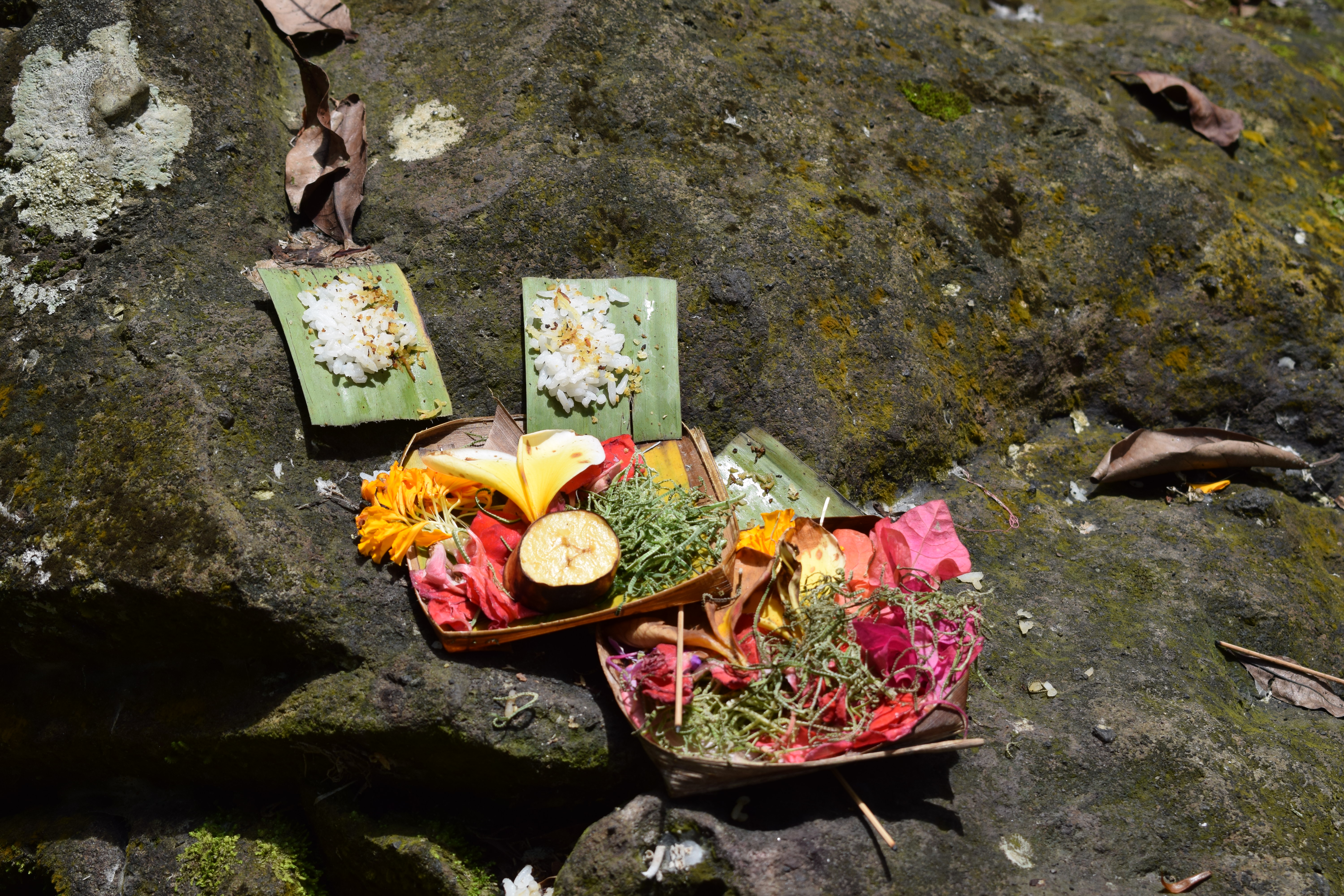
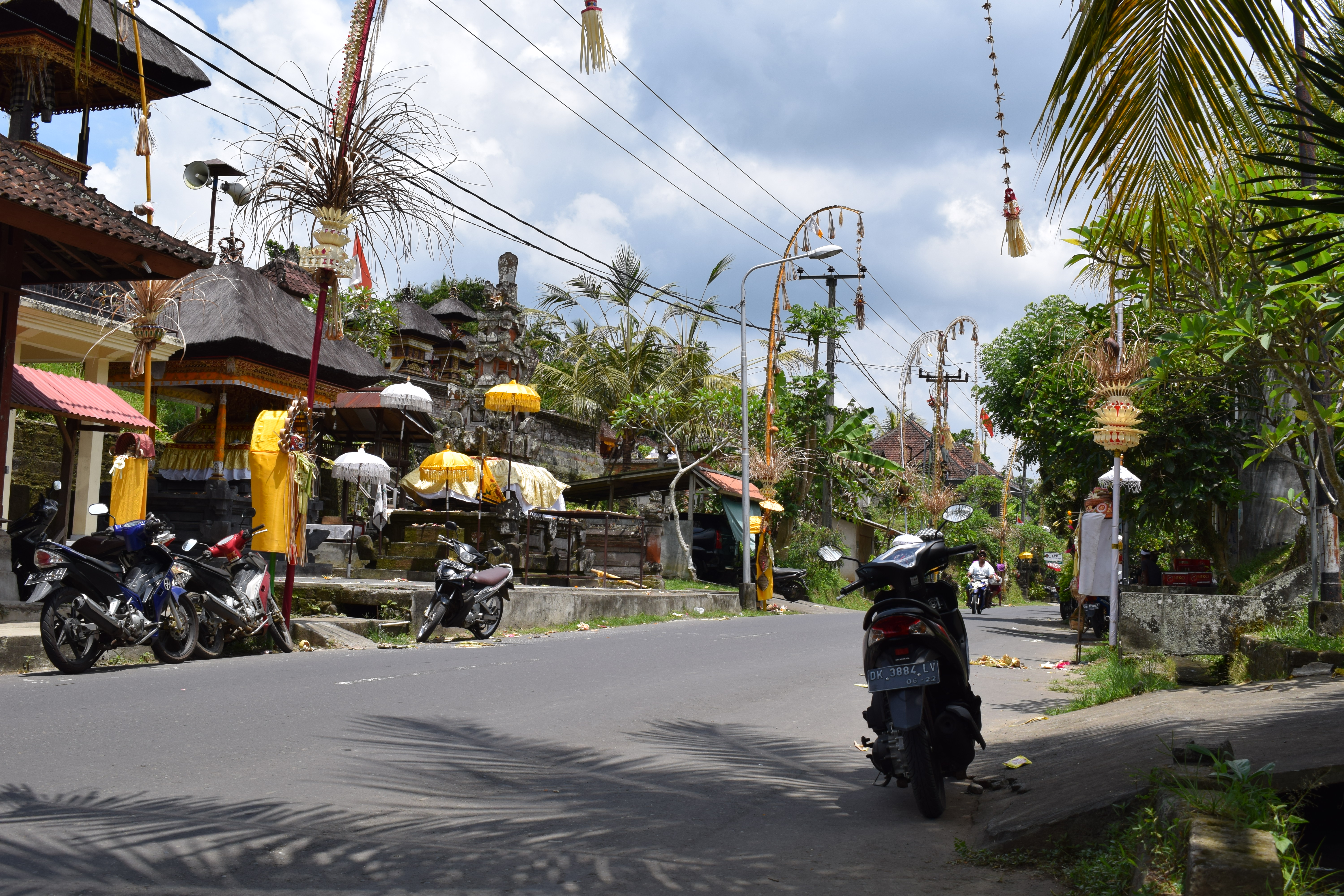
We were lucky to be in Ubud during the Balinese holiday of Galungan, a time when the island’s rich cultural heritage is on full display. Galungan is a joyous festival where families invite their gods and ancestors to return to earth to celebrate the triumph of good over evil. To celebrate, the island is decorated with thousands of elaborately decorated bamboo poles, called penjor, which sway gently in the breeze accentuating the island’s mystical allure. The streets themselves became places of worship, hosting lively parades starring colorfully-dressed devotees hoisting beloved images of their gods high into the air or nimbly balancing headdresses piled high with offerings of fruit and flowers.

Offering Platter in Ubud Bali

Motorcycles on the street in Ubud Bali

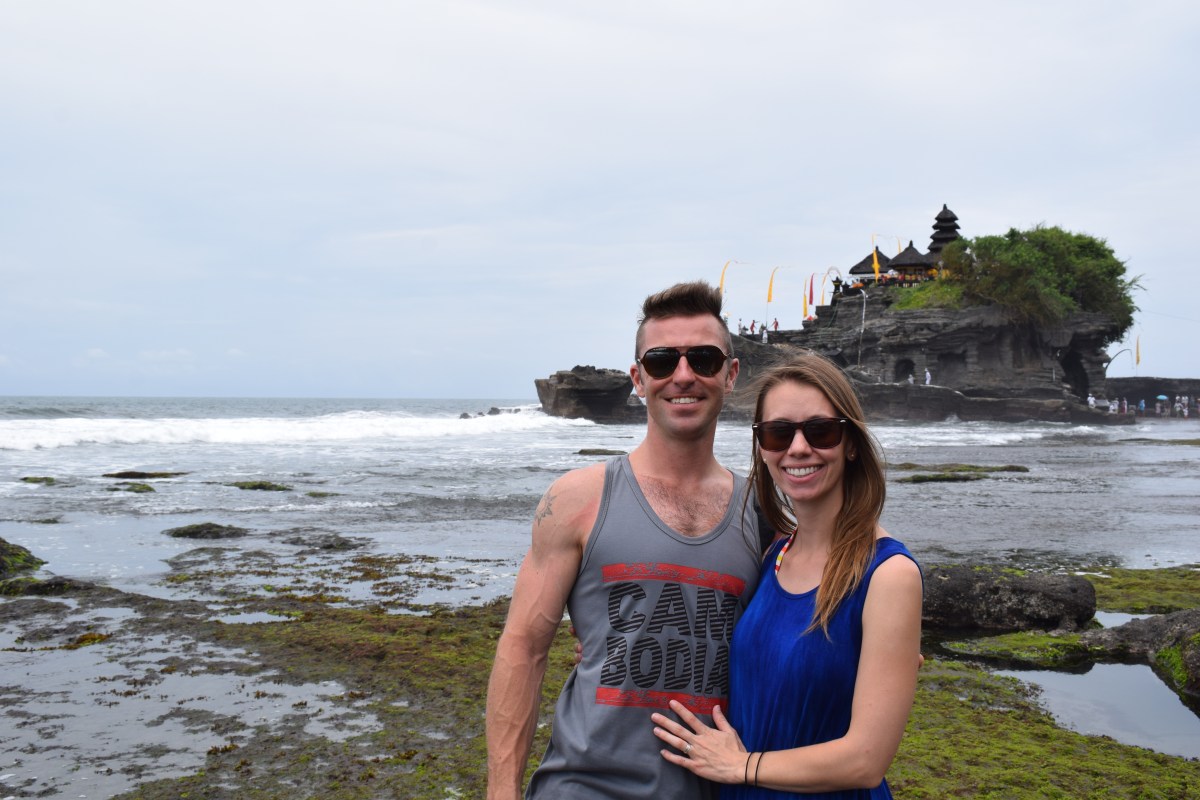
We spent our days enjoying the island’s relaxed ambiance while taking in some of the “must see” sites around the island: the Tanah Lot Sea Temple, the Tegallalang Rice Terrace, Goa Gajah (the Elephant Cave), the GitGit Waterfall, and the Sacred Monkey Forest in Ubud, to name a few.

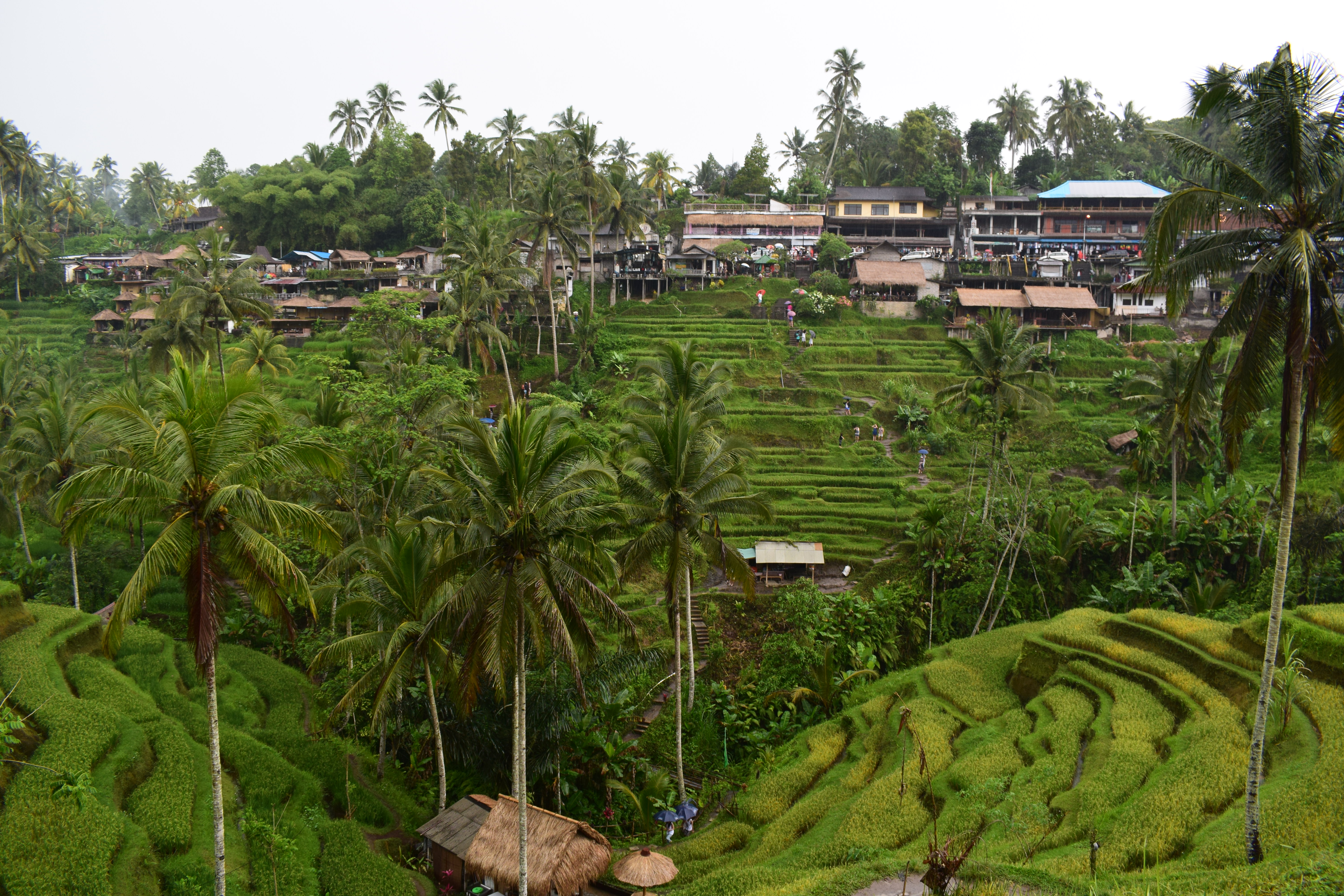
Hilly Rice Fields Near Ubud Bali

One of our most memorable experiences was a foot journey into rural Bali through the rice fields. The beauty of the verdant fields, each displaying the crop at a different growth stage, was beyond captivating. The peaceful magic of this tropical paradise seeped into our souls.

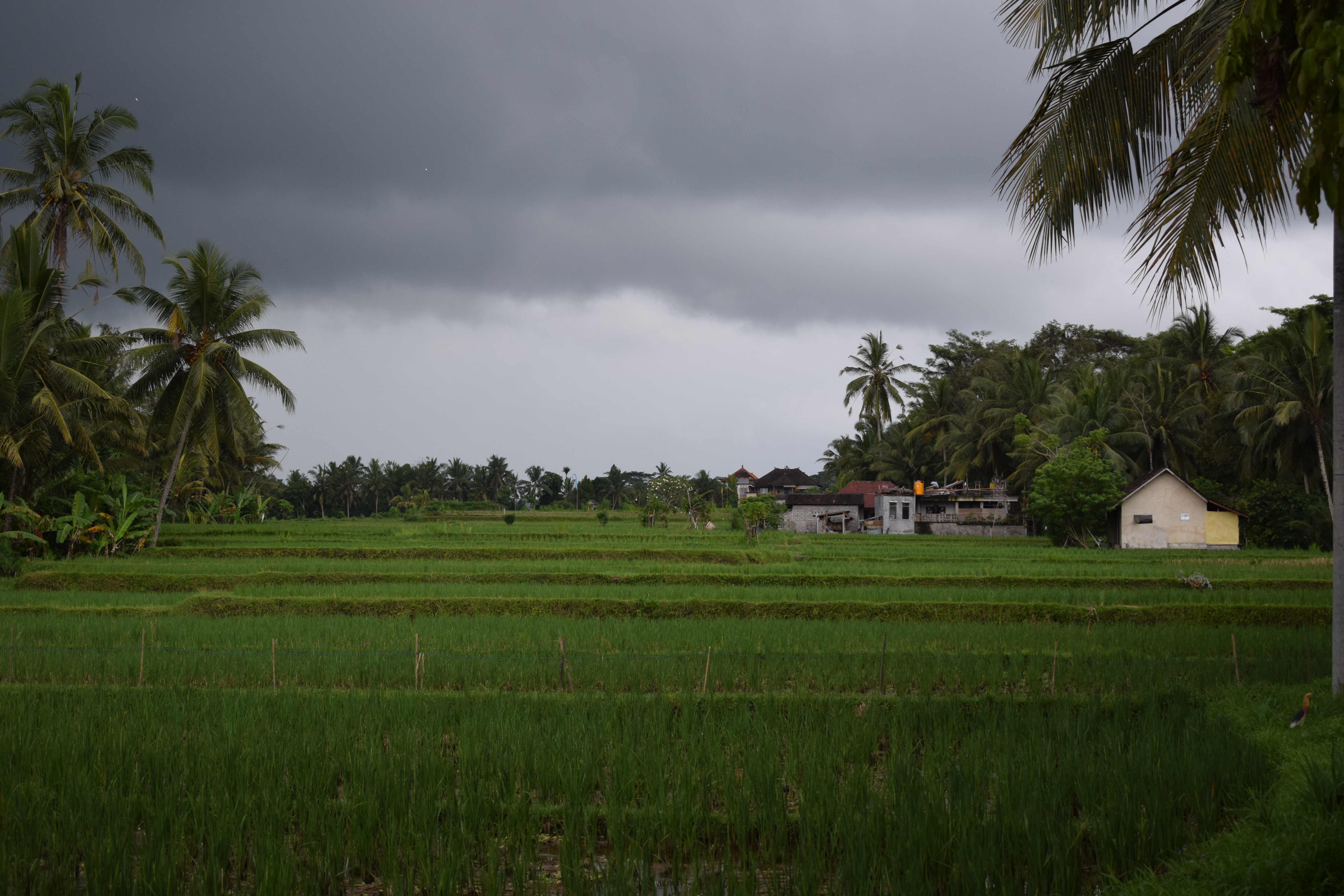
We were so enraptured by our surroundings that we failed to notice a massive thunderstorm quickly approaching. Within minutes, we were engulfed by a torrential downpour. We ran up the mud path between rice fields as fast as we could to take shelter in a small hut where the proprietor sold his paintings. He graciously invited us in and kept us company as we waited for the storm to pass.

Half an hour later, there was no sign of the rain abating. We decided to embrace our fate of getting caught in the elements, wrapped our camera and new painting in plastic bags, and stepped into the rain. We were soaked within seconds, which gave us a lovely excuse to jump in puddles, giggling like carefree children, as we made our way back to our hotel.

Rain Storm with Dark Clouds over Rice Paddy in Ubud Bali

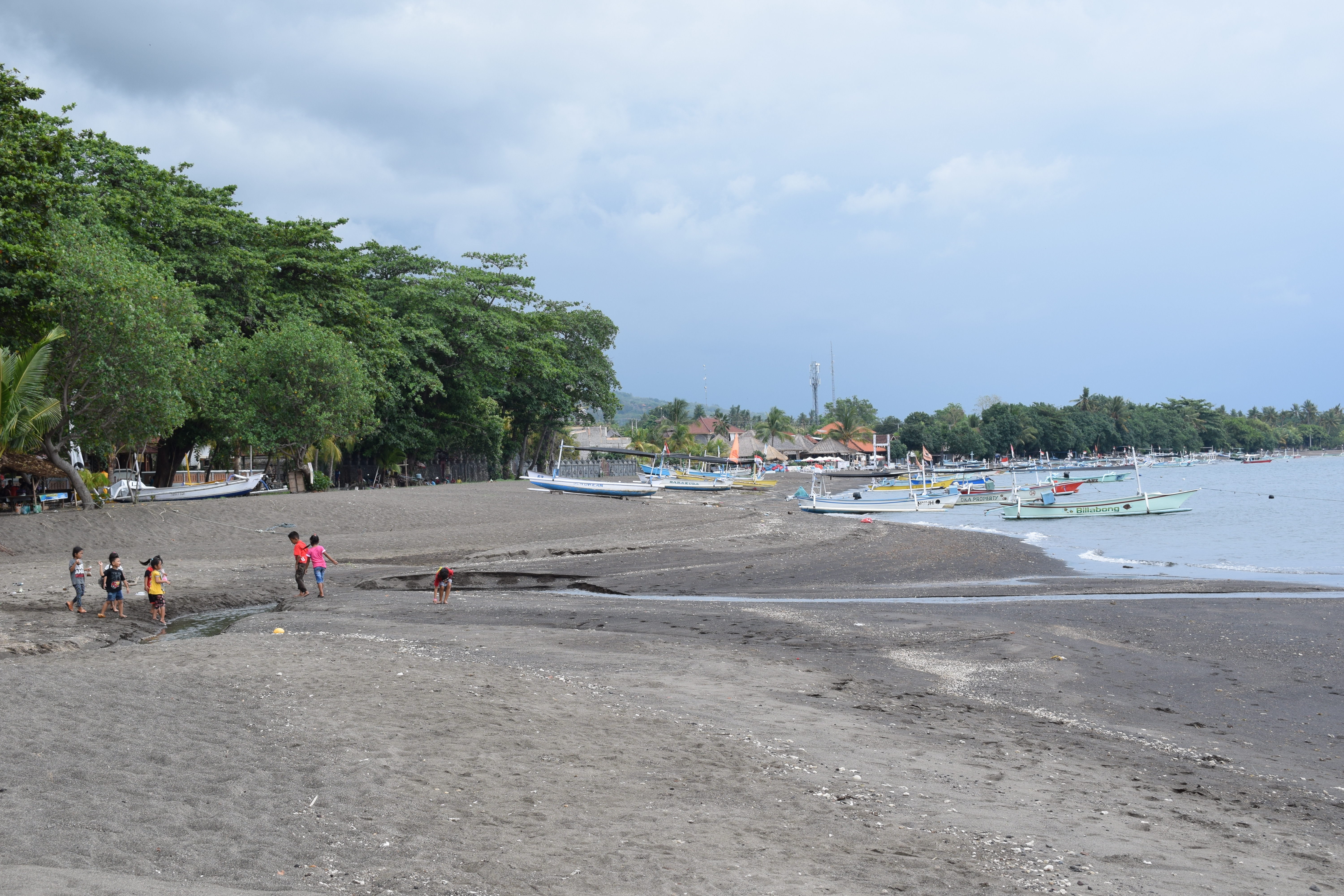
We also ventured off the tourist track for a beach day on Lovina Beach, a quiet stretch of black sand on the north shore of the island. We swam in the deliciously warm water and took a long walk along the beach, during which we were privileged to witness a cremation ceremony. The family of the deceased gathered to honor their loved one by laying offerings at the shoreline and releasing the ashes into the water.

Children Playing on Lovina Beach in Northern Bali

For the last four nights of the trip, we decided to spoil ourselves and stay at a luxury resort in Nusa Dua, on the southern tip of the island. We thought a couple of beach days at the end of the trip would be perfect to shake off any stresses from travel and prepare us for the lengthy plane ride over the Pacific to get home.

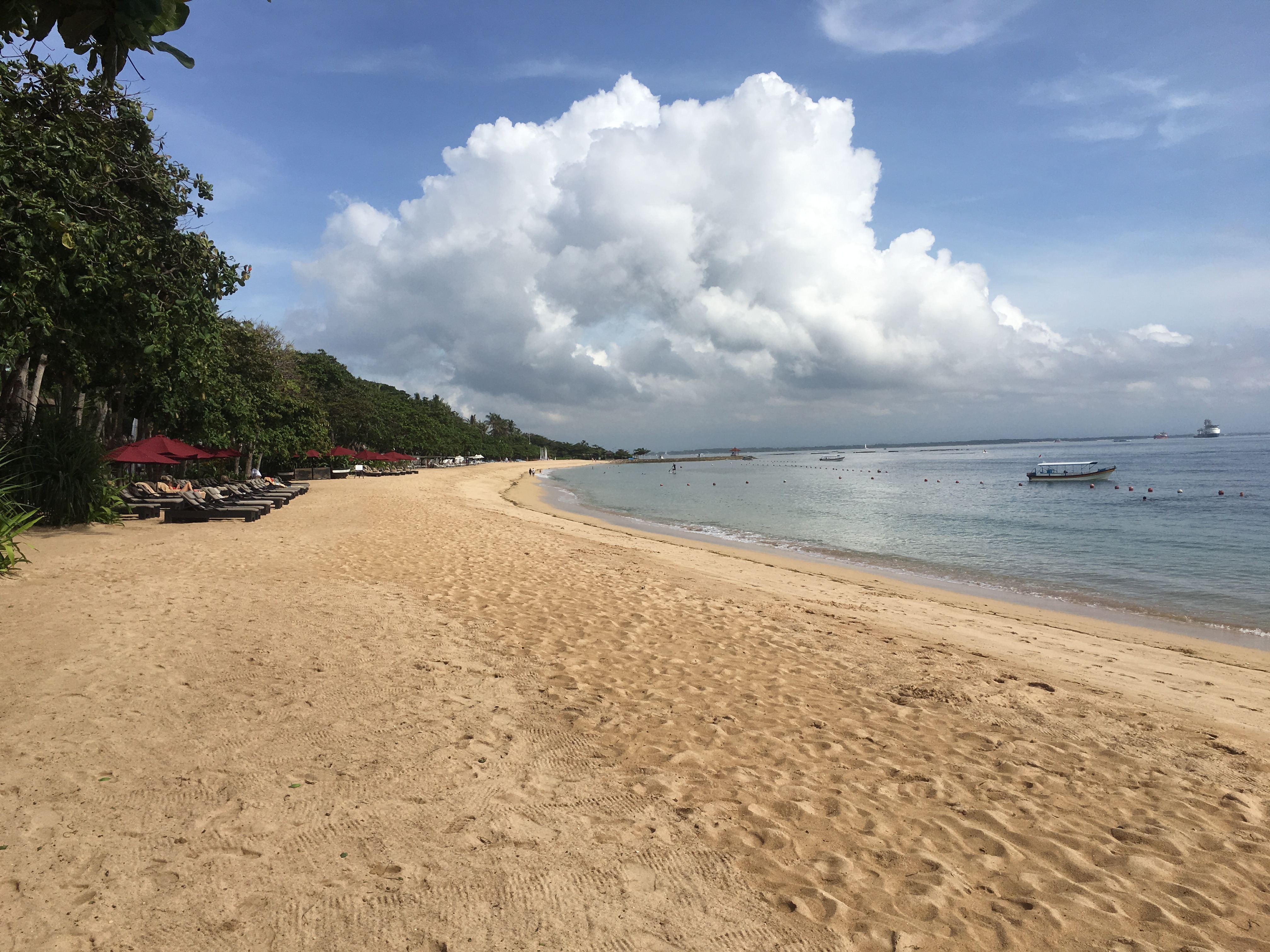
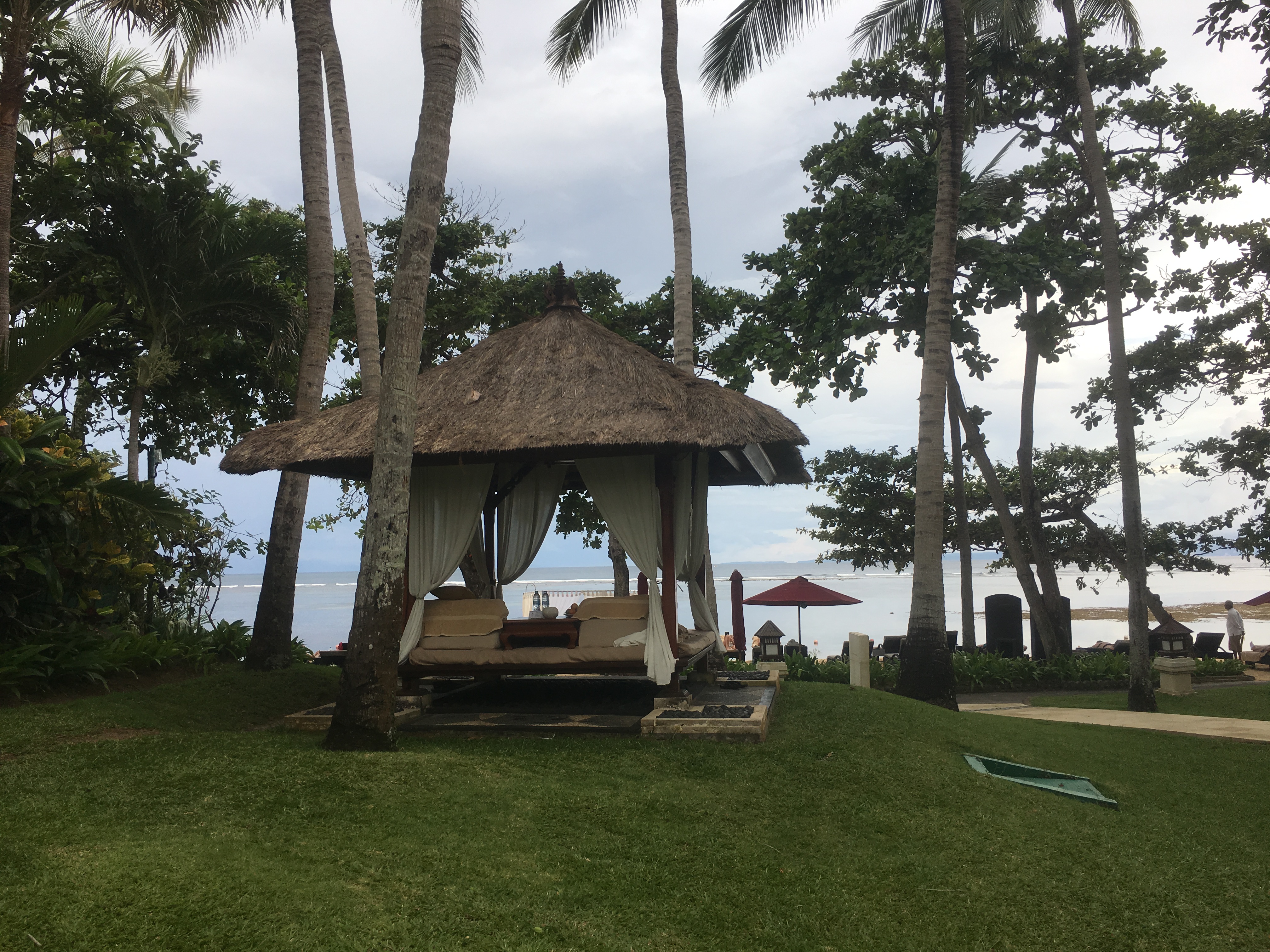
The resort was spectacular! It was a beachfront property covered with swimmable lagoons that casually snaked throughout the property. The lawn chairs and free towels were abundant, as were the fragrant plumeria flowers drifting down from the trees into the pools. The resort had everything we needed: food, drinks, extra sunscreen, snorkeling gear, surf lessons, dance performances in the evenings, and street peddlers selling souvenirs on the beach. The prices were reasonable too, allowing us to splurge on fruity drinks and a private beach cabana with enticing views of the ocean.

Nusa Dua Beach View at The Laguna Luxury Collection Resort
Beach Cabana at The Laguna Luxury Collection Resort in Nusa Dua Bali Indonesia

It quickly dawned on us that we could have easily spent our entire vacation inside the resort. We never would have seen the real Bali that locals experience every day. It was not hard to imagine how often this happens to tourists all over the world.

Our takeaway from our contrasting experiences in Bali: Although our touristy, beach resort experience in Nusa Dua was spectacular, we were most thankful for the authentic cultural experiences we had in Ubud.

-Annie, Your Friend at Orange Backpack Travel
USA: A Layover Dash to San Francisco, CA

Travel can sometimes be challenging due to limited financial resources. In many cases, airline tickets make up the bulk of a trip’s budget. Every once in a while, you hear of a friend or relative who got an outrageously cheap deal on a flight, causing you to cringe with envy.

Not to worry! In our experience it is still possible to find affordable plane tickets without having to sacrifice sleep, conjure your own personal travel genie, or leave your children at home with the grandparents. The catch is that you probably won’t get a direct flight, and you may be subjected to some lengthy layovers.

Recently, we took a flight from Denver, CO to Siem Reap, Cambodia with layovers in San Francisco, CA and Singapore. Our first flight was scheduled to land in San Francisco at 2:00pm and depart for Singapore at 1:00am the following morning. An eleven-hour layover on a trip to Asia is pretty brutal as far as flight plans go, but the flight was cheap, and we figured we’d make the most of it.

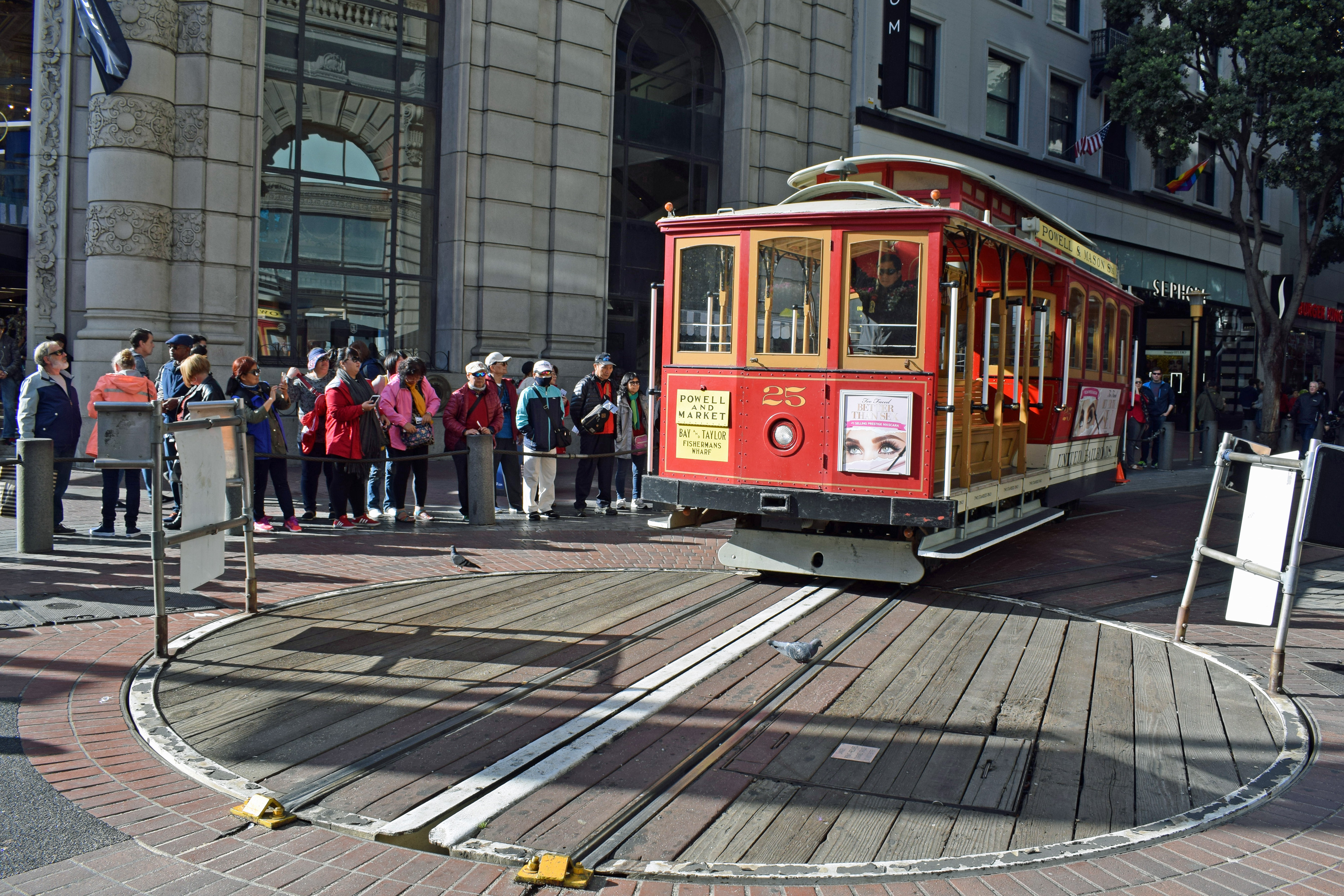
Upon arrival in San Francisco, we left the airport via the BART train and headed into the city. With the goal of getting a whirlwind tour of the city in about seven hours, we got off the train at Powell Street, intent on catching one of the iconic cable car rides to Fisherman’s Wharf. We bought our tickets, got in line, and found ourselves, twenty minutes later, at the very front of the line with the next cable car approaching. We boarded the legendary vehicle, choosing one seated and one standing position at the front of the car. My husband spent the ride gleefully leaning out from the cable car, barely hanging on as we barreled up and down the city’s steep hills.

Powell and Market Street Cable Car San Francisco California USA

We disembarked at Lombard Street, famous for its snaking switchback road, and walked down the street with the other wide-eyed tourists. There wasn’t a moment when Lombard Street was empty of cars. The constant whir of engines is no doubt a contentious issue for the street’s residents!

From there we made our way to Ghirardelli Square and were delighted to discover talented street artists and an abundance of free samples of the delicious chocolate that gives the square its name.

We ventured along Beach Street toward Fisherman’s Wharf, charmed by the plethora of seafood options, ranging from elegant restaurants to street stalls where you stand at the counter to eat. We chose the latter and inhaled a steamy bowl of calamari – fuel to keep us speed-walking through the city.

At Fisherman’s Wharf, we took the obligatory photos of the Golden Gate Bridge and snapped a few shots of Alcatraz, the infamous island prison in the San Francisco Bay.

Alcatraz Island San Francisco California

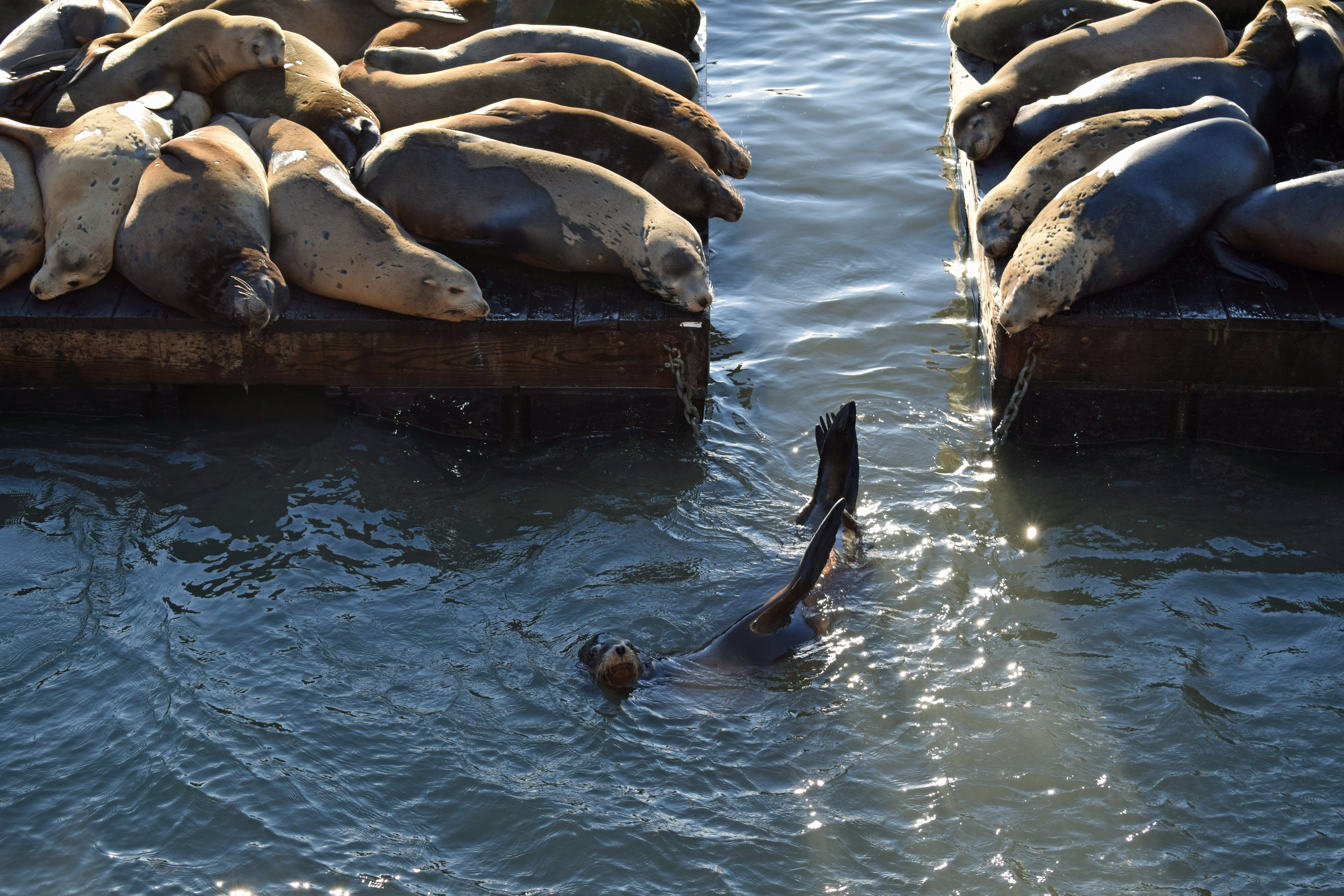
Our next stop was Pier 39, a tourist hot spot for shopping, dining, and ogling a harem of sea lions who have taken up permanent residence on the slips at the end of the pier. The sea lions romped, frolicked, and brayed into the wind to the delight of the tourists. To an onlooker, the crowd on the pier comically mirrored the sea lions, each person jostling his or her neighbors to get the best view.

With silly smiles on our faces from watching the sea lions, we turned our steps toward Coit Tower, a hilltop overlook with stunning views of the city and the bay. Along the way we noticed several individuals carrying skis on their shoulders, a typical sight for those of us who live in a ski town, but noticeably out of place in San Francisco. The mystery resolved itself a few blocks later as we passed the entrance to a remarkably large ski swap held on one of the piers.

To our great amusement, we followed a snowboard and its proud owner to the base of a long flight of stairs leading to the top of Coit Tower. We began our ascent up hundreds of stairs, passing secret gardens hidden by hanging vines, tiny apartments with no other means of access, and friendly tourists who kept telling us we were almost there.

The views were without doubt worth the climb. The red hues of the Golden Gate Bridge faded into the sunset mist, and the surrounding buildings slowly darkened into impressive silhouettes.

Golden Gate Bridge at Sunset San Francisco California

By this point, we were thoroughly tuckered out, but we had one more stop to make before heading back to the airport: Chinatown!

If you’ve never been to a Chinatown, you should put it on your must-see list. There are Chinatowns all over the United States, but the San Francisco Chinatown is the original.

Chinatown forms its own private world within the bustle of San Francisco. Signs are written in Chinese, traditional produce markets line the streets, and paper lanterns are strung between buildings overhead. Tacky tourist shops display postcards and knick-knacks, while priceless Buddha statues and hand-painted dishware are sold in the shop next door. Vast displays of pastries beckon your taste buds and inexpensive prices prompt you to purchase several, not sure what’s inside the sweet dough, but reveling in the unknown.

Pastries in Chinatown San Francisco CA

Just as we grew accustomed to walking through this delightful pocket of Asian culture, Chinatown abruptly disappeared, and we were transported back to metropolitan San Francisco.

Content with our swift city tour, we trekked back to the airport, eagerly anticipating the next leg of our trip to Cambodia. A couple of hours later we boarded our sixteen-hour flight to Singapore and promptly fell asleep, exhausted from our layover excursion. We were so tired that we slept for eight hours straight – impressive for an airplane, we know!

Our takeaway from this experience: If you have a long enough layover, take advantage of it! The benefits of a “bonus” adventure far outweigh the inconvenience of a long layover!

-Annie, Your Friend at Orange Backpack Travel
India: Diving Into the Heart of a Culture

Traveling can often be a mixture of exhilarating and overwhelming sensations. The farther from home you go, the more out of your element you will be. But that is the beauty of traveling! We long to visit exotic places that are nothing like our own home. We want to see and experience something radically different, something awe-inspiring, that will make us say “Wow!”.

This need for diversity and a different perspective on beauty drove us to visit the sub-continent of India. We desired a travel experience that would both challenge us and open our eyes to the vibrancy of a culture that lay in such contrast to our own. We were not disappointed!

We flew into Delhi for a whirlwind day tour of the city, complete with snake charmers, gorgeous marble mosques, richly decorated mausoleums to distant emperors, and a terrifying bicycle rickshaw ride through the narrow, bustling streets of Old Delhi.

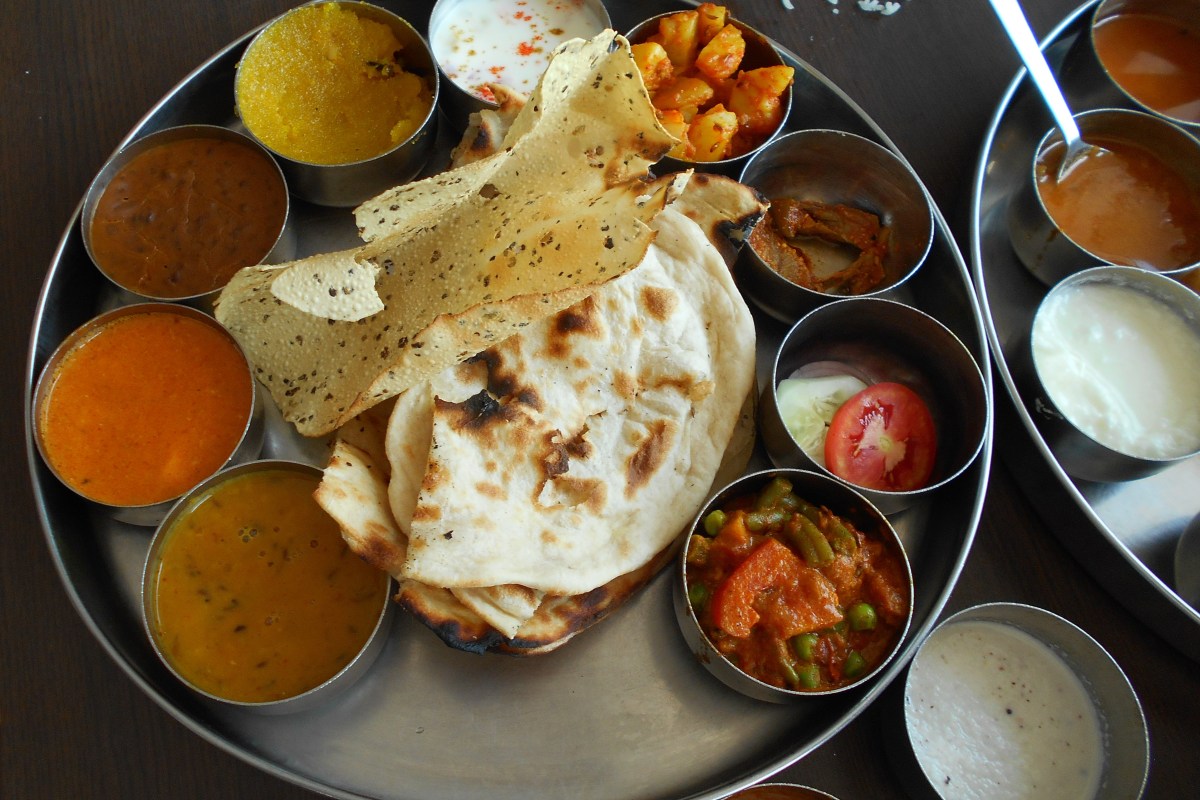
We ate our first authentic thali, a meal featuring a large tray decorated with either rice or naan and an assortment of spicy curries, creamy dill sauces, and sweet concoctions all on one plate! The thali was the first of many examples of India’s extremes: insane spice to unbearable sweetness, tremendous wealth to rampant poverty, and wondrous natural beauty to extreme pollution, to name a few.

The drive between Delhi and Jaipur, the capital city of Rajasthan, a desert state in the north-western part of the country, illustrated the extent of the diversity within India’s borders. The millions of motorcycles and rickshaws that zoomed over Delhi’s streets were replaced by camels pulling carts laden with farming supplies over dirt roads that connected rural communities. Industrious city jobs faded into the slower pace of families making a living by subsistence farming. Western clothing styles of the city became less common. Locals instead chose to adorn themselves with more traditional kurtas and vibrantly colored saris.

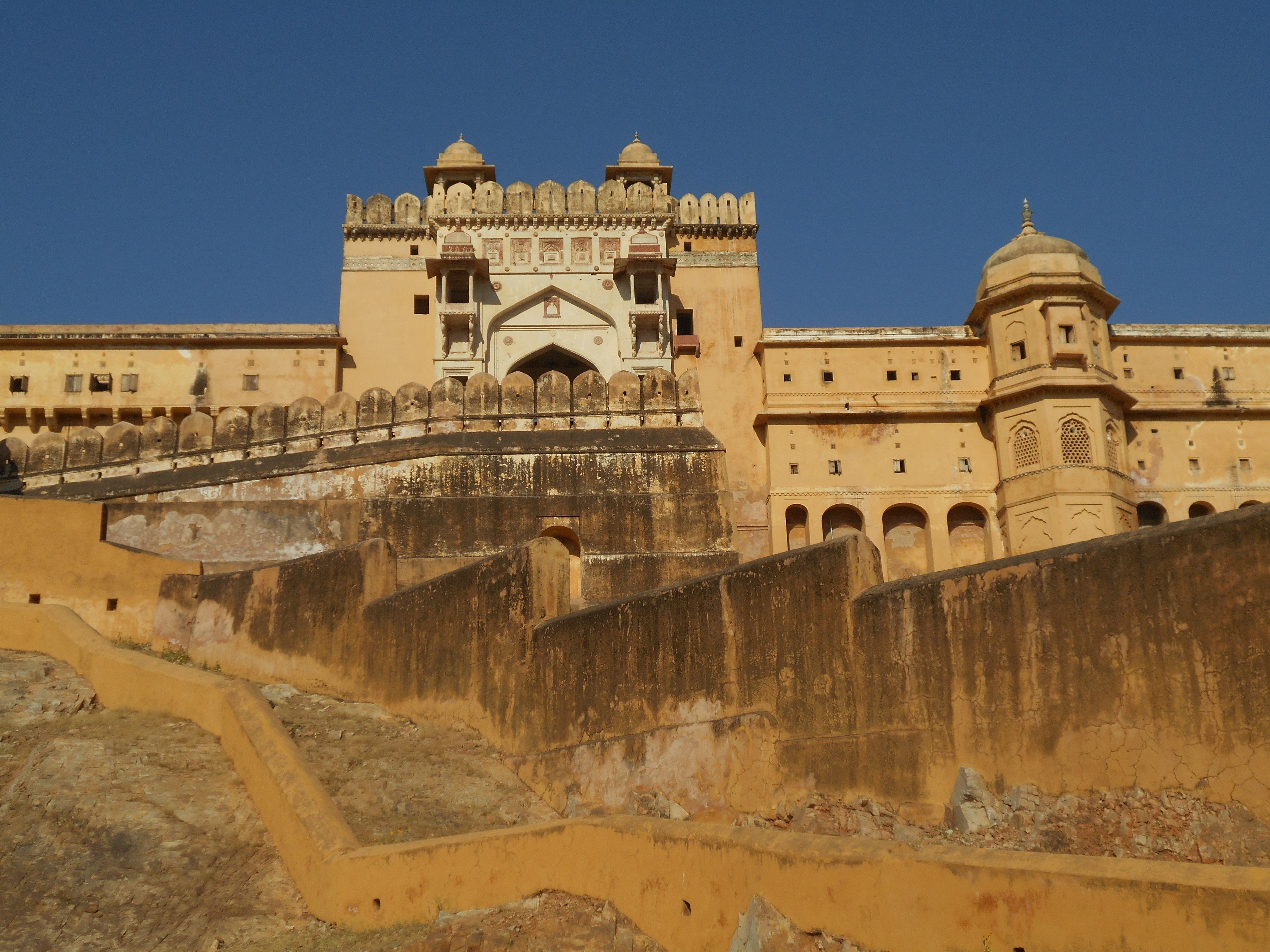
Jaipur is a tourist hot-spot in northern India, and rightly so. On our first day in Jaipur, we rode an elephant to the top of the formidable Amber Fort, visited a handicrafts market that supported local artists, and learned to tell time and determine horoscopes using phenomenally accurate sundials and astronomical instruments constructed in the 18th century.

Amber Fort - Jaipur, India

The overwhelming bustle of New Delhi and the desert majesty of Jaipur made our first 48 hours in India fly by in an intense cultural blur.

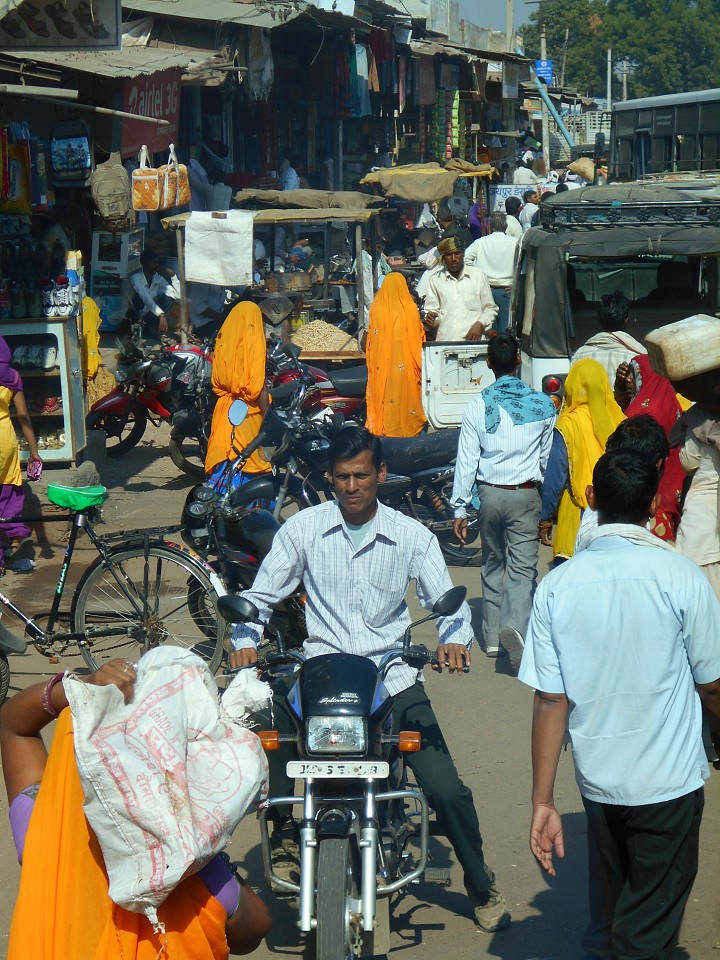
However, the reality of daily life in a large, overcrowded Indian city didn’t strike home for us until we ventured into an open-air marketplace late in the evening in Jaipur’s old city. The market was formed by two rows of shops on either side of a narrow alley, barely wide enough to fit one car or three motorcycles side-by-side.

The store owners competed with street vendors who either set up out on the sidewalk or meandered through the crowd carrying their wares in their arms. The atmosphere was vibrant, lively, fragrant, and loud. People were everywhere!

To say we were overwhelmed is an understatement! The sensory overload was almost paralyzing as we stumbled along the street.

Street Market - India

Fortunately, a kindly shopkeeper saw our bewilderment, took pity on us, and asked if we would like to step into his shop. We accepted, grateful to have direction, and found ourselves staring at a white wall 15ft long by 6ft tall bedecked with every color and style of arm bangles imaginable. Reds, golds, pinks, purples, blues, silvers all jumped out at us, competing for our gaze.

We took a few deep breaths, relieved by the soothing atmosphere inside the shop. We gladly bartered for a set of beautiful white bangles, thanked the shop owner profusely, and stepped back into the street, no longer affronted by the chaos but ready to embrace the flurry of activity.

We entered nearly every shop on the block, learning about the proprietors’ trade, bartering with a shrewd business sense, and gently fending off salesmen eager for our rupees.

We had begun the evening wary of our surroundings, but ended it by forging real connections and laughing with the locals.

The takeaway for us is that sometimes you have to plunge right in to an uncomfortable situation to truly see and experience the beauty and vibrancy of a foreign culture.

-Annie, Your Friend at Orange Backpack Travel
South Africa: A Hike Worthy of Legend

South Africa is a unique nation in terms of its diversity with myriad peoples, cultures, weather, ecosystems, beliefs, and activities. The same can be said for Cape Town, a cosmopolitan gem, one of South Africa’s two capital cities.

Cape Town boasts an amazing array of activities geared toward tourist and local alike. To name a few: Boulders’ Beach to view Jackass Penguins (Yep, that’s what they’re called. Also, they bite!), a scenic drive to Hout Bay and Cape Point at the far reaches of the peninsula; watching seals feast at sunset while savoring your own tasty treat at the Victoria and Alfred Waterfront; a trip to Robben Island (buy your tickets well in advance- tours sell out quickly!); or sipping your way through a tour of the vineyards of the Cape Winelands.

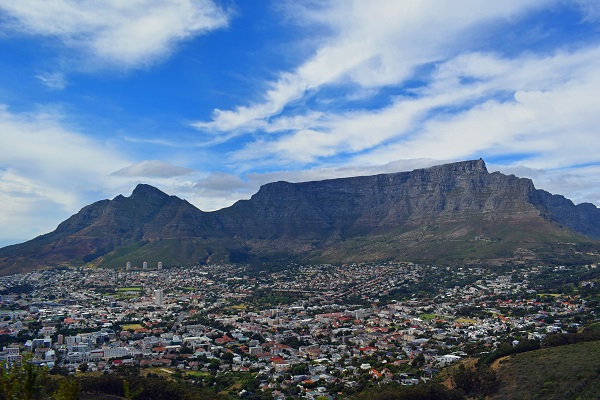
Our most memorable experience was hiking to the top of Table Mountain, the mammoth mass of rock towering over the city, sporting a mysteriously flat top that is often shrouded with reaching tendrils of white cloud crawling down its steep slopes.

This bizarre combination of theatrical weather phenomena makes the mountain come alive, its temperament ever-changing and unpredictable.

We originally planned to take the cable car to the top of Table Mountain. It was a clear and sunny day. Those ever-present clouds veiling the top had even decided to slither back to their unknown origin. However, the winds at the top of the flat expanse proved too strong, causing the cable car to close and us to stand at the base, settling for a less grand photo of the bay below and cursing our ill luck.

Such is the fate of a tourist with a limited amount of time at hand.

But the call of the mountain was too great. We resolved that afternoon, along with three friends of ours, to attempt the to hike to the top.

We hired a cab to take us from our hotel to the base of the cable car. The cab driver informed us that it was still closed due to high winds and agreed to take us to the trailhead instead.

Before continuing the story, we should mention that we live in the high mountains of Colorado, hike often, and consider ourselves to be in good physical shape. We thought that an hour and a half hike to the top would be no problem for us.

Our taxi driver took us to the less strenuous of the two trails, vehemently assuring us that this was the path most people took. In retrospect, his insistence on taking us to the easy trail should have been Clue #1 that this hike was maybe more than we bargained for.

Clue #2 came from the local gentlemen at the base of the trail inquiring whether we carried enough water with us. They said two liters each was the minimum necessary. We were confident that we had brought enough and suspected that the gentlemen were simply trying to sell bottles of water to unwitting tourists.

The bright sunny morning turned overcast in the afternoon, giving us relief from the African sun. It didn’t take us long to admit that, had it been a hot, sunny day, we absolutely would have needed the full two liters of water each!

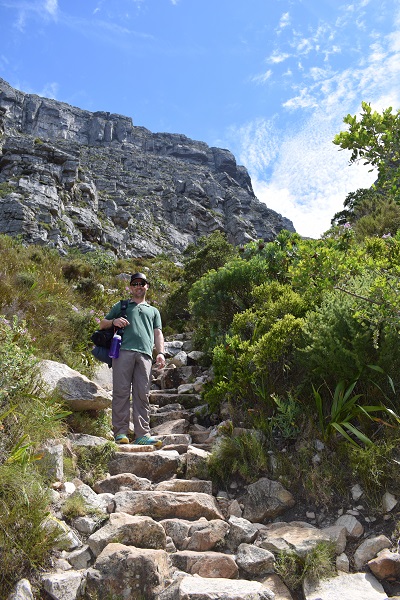
The trail to the top of Table Mountain, turned out to be less of a “path” and more of an endless flight of stone stairs (think Lord of the Rings). Some parts were steep enough they required scrambling with both hands. The best part of the trail was that the most treacherous switchbacks were flanked with barbed wire fence, so if you slipped, you had the added bonus of your skin being ruthlessly punctured by the very fence designed to stop your fall down a jagged rock face.

Man Hiking Table Mountain Cape Town South Africa

We were clearly a long way from Colorado! Hiking in Africa was on a whole different level.

We took our time and made it to the top two and a half hours later, our spirits high with the feeling of accomplishment. The clouds at the top were minimal, and the view of the city was spectacular! The grueling hike was well worth it.

View of Cape Town from Top of Table Mountain

The best part of this whole adventure was that the cable car had opened while we were slogging our way up the mountain. We were all thrilled beyond belief that we didn’t have to hike down as well!

Our takeaways from this excursion: Take heed of the locals. They know their stuff. Both the cab driver and the water-sellers knew their business. We did well to take their advice.

We can’t even begin to imagine what the more difficult trail was like! This one was legendary enough!

-Annie, Your Friend at Orange Backpack Travel
Zimbabwe: A Lesson in the Rules

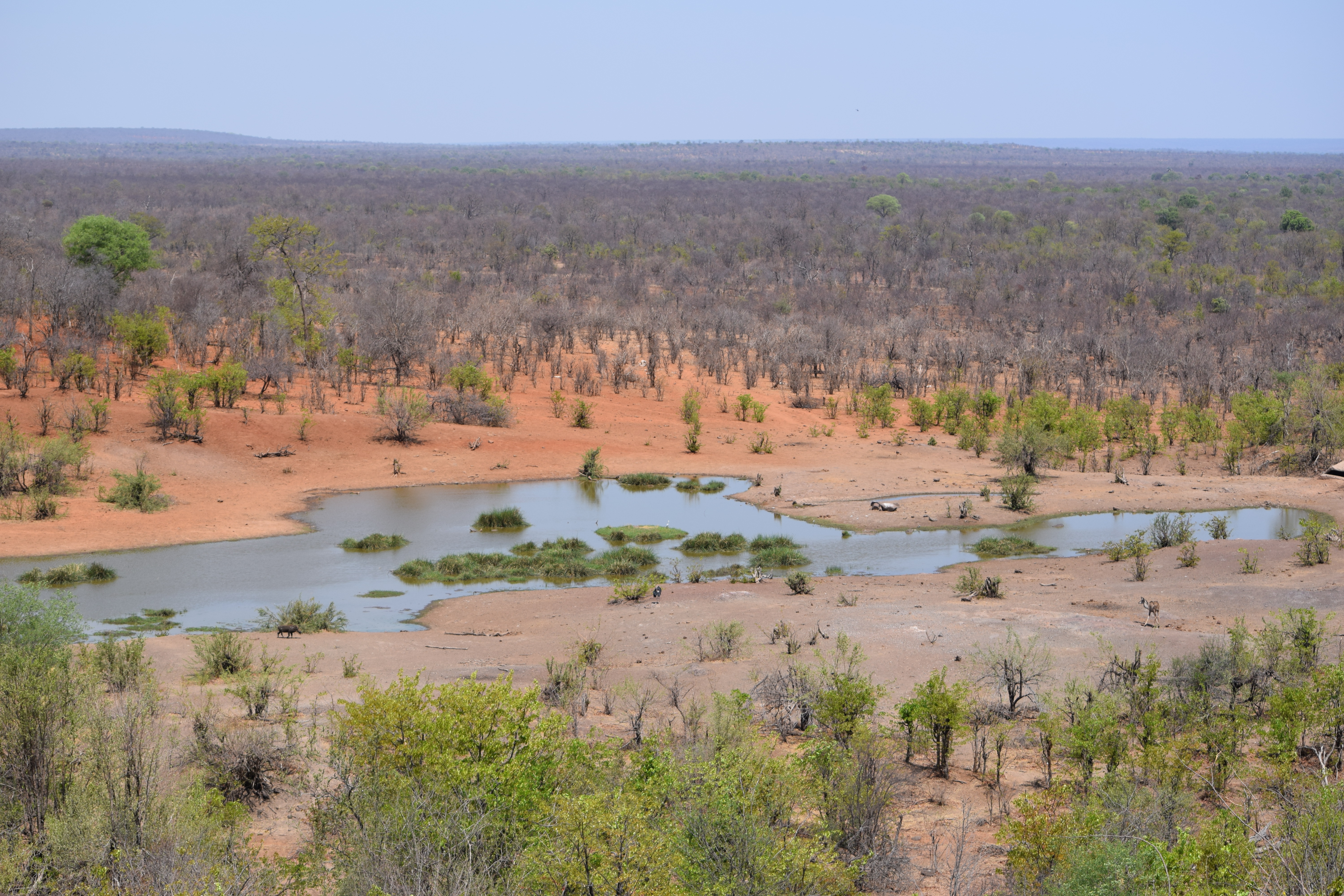
Recently, we journeyed to Southern Africa on an adventure to experience the cultures and natural beauty of the African continent. One of our stops was an incredible safari lodge in Zambezi National Park adjacent to Victoria Falls, Zimbabwe. The lodge stood alone, several miles out of town overlooking a flourishing watering hole.

We spent our several days there with our eyes glued to the water, fascinated by the warthogs, kudu, baboons, and elephants who came to quench their thirst.

View of Water Hole from Victoria Falls Safari Lodge in Zambezi National Park Zimbabwe
Zambezi National Park, Zimbabwe

Zimbabwe proved to be quite a hot and dry country with temperatures easily soaring past 100°F. The heat drove the hotel guests to mimic the animals and wallow in the hotel pool. The pool itself was delightful, a small two-tiered set of pools with a waterfall in between. It was designed to look as natural as possible, stone trimmings and plants flanking the slightly murky water.
On our first evening at the lodge we decided a late night swim under the stars was just the ticket. Unfortunately, we discovered that the pool closed at 4pm each day, preventing our midnight dip. The rebel in me wanted to say, “What are they going to do if we do go in the pool after hours? Kick us out? Nah!”

That rebellious side was forced to simmer down, however, in the face of fatigue from a day of touring the area surrounding Victoria Falls. Instead, we agreed to be rule-abiding hotel guests and visit the pool the following day during its open hours.

Annie and Aaron at Victoria Falls in Zimbabwe
Victoria Falls, Zimbabwe

The wait was worth it! The cool waters served as a healing balm on my scorched skin. Watching the wild animals frequent the watering hole as we sipped cold beer and lounged pool-side was the highlight of a fabulous safari lodge experience! Thanks Zimbabwe!

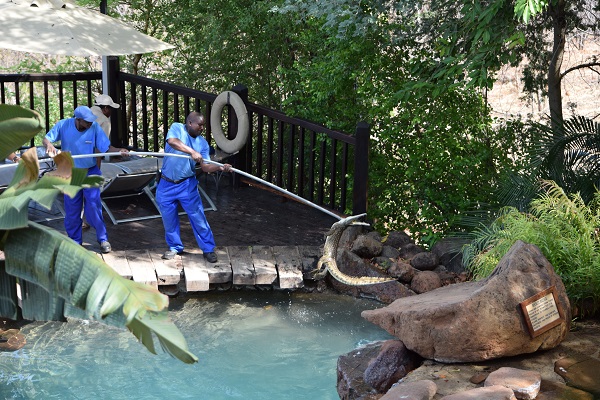
On our last morning, we were enjoying a scrumptious breakfast on the open veranda, when we noticed several concerned hotel staff members peering quizzically into the depths of the pool. The staff piqued our interest even more when they produced a long pole with a substantial wire loop protruding from the end.

We started discussing the possibility of a drowned monkey or the like when Aaron saw a relatively small (5 foot!) crocodile slither across the bottom of the pool. This revelation was made even more shocking by the dawning realization that we had been swimming in that same water not twelve hours before. To make matters even more disturbing, I am absolutely positive that we hadn’t checked the pool for unexpected visitors before we dove in. It turned out that the crocodile crawled into the pool sometime after it had closed the day before. Fortunately, we had not broken the rules and gone for that evening swim. We might have unwittingly disturbed a toothy crocodile!

We were highly entertained for the next hour watching the crocodile extraction. It was quite a process.The crocodile escaped the first time staff managed to drag it to the pool deck and dove back into the waters of temporary freedom after the metal loop broke! The staff finally succeed in removing the reptile from the pool on the second attempt and returned it to the great Zambezi River where it belonged.

This experience taught us two very important points to keep in mind during your travels. One, rules are often set in place for good reasons that may not be apparent to mere tourists. Two, always check the bottom of the pool before jumping in!

-Annie, Your Friend at Orange Backpack Travel