Costa Rica: Road Trip Across Country

Car Rental in Costa Rica:

In April 2019, we planned to take a two week trip to Costa Rica. We wanted to see many different areas of the country, so we started exploring the idea of renting a car to get around. We solicited opinions from friends who had been before and scouted the Internet for advice. In the end, we decided to go for it and rent a car for the majority of our trip.

Having done so, here’s our advice about car rentals in Costa Rica:

  1. Rent a 4-Wheel Drive Vehicle: It will not be the cheapest option available, but many Costa Rican roads are not passable without the extra maneuverability and horsepower of a 4-Wheel drive car. We ended up with a Toyota Fortuna and loved it!
  2. Get Car Insurance: All car rental companies will require you to get basic insurance through them. It’s a National law. We recommend getting extra insurance that will cover a bit more just in case!
  3. Choose a Reputable Rental Company: We decided to go with Alamo since we were familiar with them from trips in the United States. Our experience with them in Costa Rica was positive.
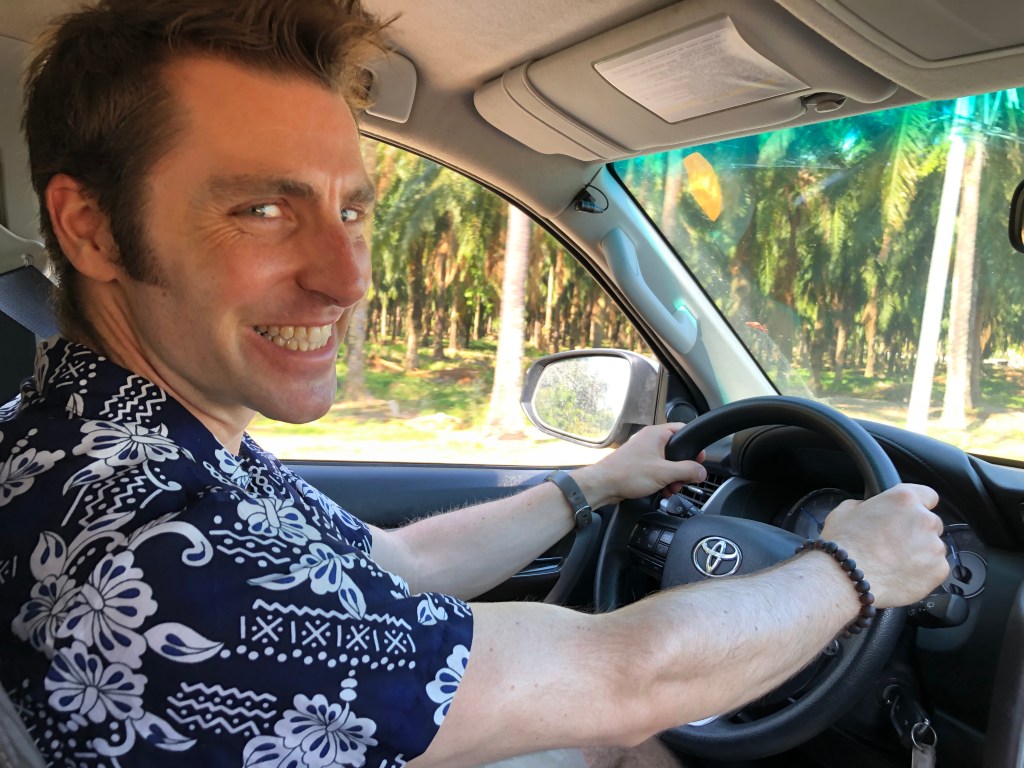
Man driving Toyota Fortuna in Costa Rica
The road trip begins…

Driving in Costa Rica:

Take Google Maps with a Grain of Salt

We heavily relied on Google Maps for navigation. Typically, one of us would drive while the other navigated. We brought an old fashioned map just in case but it turned out to be relatively useless since we were hard pressed to find any street signs, especially in the smaller Costa Rica towns.

Google Maps was flawless in terms of locating available roads. However, more than once it took us on “roads” that were little more than goat paths. These were the moments we were most grateful for our four wheel drive car.

So, the lesson here is to take Google Maps with a grain of salt. You may end up getting more of an adventure than you bargained for!

The best quote from my navigation: “When the road ends, turn right!”
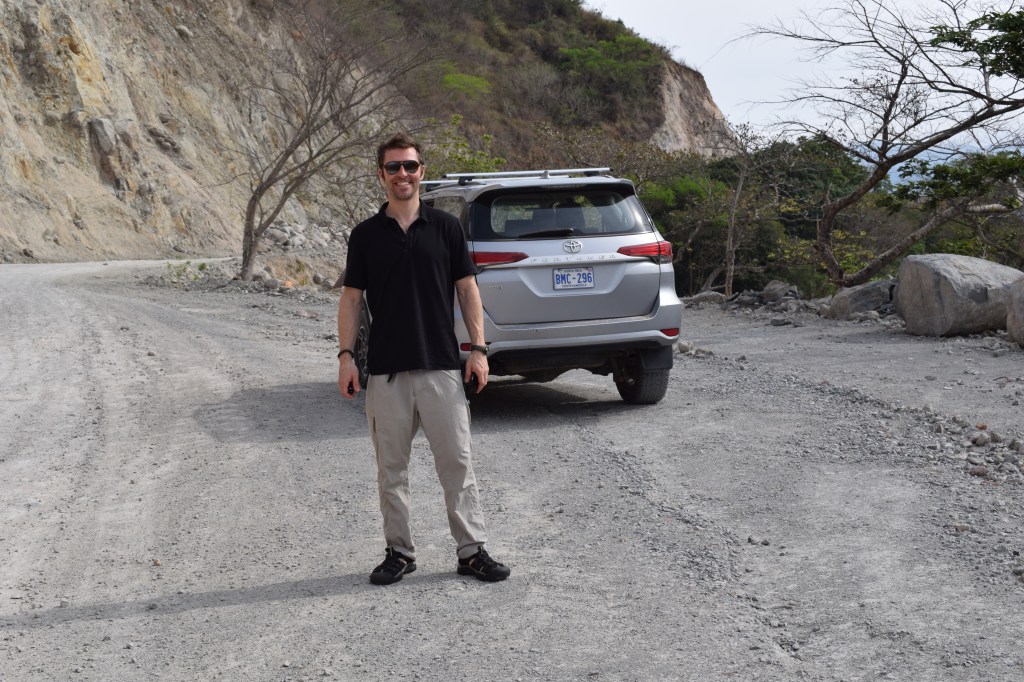
Man standing in front of Toyota Fortuna in Costa Rica
Aaron with our Toyota Fortuna

Road Conditions in Costa Rica:

Road conditions in Costa Rica vary widely all over the country. During our two week road trip we encountered everything from four lane asphalt highways to single track “roads” where the mud was so thick it threatened to immobilize the tires. These diverse conditions are precisely why we recommend renting a car with four wheel drive.

We also asked locals at our hotels for advice on which roads to take. This is crucial in the rainy season since many roads get flooded and become impassable.
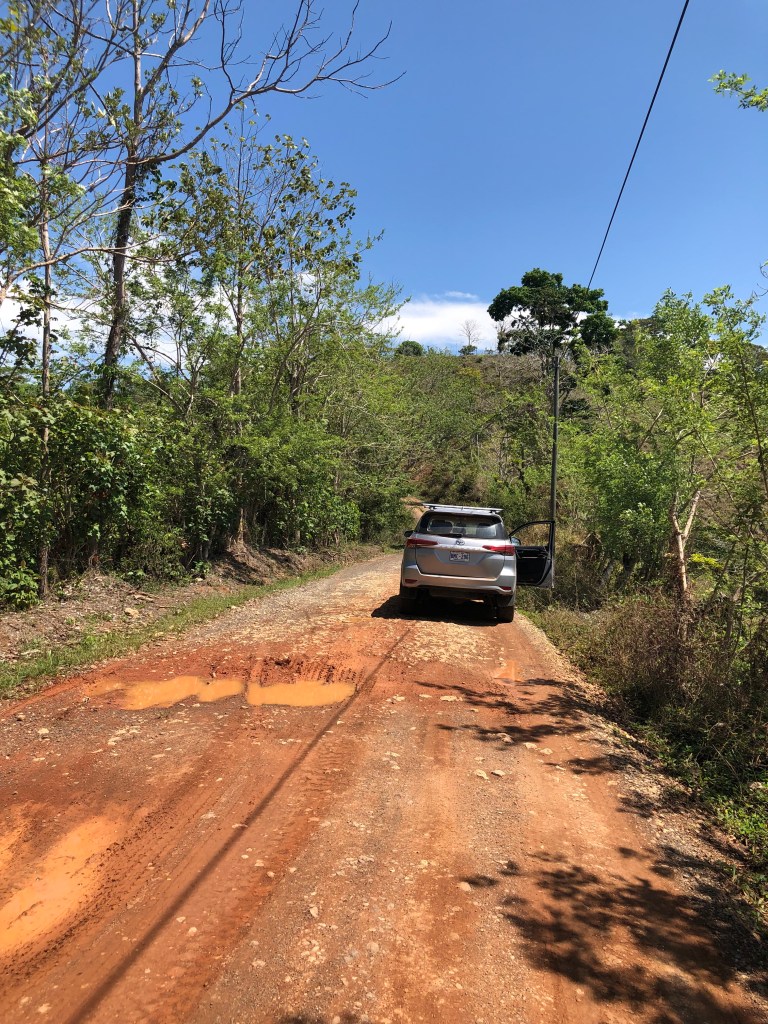
Toyota Fortuna on muddy road in Manuel Antonio, Costa Rica
Road Near Manuel Antonio
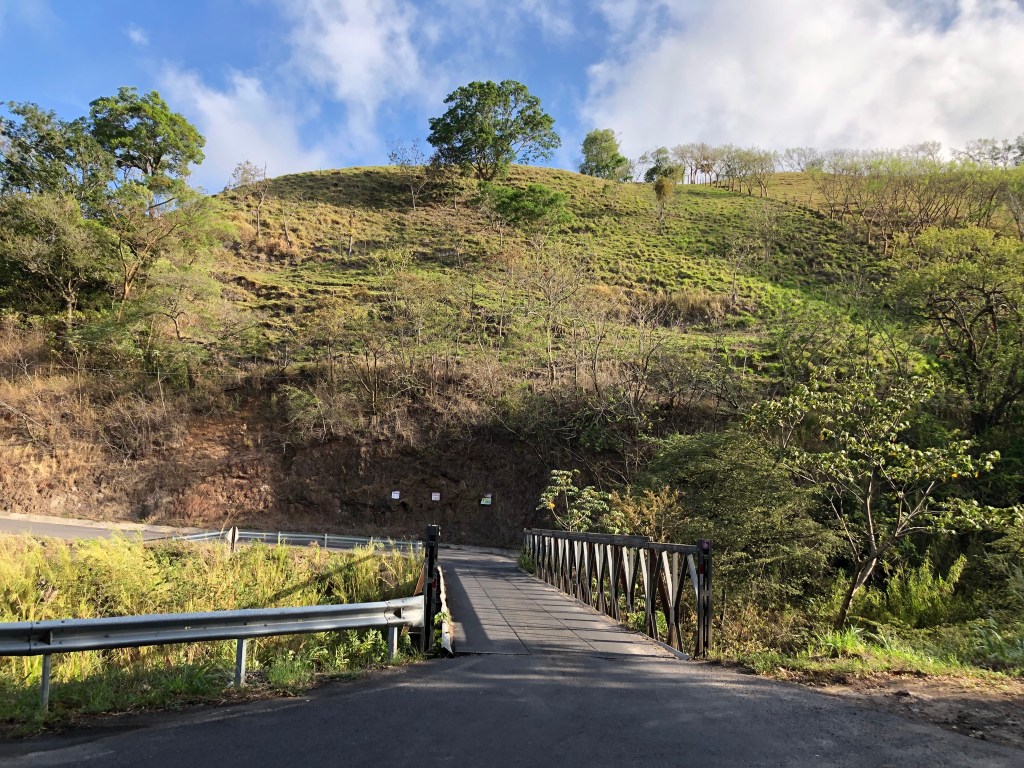
One Lane Bridge Costa Rica
Beware the One Lane Bridges

Driving in Monteverde

The most challenging driving we encountered was in the area around Monteverde in the center of the country. Most of the roads were unpaved and required slow speeds to avoid obstacles like rocks and ruts. Even the few paved roads in the area were in rough shape.
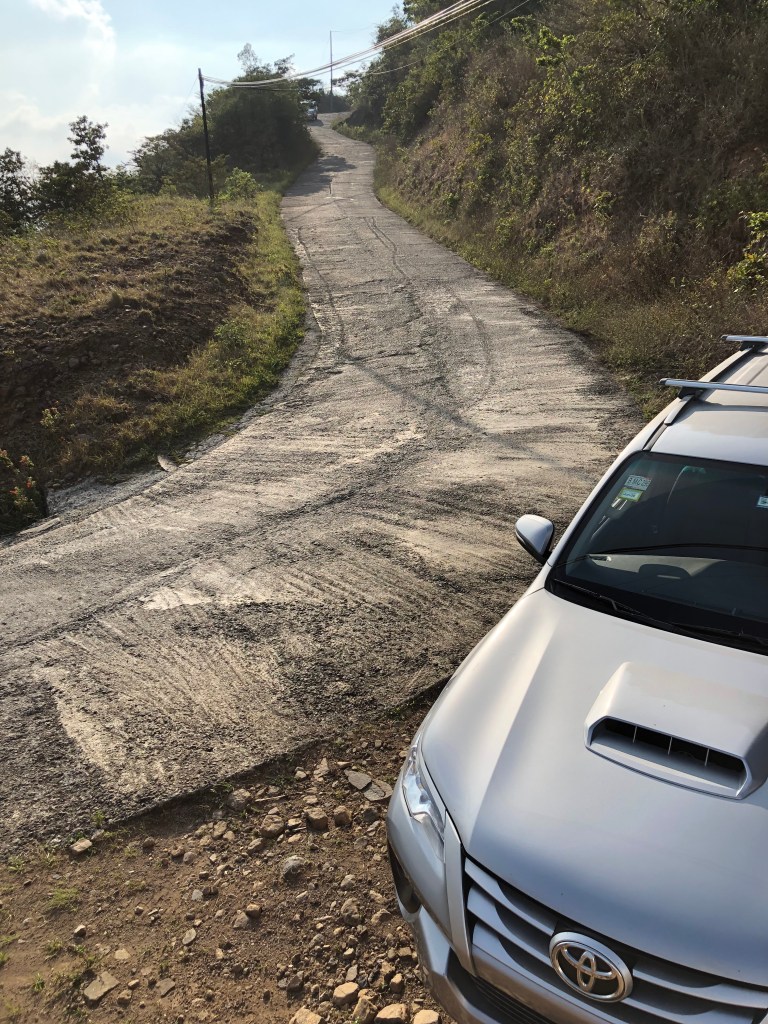
Silver Toyota Fortuna on steep road near Monteverde
Steep Road Near Monteverde

Traffic from San Jose to the Beaches on the West Coast

We had a couple of long driving days on our road trip including the drive from the Arenal Volcano area to Manual Antonio.

This drive wasn’t technically difficult, but the traffic was horrendous once we reached Highway 27, the paved, four lane road going west from San Jose to the coast.

We were driving to Manuel Antonio just before the Easter holiday weekend which likely explains the crazy traffic we encountered. We spent hours baking in the hot sun waiting to exit the highway and make our way south.

We learned that if you are road tripping through Costa Rica around a holiday, you’ll likely be joined by many locals who are also looking to celebrate away from home.
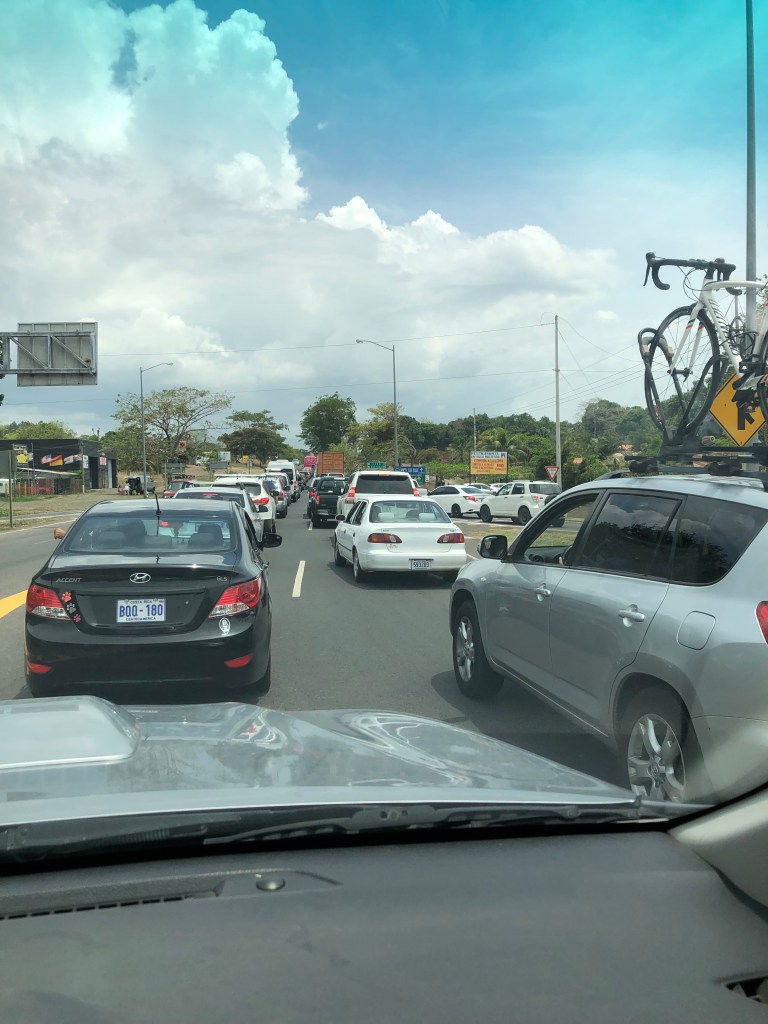
Traffic Jam Highway 27 Costa Rica
Traffic Jam on Highway 27

Freedom and Flexibility to Explore:

For us, the best part about renting a car was the freedom and flexibility it afforded us. We were able to explore the country at our own pace and see exactly what we wanted to see. Want to take a detour to a small town off the beaten path? Done. Want to spend a couple extra hours at a favorite spot? Easy.

When we were still considering whether renting a vehicle was a good idea, we came across many transportation services for hire to bring you from one place to the next. We even met folks along the way who used such companies. In the end, we were grateful we could determine our own time schedule and itinerary.

If you are considering renting a car in Costa Rica, please know that it is totally doable, and we highly recommend it!

-Annie, Your Friend at Orange Backpack Travel
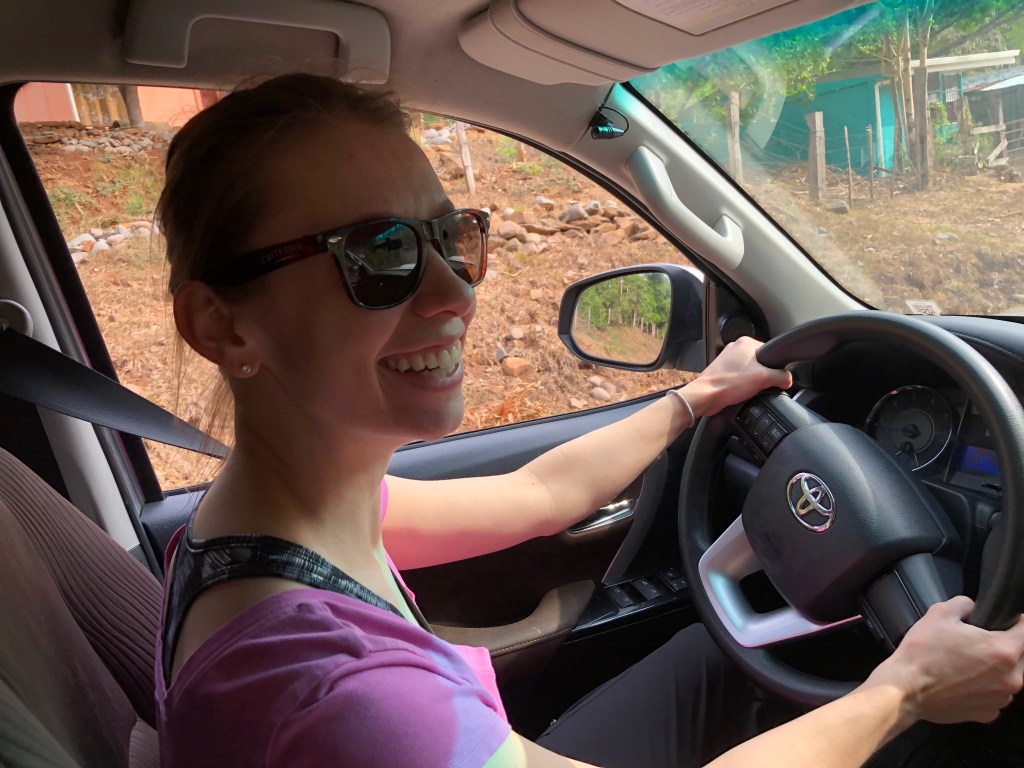
Woman  Driving  Toyota  Fortuna  Costa  Rica

Colorado: Adventure in Your Own Backyard

Every season provides the opportunity for adventure. Summer brings the chance to travel to exotic lands. Winter is the season of holiday trips to visit family. Spring beckons us to escape winter’s grasp with getaways to lush, tropical lands.

But Fall, in my opinion, caters to a different kind of adventure. The kind that doesn’t require vacation days or piles of cash saved for months and earmarked for travel. For me, fall is best spent traveling in my own backyard, in the mountains of Colorado.

Most travelers set off to view beauty or experience the diversity of another place, somewhere other than their hometowns. The arrival of the fall season brings both of those pleasures right to your front door.

As you look out your window, you see the world wholly transform itself. The solid green of the trees blooms before your eyes into a dazzling array of yellows, oranges, reds, purples, and browns. Every day the view is different. One day a golden patch of aspen trees may be brighter than the day before, or it may disappear altogether the day after.

The majesty of the newness surrounding you mirrors that in your heart when you look upon a new place for the first time.

Yellow Fall Colors at Maroon Bells Colorado
Maroon Bells, CO – Dusk

As fall progresses, the trees lose their leaves, creating piles of intrigue that need to be explored. The citrus hues of the cottonwoods mix with the reddish-purples of fallen maples, swarming together and bidding your feet to explore. You yield to the temptation and kick into the pile. The swoosh of flying leaves brings a smile to your face, the same smile that adorned your lips the moment you saw the Taj Mahal or Machu Picchu.

This feeling intoxicates you, fuels your desire for more. So, you venture forth to find an even bigger pile of leaves. You jump in that one too, reveling in the crunch beneath your feet and the lift in your spirit. This simple act of childhood provokes amazement at how awesome the world is, from the grandest view of the Great Wall of China to the discarded leaves that make way for a new season.

This year one of our backyard adventures took place at Snowmass Mountain, a ski resort not far from where we live. This summer marked the opening of the Lost Forest, a brand-new adventure park on top of the mountain. We boarded the gondola and took in the views of the mountain peaks surrounding us. No matter how many times I ride a gondola or chairlift the views never cease to amaze me. It’s something about the change in perspective when you can suddenly see the peaks of every mountain for miles around.

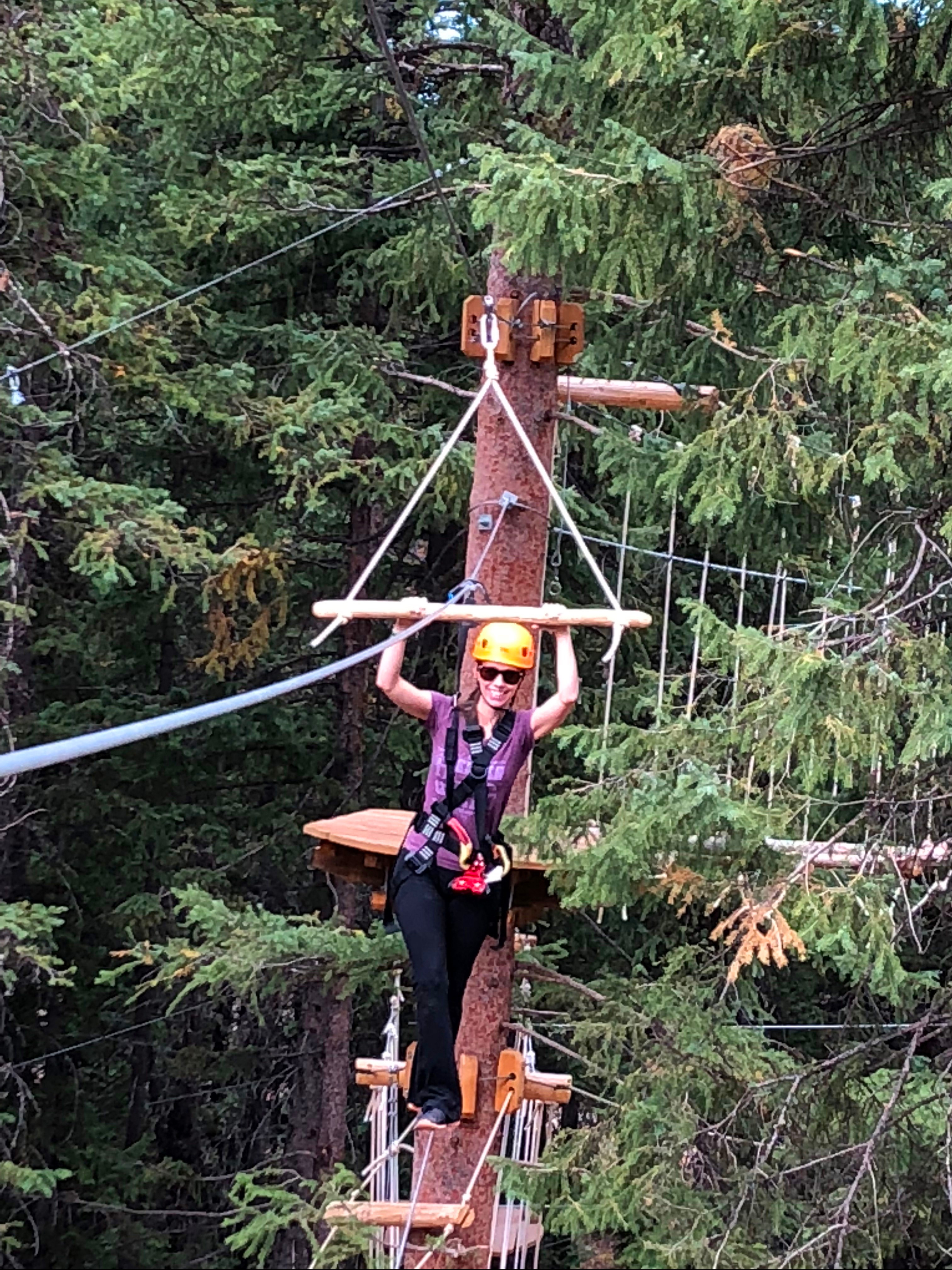
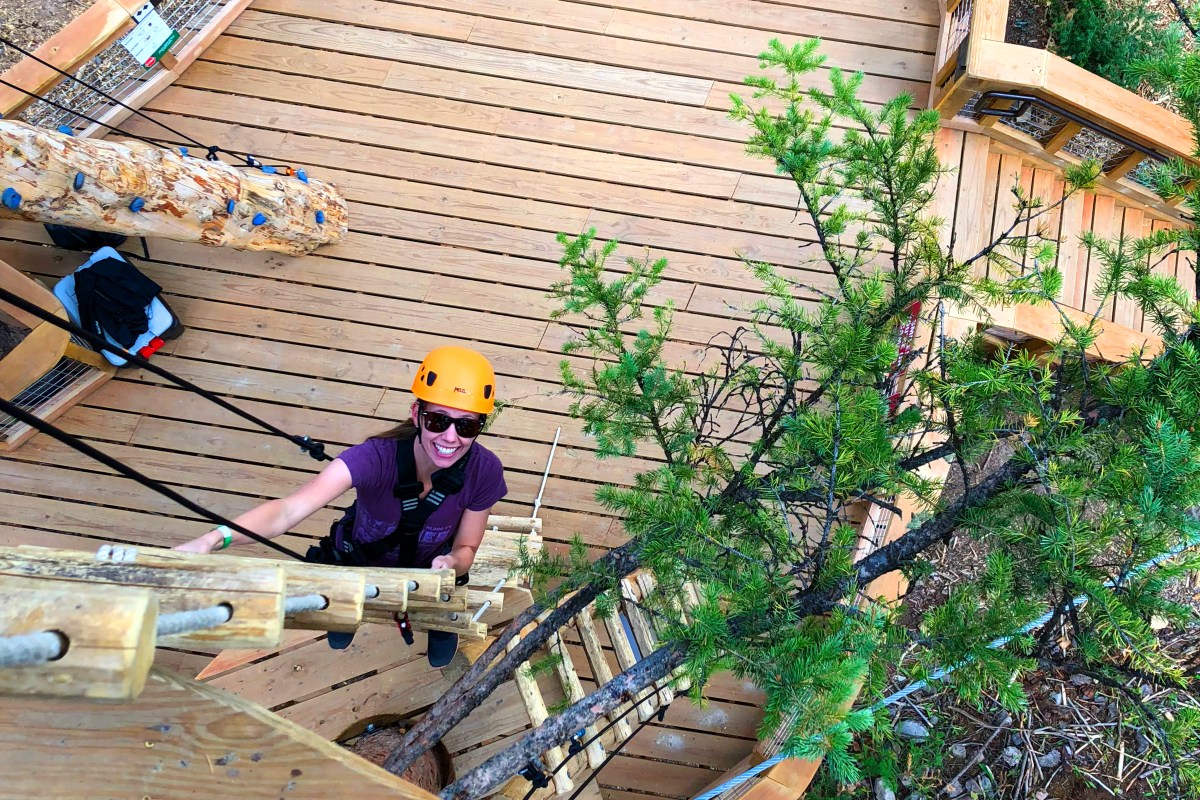
At the top, we got harnessed up and took an orientation class for the Treeline Adventure Course, a challenge course with ziplines and other suspended obstacles hanging high up in the trees. The area presented five routes of increasing difficulty, each with different elements that you had to navigate to get from tree to tree.

Couple in Climbing Harnesses Zip Lining in Colorado

Since we fancy ourselves to be quite athletic, we started at the middle level course, completed it with ease, and skipped to the hardest challenge. Level 5 was the highest course, around thirty feet in the air, and it was no easy task maneuvering through the course. At times, I found myself clinging onto the ropes for dear life hoping the next move wouldn’t bring disaster. The exhilaration of the Treeline Challenge Course had pasted unfaltering smiles on both our faces.

Man on Zip Line Course in Snowmass Colorado
Woman on Zip Line Course in Aspen Colorado

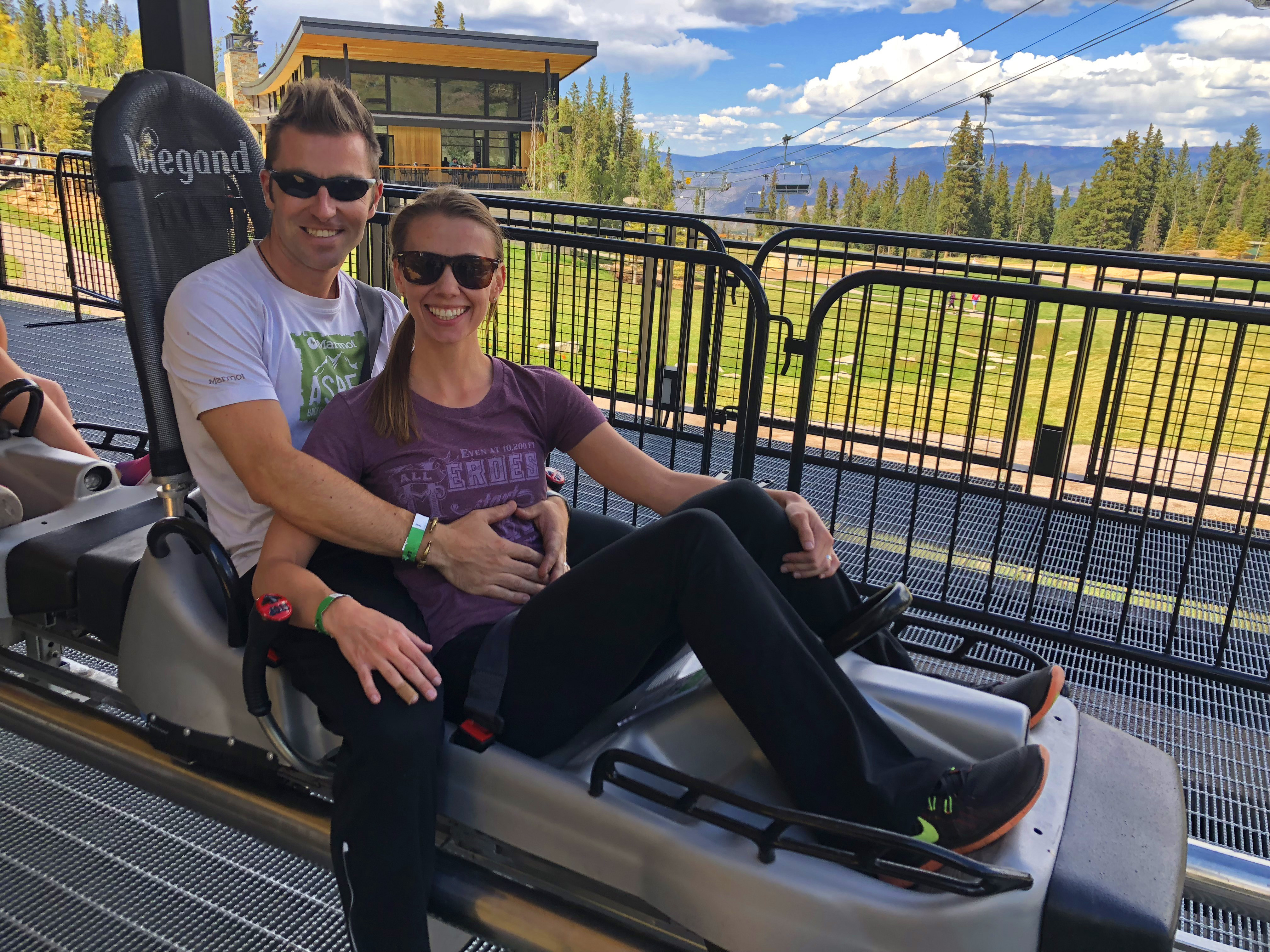
The next stop in our backyard adventure was the Breathtaker Alpine Coaster, a sleek alpine slide that barreled down through the trees between ski runs at top speeds. We decided to ride together, chatting patiently as the coaster slowly pulled us to the top of the course.

Couple on Alpine Roller Coaster in Snowmass Colorado

As the sled crested the top and we started to descend, the butterflies in my stomach fluttered with excitement. The sled accelerated much faster than I expected and before I knew it the coaster had taken on a life of its own. The wind whipped across our skin as the sled jerked us back and forth. It felt as though we could be tossed from the sled at any moment. Aaron laughed and I screamed the entire way down. By the time we reached the bottom, we knew that we would have to ride it again.

We rode the Alpine Coaster five times, feeling more and more like little kids each time.

I kept thinking to myself: This is like something we would do on a vacation! I came to realize that this is exactly the point. It’s important to remember to enjoy the opportunities to explore in your own backyard. You don’t always have to travel great distances to generate the excitement of vacation-like experiences.

Fall is often thought of as the season where “everything dies” but to me it’s the time of the year when the “newness” that travelers are addicted to comes to our very own doorstep.

-Annie, Your Friend at Orange Backpack Travel
Ecuador: You did WHAT in the Amazon?

“You did what in the Amazon?” my mother asked, her eyebrows sky-high as we regaled my parents with tales of our honeymoon.

In a spur-of-the-moment decision, we had chosen Ecuador as our honeymoon destination. The country hadn’t even crossed our minds until I stumbled upon an irresistible trip through Travelzoo, a travel deal watch list I subscribe to. The trip was an eight-day guided tour of the central part of Ecuador via Gate 1 Travel. I reviewed the trip itinerary, proposed the idea to my fiancé, and we booked the trip the next day.

To start the trip, we flew from Denver to Miami, where we spent the first night of our honeymoon sleeping on the airport floor. It was not the ideal way to start a vacation, let alone a honeymoon, but I must confess we planned it that way. Our flight arrived late in the evening in Miami, and our next flight left at 6:00am. We agreed to save a bit of money and camp out in the terminal. We did not anticipate, however, that we would arrive too late in the evening to get through security to sleep at our gate. Our dreams of airport chairs without armrests vanished, and we made do with the cold, hard linoleum floor just outside the ticketing counter.

The next morning, we boarded the plane as two very tired and somewhat cranky newlyweds. After a brief layover in Bogota, Columbia, we finally arrived in Quito, Ecuador’s capital city.

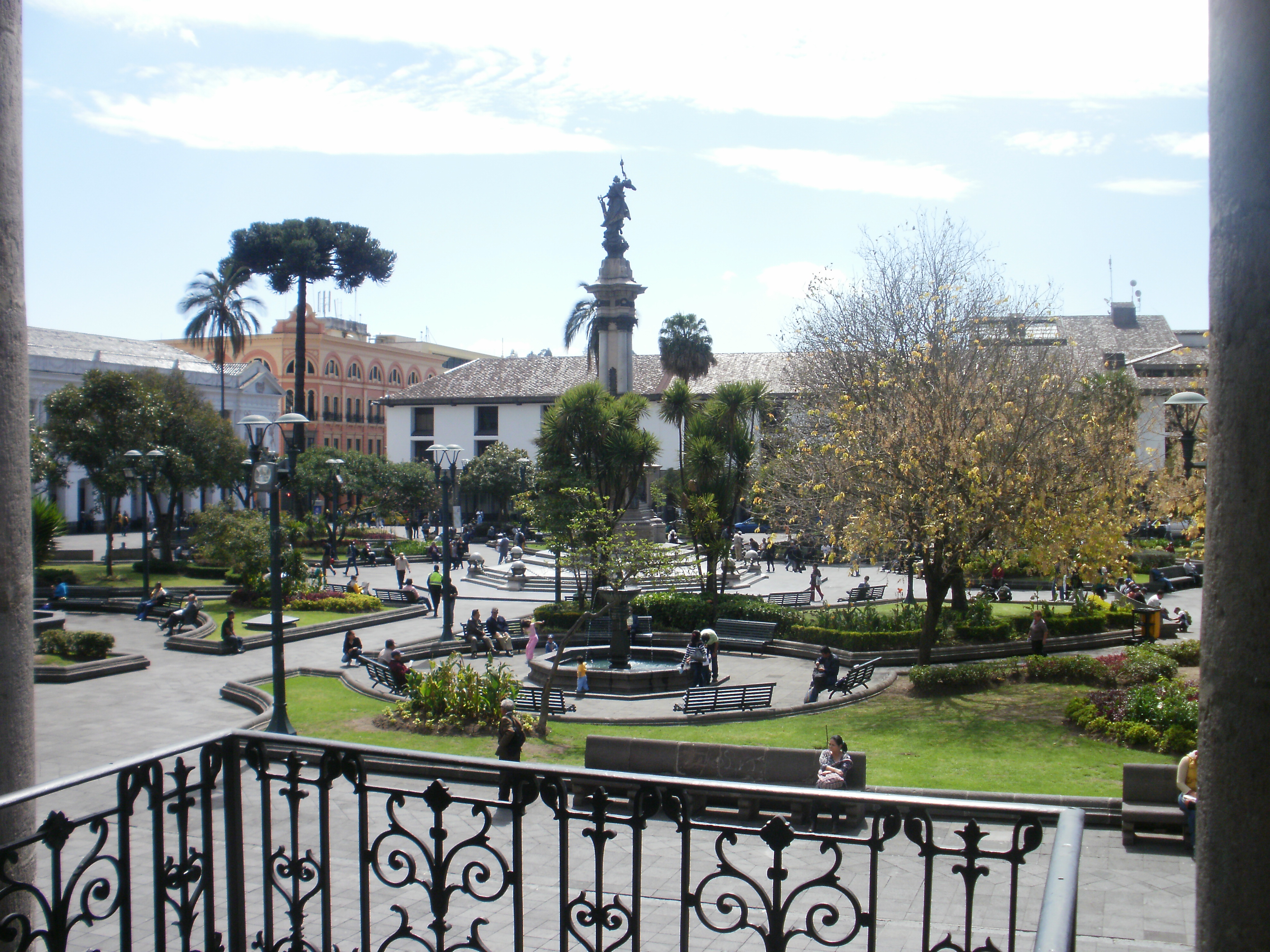
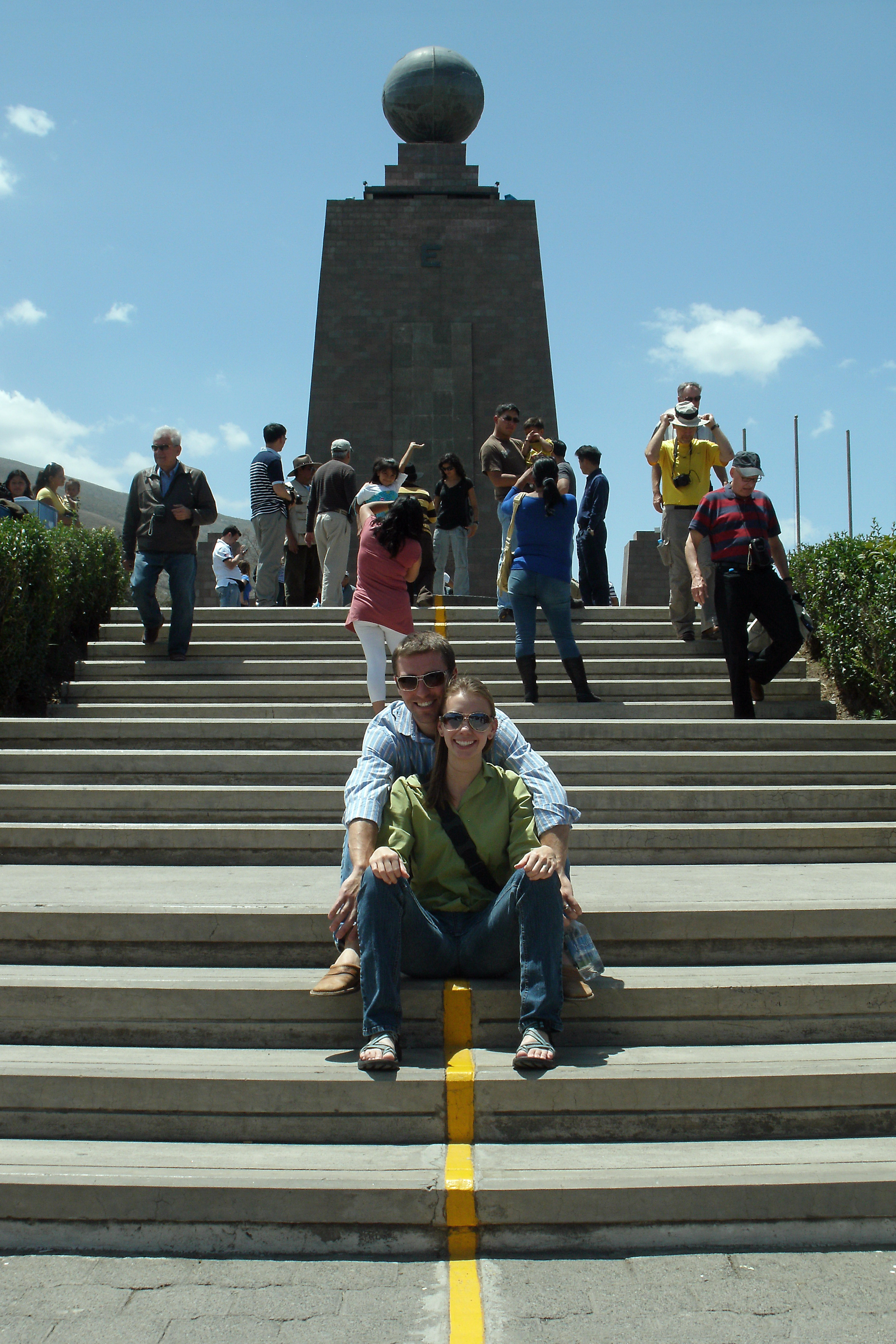
The city sits high up in the monolithic Andes, a mountain range dotted with active volcanoes and filled with the rich history of the Incan Empire. We went on a city tour to explore the Plaza de la Independencia, the historic main square, and Compania de Jesus, a gilded Jesuit church, to learn a bit about the Spanish Conquistadores who conquered the Incan people in the 1500s. We also took a trip to the Middle of the World to straddle the Equator, placing one foot in the northern hemisphere and the other in the southern hemisphere.

Plaza de la Independencia in Quito Ecuador
Plaza de la Independencia, Quito, Ecuador
Couple Sitting on Equator at Middle of the World Monument in Ecuador
Middle of the World: At the Equator

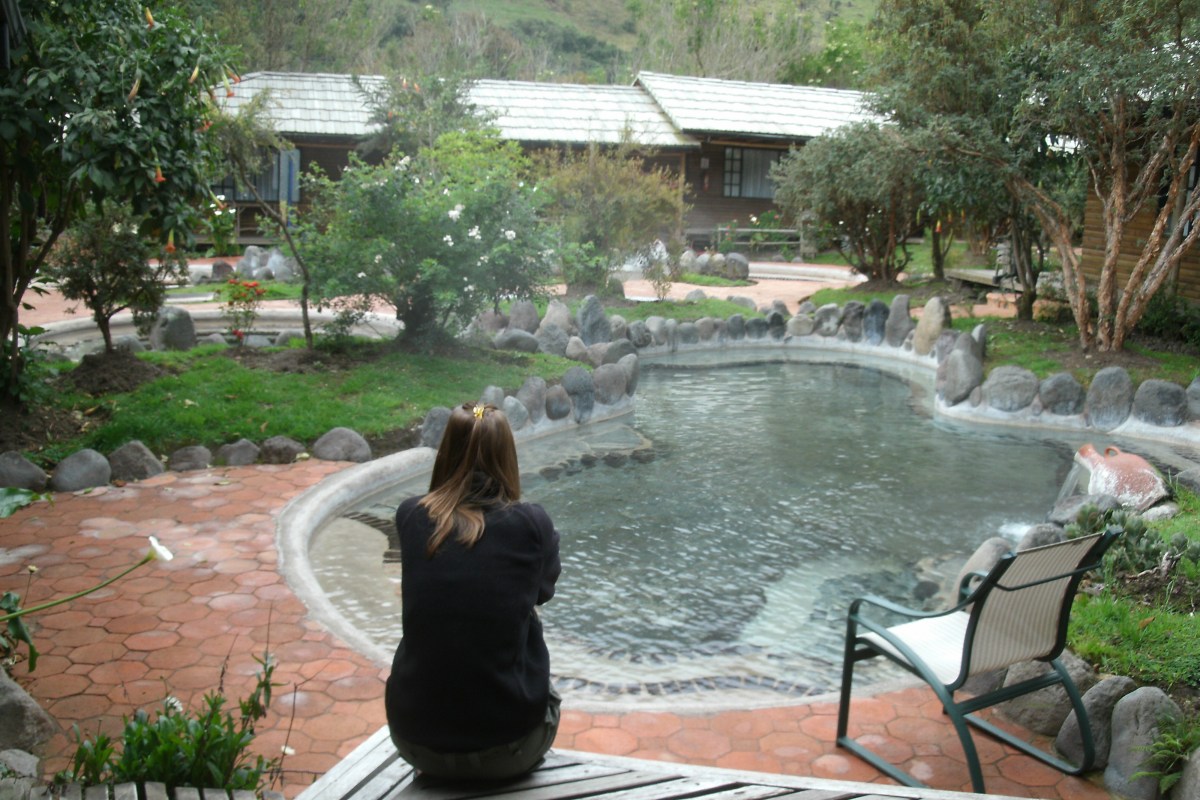
Next, we headed to Otavalo, a small lakeside town with a famous handicrafts market where we purchased several alpaca wool blankets. The third day of our trip, the tour took us through the Cloud Forest to Papallacta, an intimate resort built over a natural hot spring and nestled high in the Andes. We relaxed in the thermal pools and got a couple’s massage, finally participating in what seemed like a typical honeymoon activity.

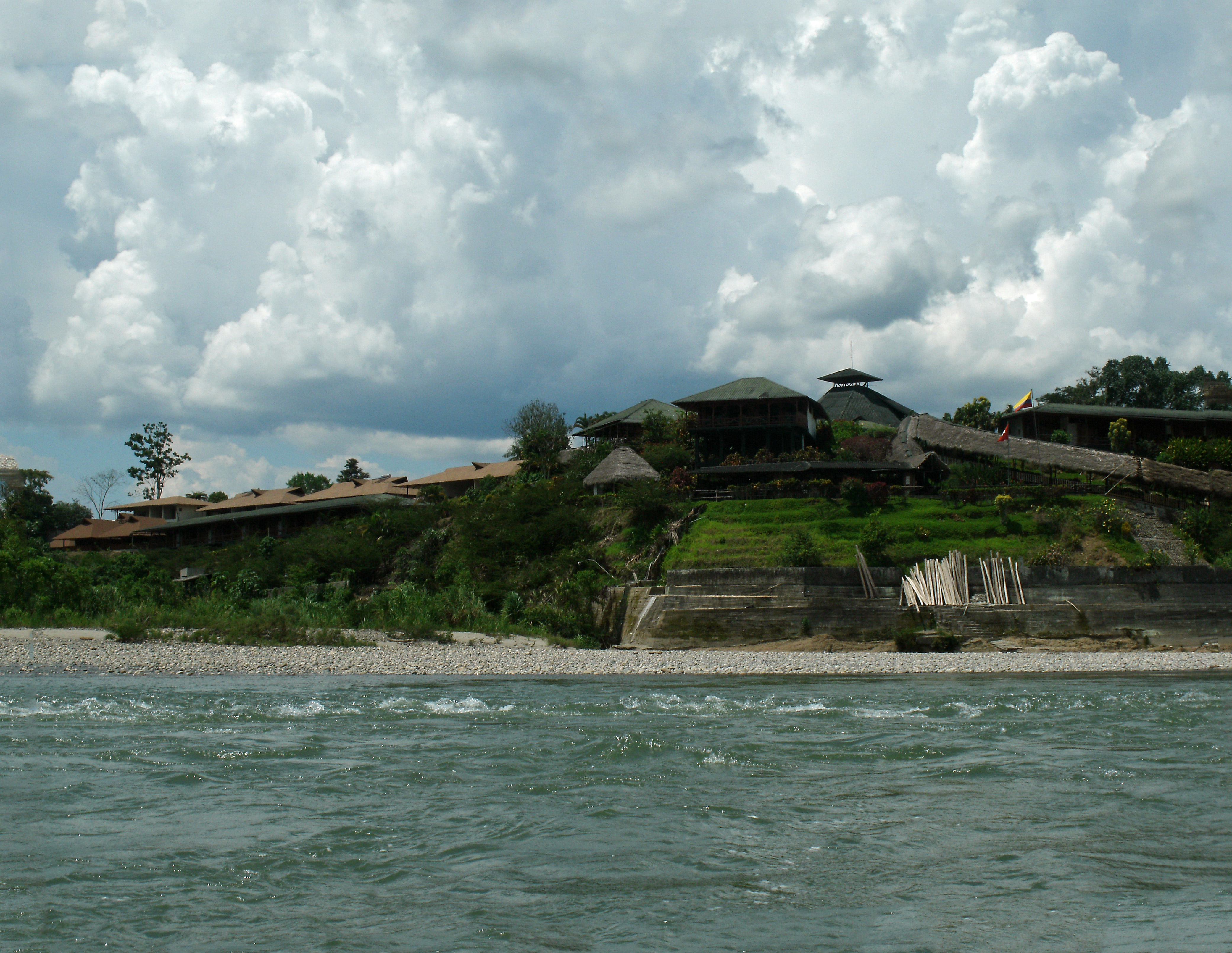
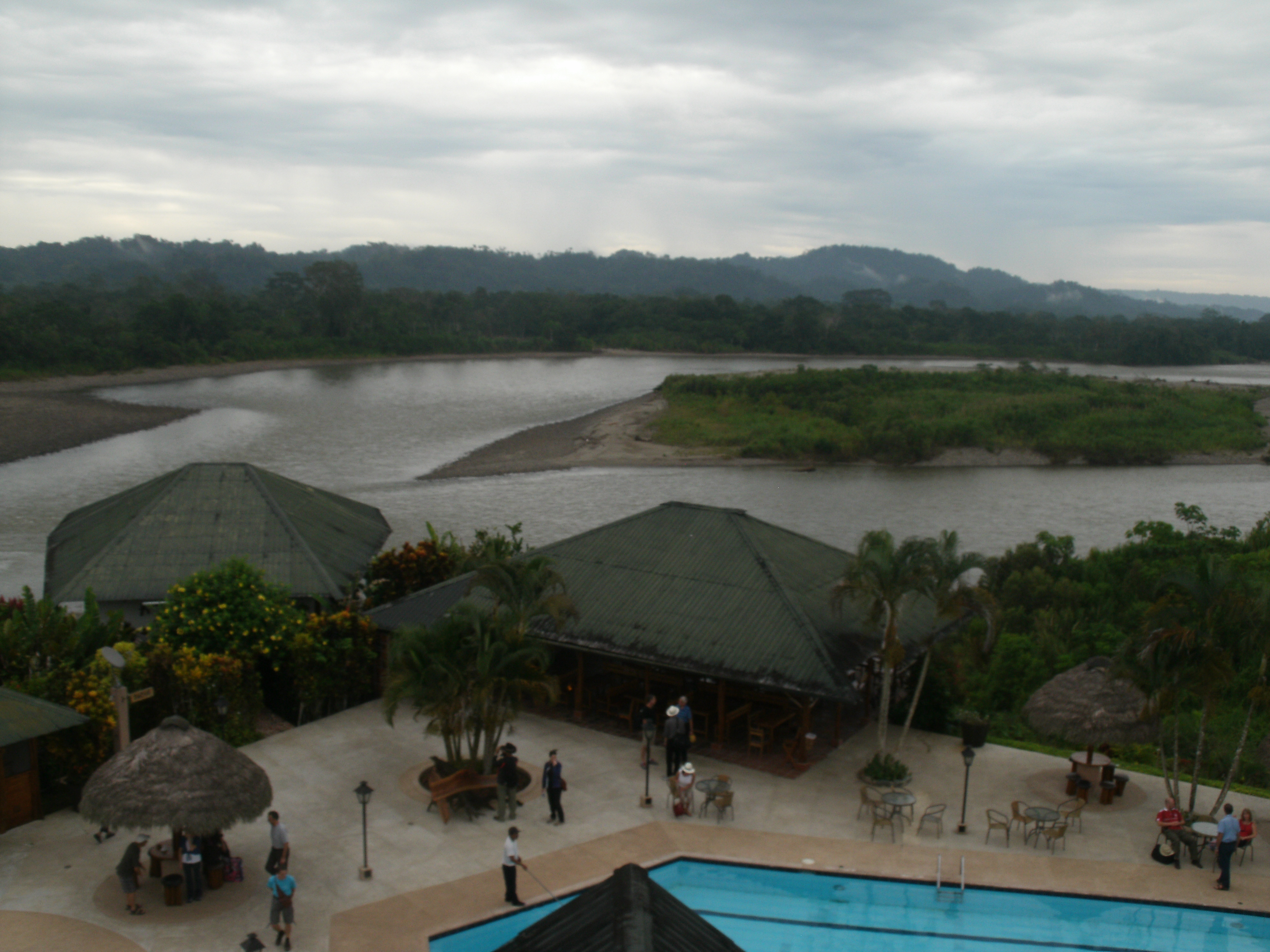
The highlight of the trip was our stay in Casa del Suizo, an eco-lodge on a private rainforest reserve deep in the Amazon. The only way to access the lodge was by boat via the Napo River, a tributary to the Amazon River. The lodge was surrounded by jungle so dense that a person would easily lose all sense of direction within ten feet of entering the underbrush.

Casa del Suizo Lodge on Napo River in Ecuador Amazon
Casa del Suizo, Ecuadorian Amazon

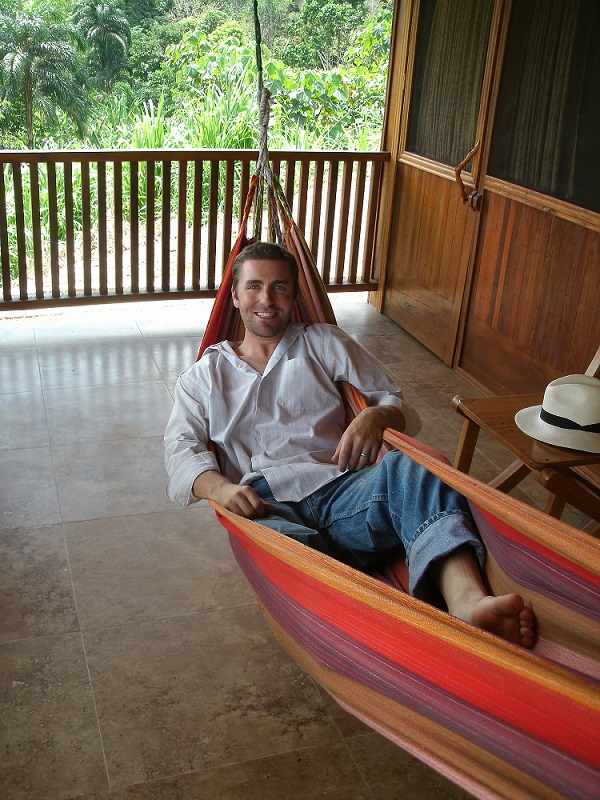
Our tour guide went above and beyond and got us the luxury suite since it was our honeymoon. This deluxe room turned out to be a private cabin at the very edge of the hotel complex, complete with mosquito nets, vaulted ceilings, and screens for windows. We even had our own veranda with a hammock overlooking the river. It sure beat sleeping on the floor of Miami International Airport.

By now we were convinced that Ecuador was a hidden gem in South America. It’s geographic diversity and the rich culture of its people, both modern and indigenous, were incomparable to anything we had experienced before. To put it simply, Ecuador had it all.

Man Relaxing in Hammock in Ecuador Amazon
Aaron in the Amazon

That evening, the rainforest lived up to its name, and the sky unleashed a deluge. We fell asleep listening to the sounds of the jungle compete with the rain.

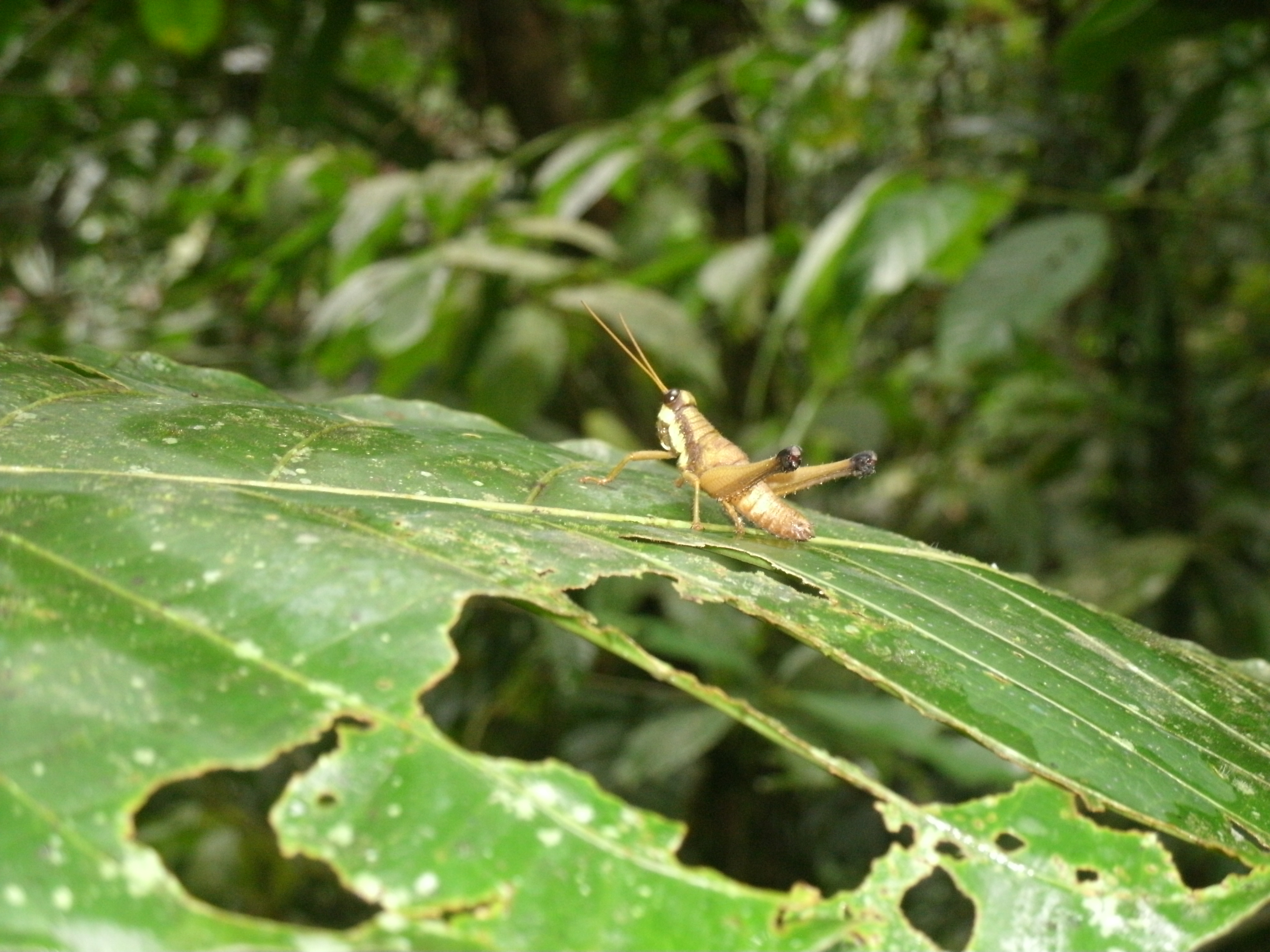
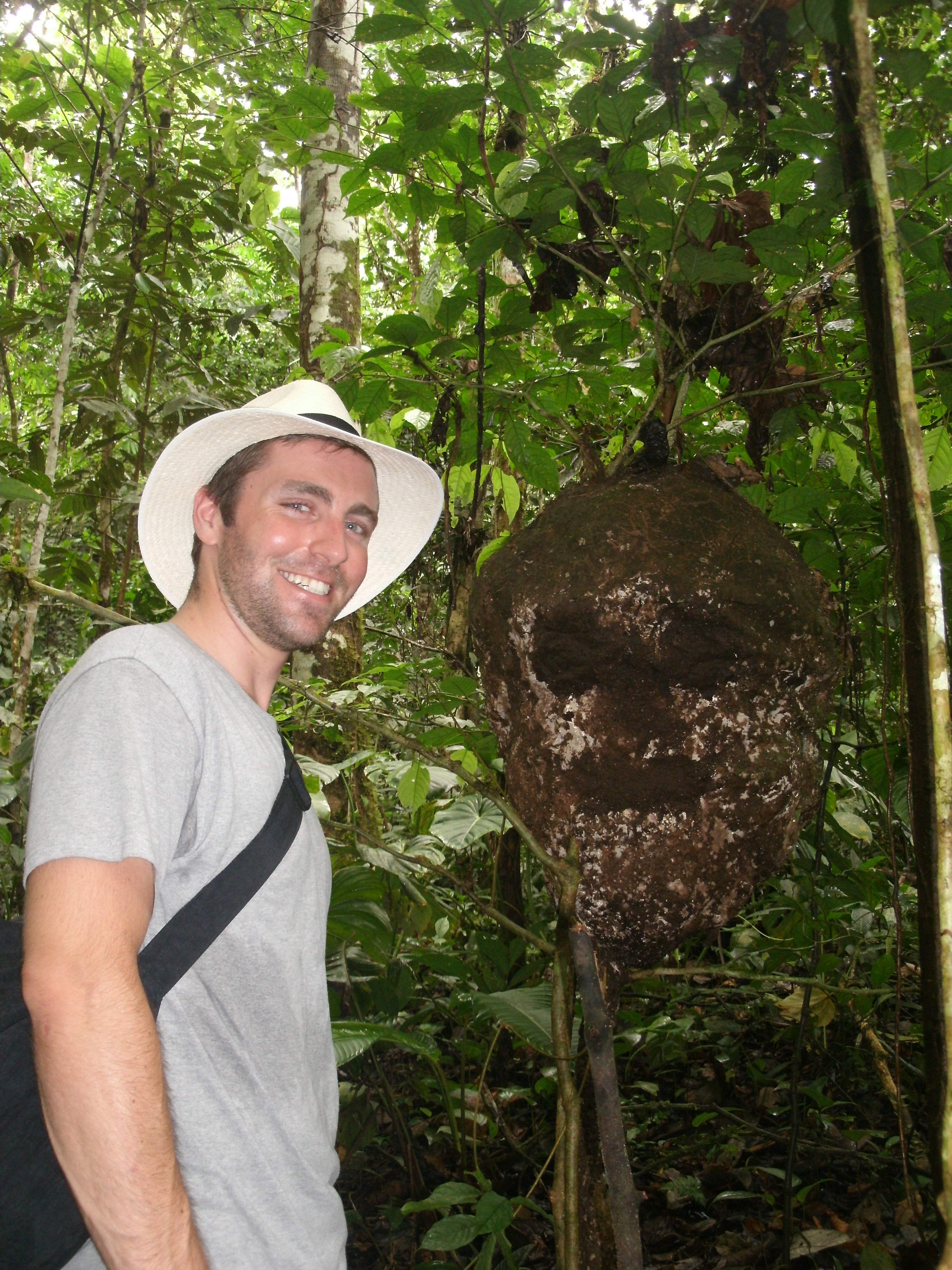
The next morning, we took a boat upriver and participated in a guided walk through the rainforest. From the moment we got off the boat, the earth’s abundance and diversity were inescapable. I had never before experienced an environment where every inch of space was occupied. Plants grew on top of each other and trees grew extra roots to shift their position in the jungle, all to compete for precious sunlight. Insects and birds zoomed through the air unconcerned with our presence. Enormous termite nests hung along the path. A small brown tree frog watched as we passed by. Monkeys skittered through the canopy above.

We, as human beings, were superfluous in the Amazon. That much was clear.

Grasshopper in Amazon Rainforest Ecuador
Grasshopper
Man Next to Large Termite Nest Amazon Rainforest
Giant Termite Nest

Our rainforest tour concluded with a raft trip back down the river on traditional balsa wood rafts which were constructed by loosely strapping several logs together with rope.

We climbed aboard the raft with a couple of our tour mates, sat down on the logs, and drifted out into the current. Our combined weight forced the rudimentary raft to sink about six inches below the water, which meant that our legs and hips went underwater as well. It was a rafting experience unlike any I had had before. It felt more like rafting through the river than on the river.

Five minutes into the float, we heard a shout and watched one of our tour mates jump into the river, declaring that he would swim back to the hotel. Everyone looked at the gentleman like he was crazy. The river was in fact a tributary to the Amazon!

Our guide, however, seemed unconcerned. She explained that the rain the previous evening had caused the river to rise about ten feet, meaning there was little chance of getting stuck on something underwater. She also said that most of the deadly river predators preferred still or slow-moving water and were not likely to be swimming in this rushing torrent.

That was all Aaron needed to hear. He took off his shoes, handed me his hat and dove in. I watched in disbelief, plagued with horrific thoughts of piranhas, giant anacondas, and unknown Amazonian river beasts. Aaron, on the other hand, was frolicking like he was in a swimming pool, hollering to the wild with a joyful smile on his face.

The river’s current started to pull Aaron faster than the slow-moving balsa raft. In dramatic fashion, I thought to myself, “I don’t want to lose my husband. If we die in the Amazon, so be it.”

So, I jumped in too.

Pushing all thoughts of piranhas from my mind, I swam to catch up to Aaron. As we floated down the river, we held hands and grinned like fools. This was what a honeymoon was meant to be! A memorable life-or-death adventure taken together!

The river was indeed moving tremendously fast, and within ten minutes we were swimming for the beach in front of the lodge. The rest of the tour group finally caught up to us at the lodge, all exclaiming their disbelief at our bravery.

View of Napo River from Casa del Suizo Ecuador Amazon Rainforest
Napo River, Amazon

When we later recounted this story to my parents, they also struggled to believe we went swimming in the Amazon: “You did what in the Amazon?!”

It was an unforgettable honeymoon indeed!

Our takeaway from the Amazon: Sometimes you just have to go for it!

-Annie, Your Friend at Orange Backpack Travel

Cambodia: Mysteries of Forgotten Temples and Fallen Empires

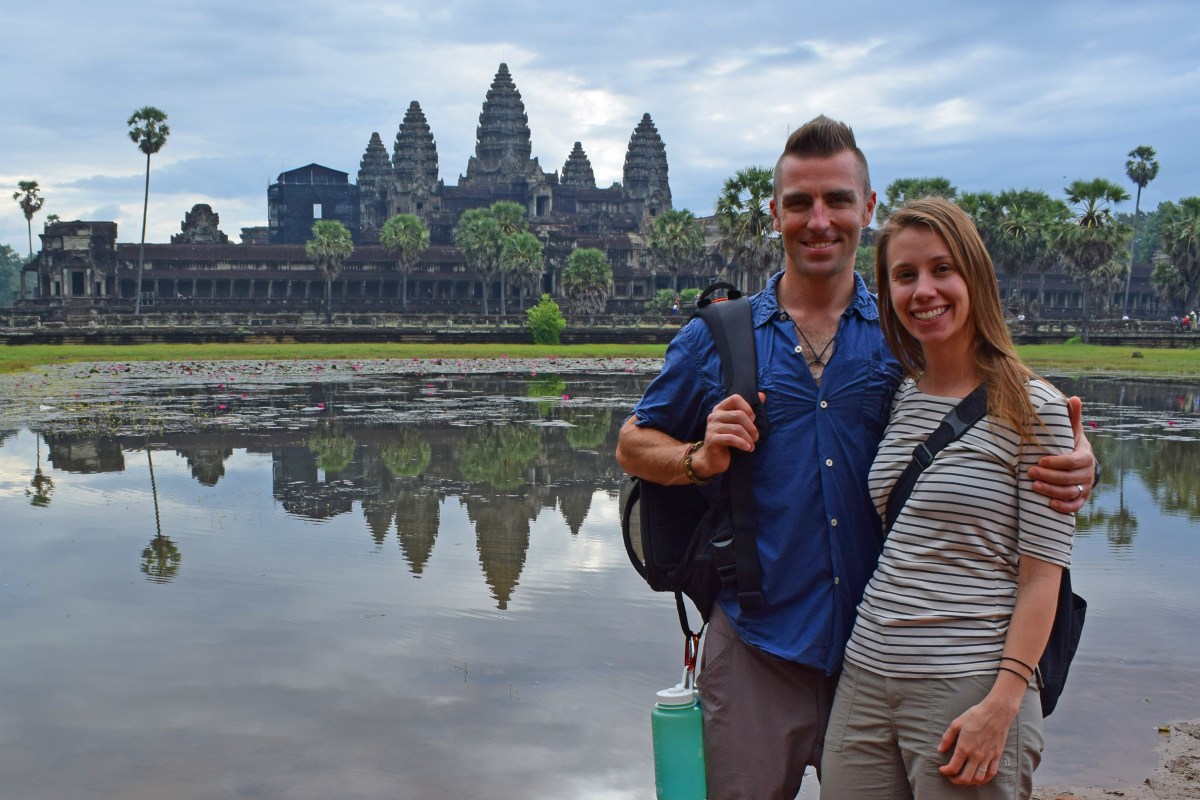
“Why Cambodia?” – We were asked this question multiple times before our trip. The short answer is that we wanted to visit Angkor Wat, the mysterious temple and mausoleum built by the Khmer King Suryavarman II from 1112 A.D. to 1152 A.D.

The long answer is that we wanted to go on an archaeological adventure to uncover the history of the forgotten Khmer Empire (802 A.D. to 1432 A.D.) and the monumental temples they left behind. As we researched Cambodia before the trip, we couldn’t believe we knew so little about the rich history of the Khmer Empire and that modern Southeast Asia owes much of its development to the Khmers.

At its height, the Khmer Empire covered modern day Cambodia, and much of Thailand, Laos and Vietnam. The Khmer were master builders, capable of taming the jungle and corralling the mighty rivers into vast irrigation systems. They constructed magnificent highway networks and impressive religious structures in honor of their deities. The Khmers, in essence, formed the Roman Empire of their time.

The Angkor temples and the people who built them fascinated us and sparked our desire to explore the ruins of this great civilization.

On our first morning in Siem Reap, the city adjacent to Angkor Wat, we awoke long before sunrise thanks to severe jetlag. We decided to take advantage of the early hour and begin our exploration of the temples by witnessing sunrise over Angkor Wat. We left the hotel and immediately hailed a tuk-tuk driver, despite the early hour, who agreed to drive us around for the day. As we rushed through the dark streets, accosted by mingling scents of heady jungle and dense air pollution, we couldn’t help but be intoxicated with anticipation of the archaeological wonders that awaited us.

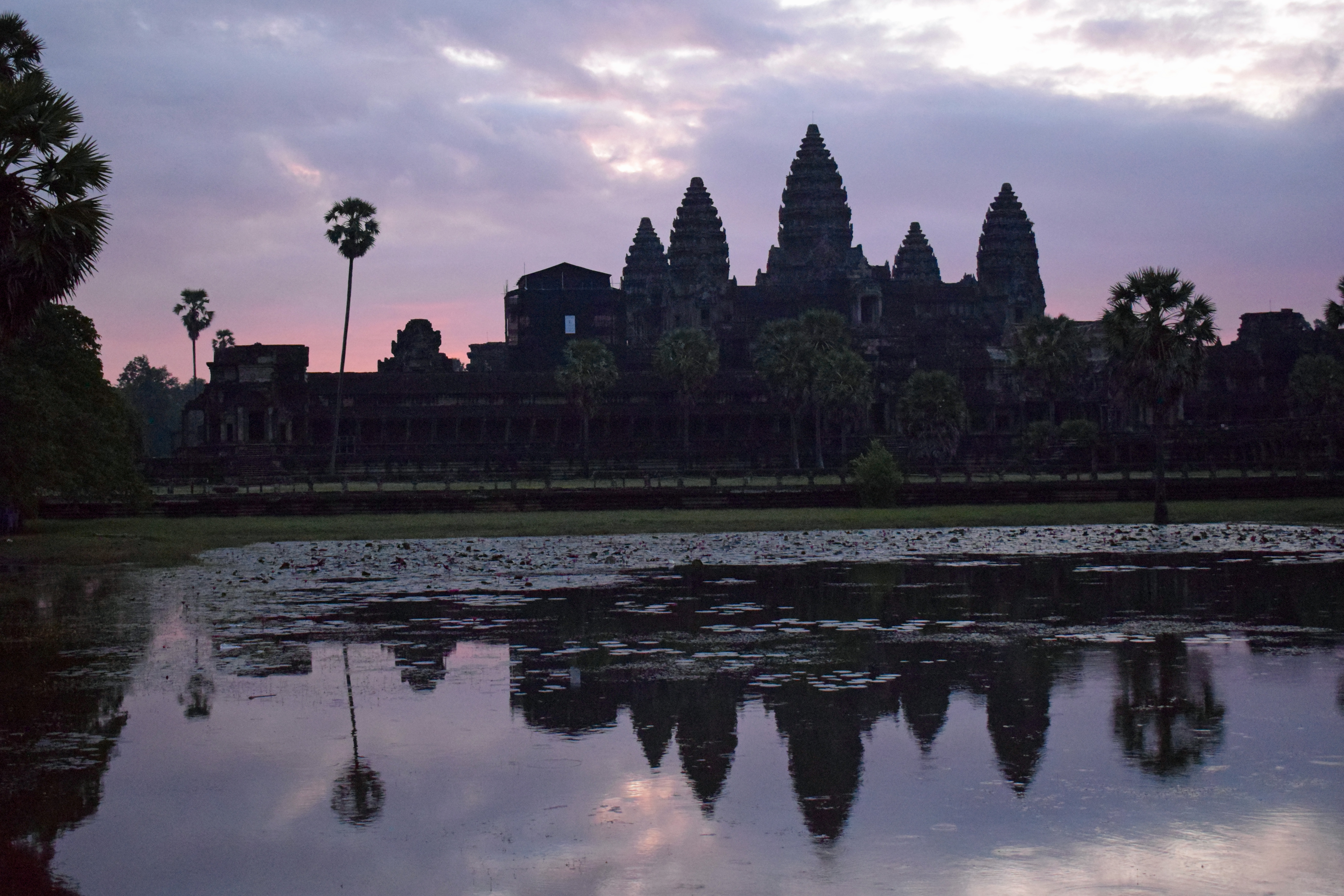
We arrived at Angkor Wat and joined hordes of tourists stumbling through the pre-dawn inky blackness. We waited, cameras poised, for the sun to rise above the temple. As the sky lightened to a pale pink hue, we were finally able to make out the magnificent complex around us. The remnants of the Khmer Empire seen up close were more impressive than we could have imagined.

Huge towers rose above the temple, drawing the eye skyward over impossibly steep stairs with no hand railings to be found. Our shoulders brushed the walls as we ducked beneath arches that were built by stacking stone blocks closer and closer together until they met in the middle. The great Khmer architects had not discovered the structural advantages of a keystone at the top of the arch, which made their construction feats all the more impressive. Intricate statues and bas-relief stone carvings decorated the temple depicting famous battles and religious stories revered throughout the Khmer Empire. A large, perfectly square, man-made canal surrounded the temple, adding to the mystery of how these structures could have been built within such thick jungle centuries before the dawn of modern industrialization.

Angkor Wat at Sunrise in Cambodia
Angkor Wat at Sunrise

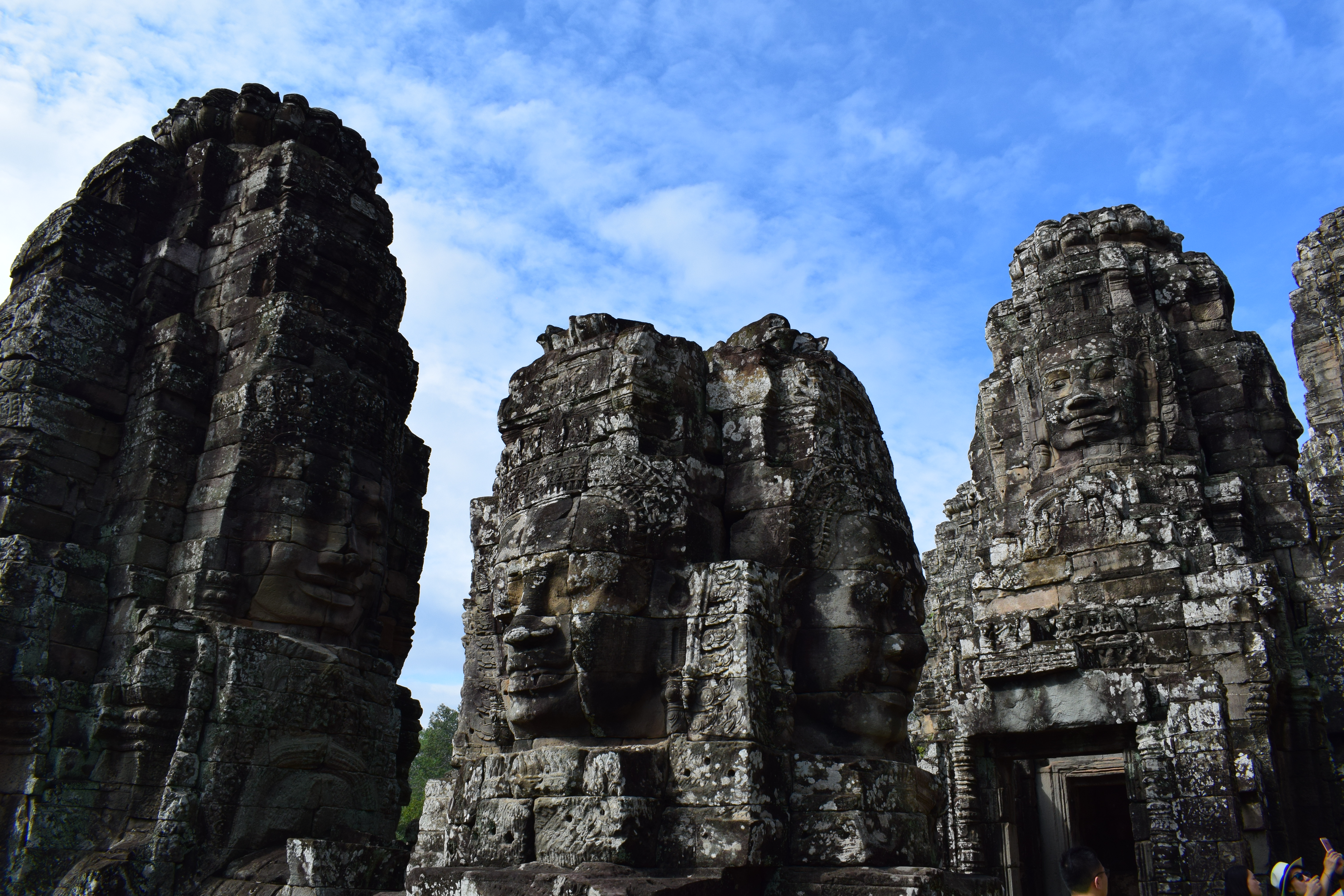
Next, we visited Bayon, a mysterious temple at the heart of Angkor Thom decorated with over two hundred giant faces, all closely resembling the king who commissioned the temple.

Faces at Bayon Temple in Angkor Thom Cambodia
Bayon Temple – Angkor Thom

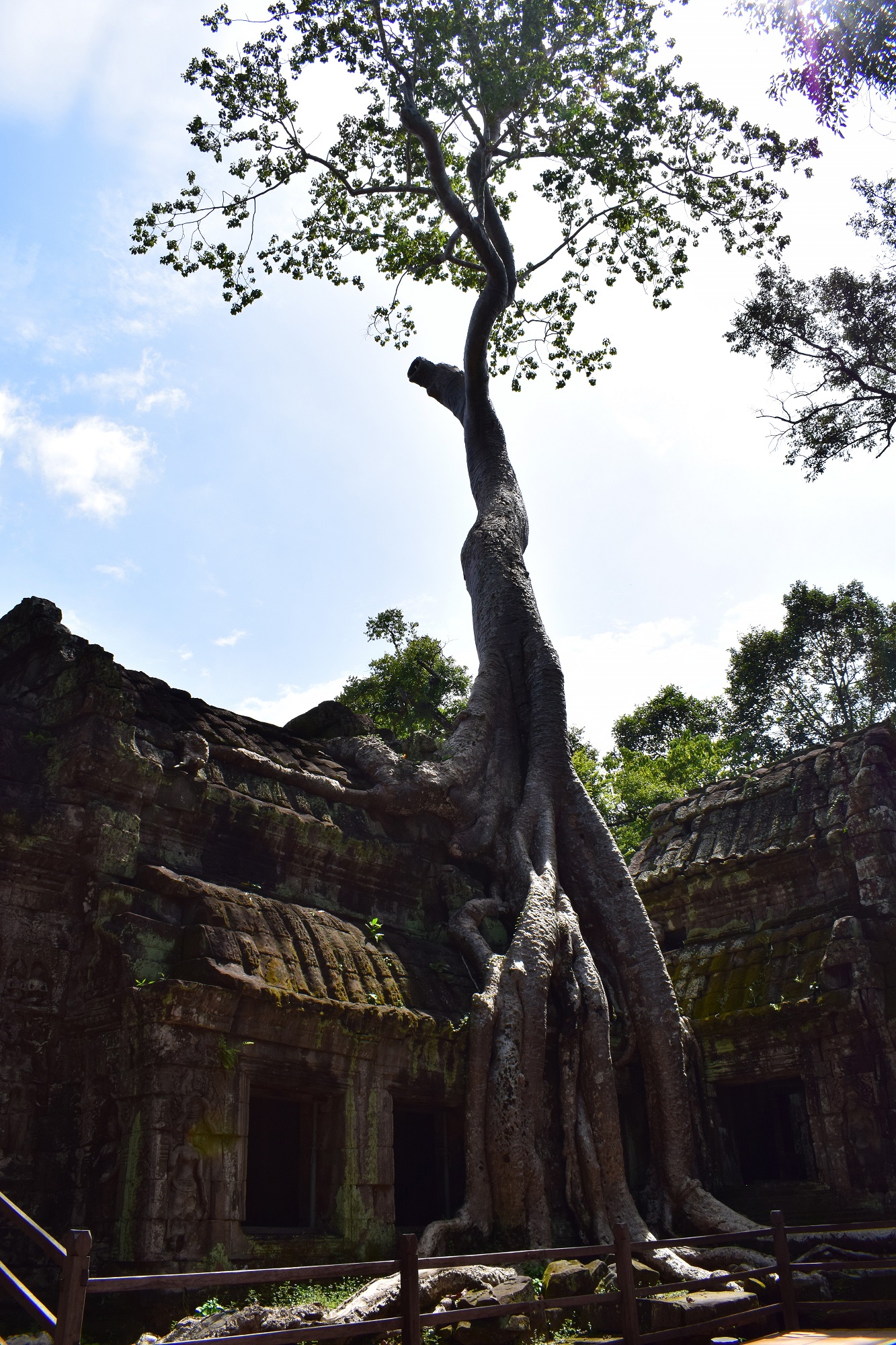
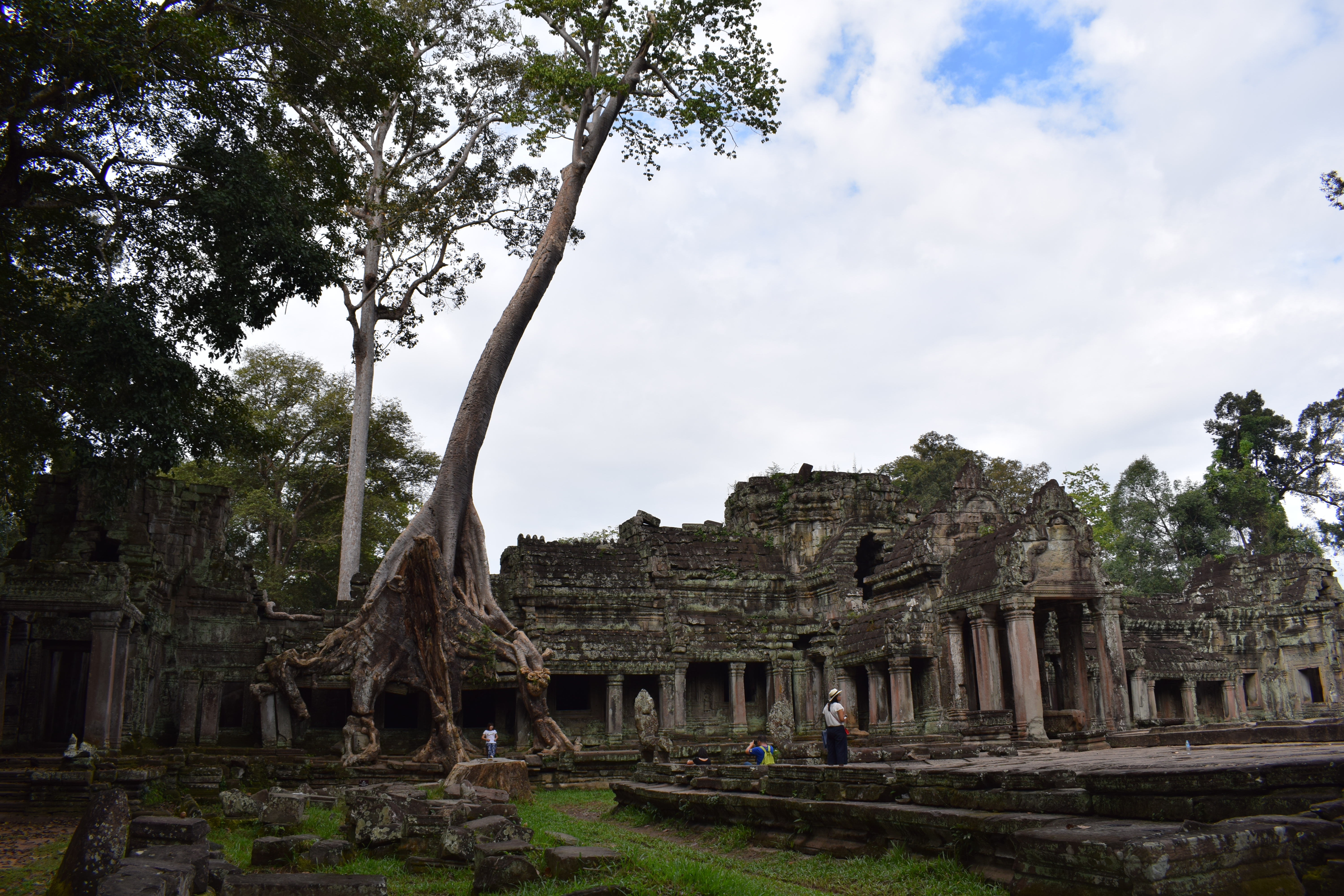
Our final stop was Ta Prohm, the famous “Tomb Raider” temple that appears to have been swallowed by the jungle. Enormous trees shoot toward the sky, their roots crushing the temple walls. The beauty here served as a blunt reminder of the power of nature. Not even formidable stone temples, marvels of engineering at the time of their construction, could withstand the jungle’s encroachment over the centuries.

Ta Prohm Temple Tomb Raider Temple Cambodia

Our trip was in November, just on the cusp of monsoon season, and boy, was it hot! The temperatures hovered around 100°F and the sky remained stubbornly cloudless. The stifling humidity had us sweating through our tee shirts in minutes. We were hot and sticky, but thrilled to be exploring such exotic temples, half forgotten and reclaimed by the jungle.

It quickly dawned on us that Cambodia’s climate was not conducive to a non-stop itinerary. Built-in rest between sight-seeing was necessary here.

By mid-afternoon of our first day at the Angkor complex, we were exhausted. We asked our tuk-tuk driver to bring us back to the hotel where we lounged the afternoon away by the pool sipping ice cold mojitos. Life was blissful.

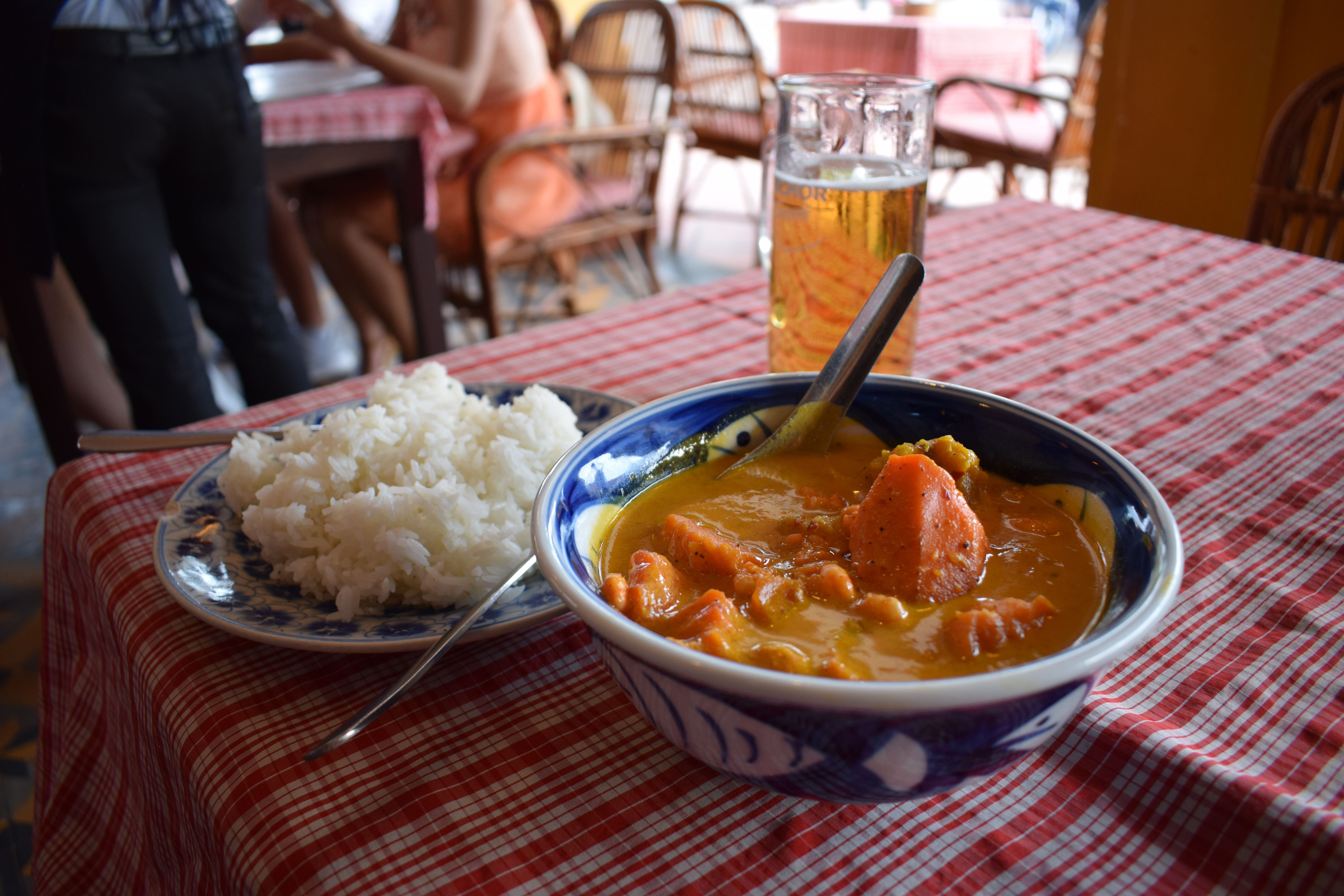
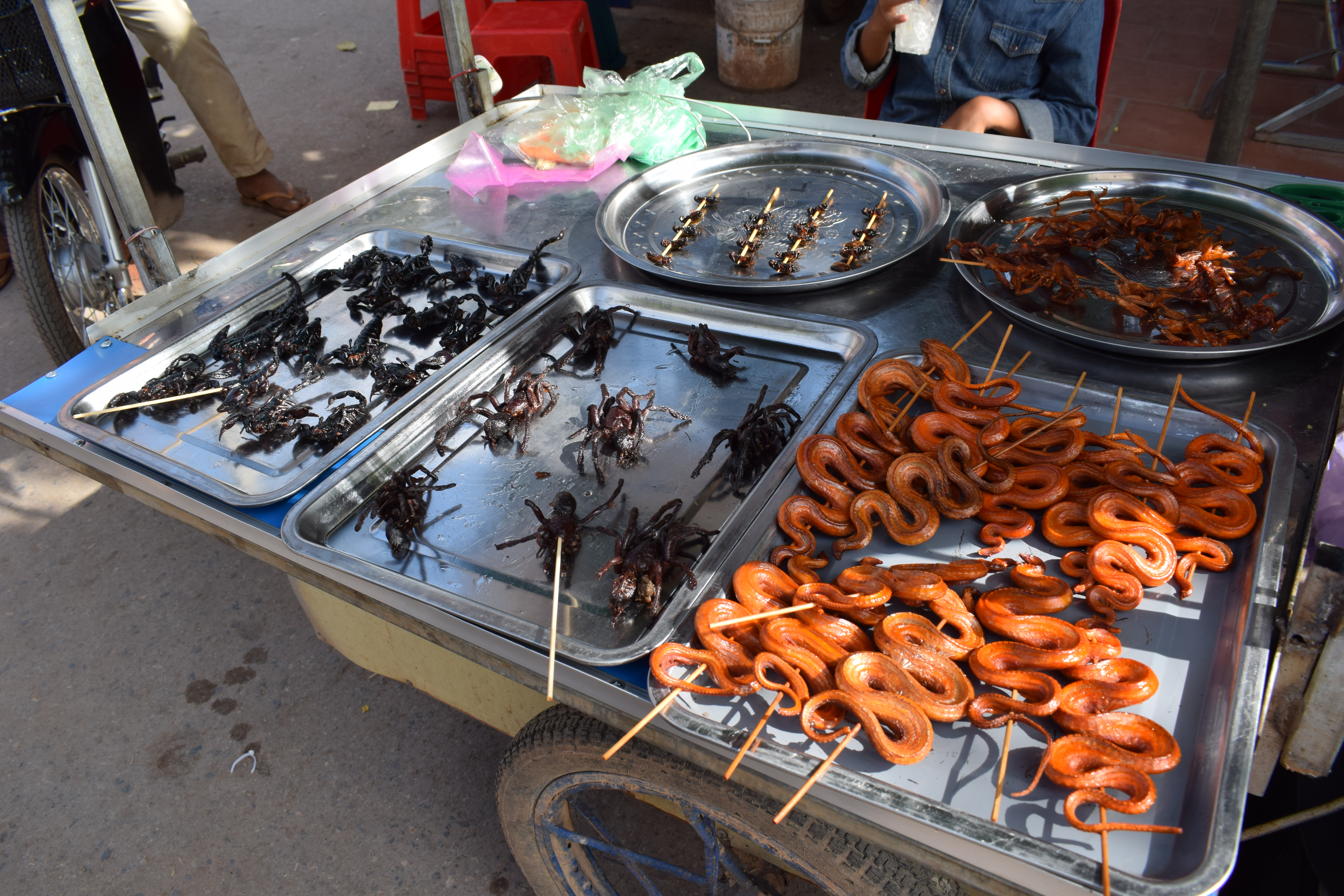
That evening, after the temperature dropped considerably, we jumped into another tuk-tuk and swerved in and out of traffic until we reached the downtown. Siem Reap’s center is relatively compact, with many restaurants and markets within walking distance of the Siem Reap River. We selected a small restaurant serving traditional Cambodian cuisine, mostly flavorful, curry-based soups with rice, vegetables, and either chicken or fish. Our table had a lovely view of the bustling street, where vendors and tourists alike provided us with free entertainment. The highlight of the evening was observing tourists’ reactions to the trays of scorpions, snakes, and tarantulas on a stick for sale as delectable snacks. Locals do in fact eat these delicacies, but we were not brave enough to try them.

Cambodian Cuisine in Siem Reap, Cambodia
Food Street Vendor Selling Snakes Scorpions and Tarantulas in Siem Reap Cambodia

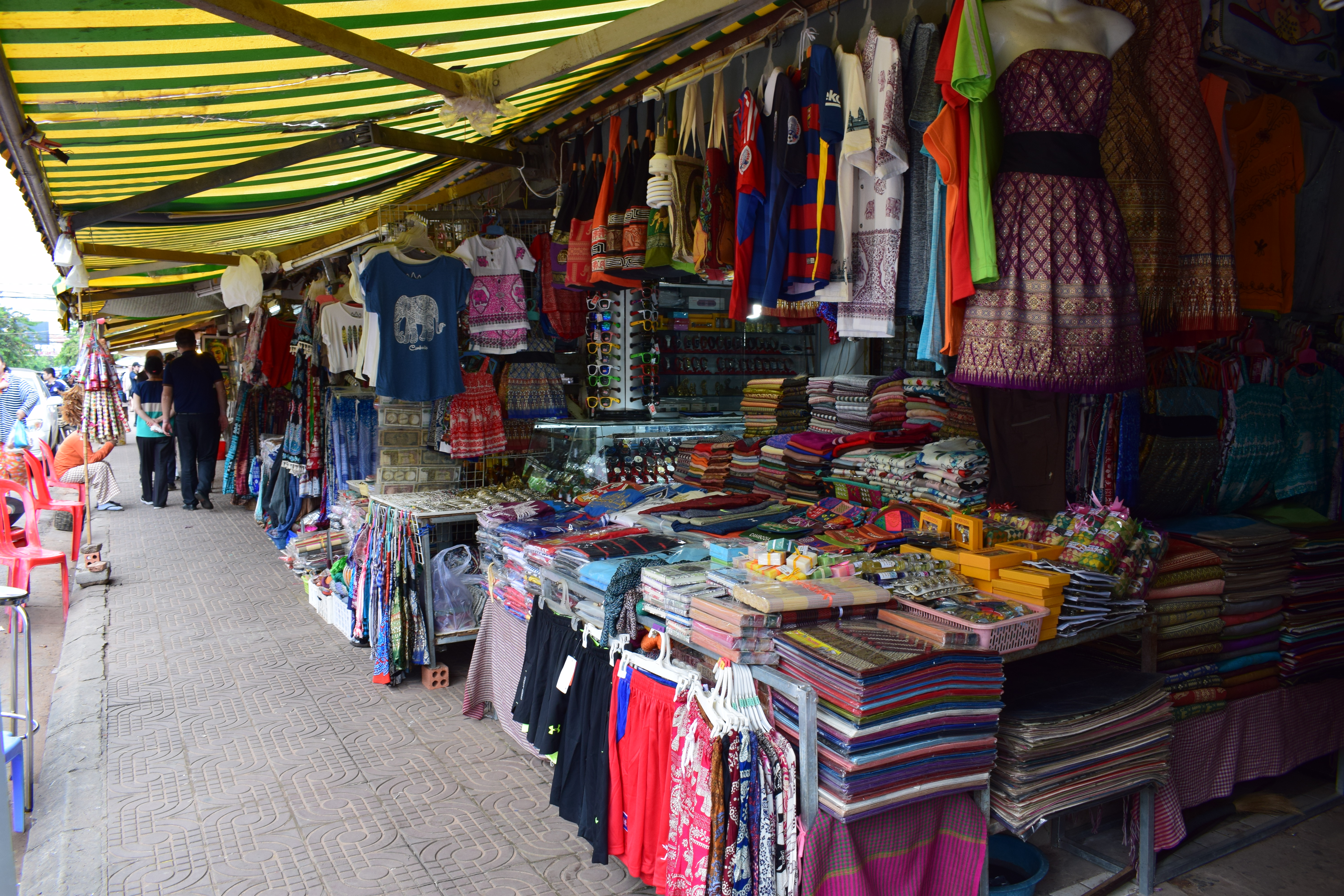
After dinner we meandered through the local market, browsing stalls piled high with colorful produce and bargaining with shrewd business owners for souvenirs. The pungent smell of freshly gutted fish permeated the enclosed space. Back out on the street, the nightlife of Siem Reap picked up after dark. Night clubs blared their music over the constant din of cars, tuk-tuks, and motorbikes on the streets below.

Psar Chaa Old Market Downtown Siem Reap Cambodia
Psar Chaa – Old Market – Downtown Siem Reap

On our second and third days, we repeated the pattern of the first day’s adventuring: sightseeing in the early morning, relaxing by the pool in the heat of the afternoon, and dinner out on the town.

The second morning of exploring consisted of the “big” loop temples: Preah Khan, Neak Pean, Ta Som, East Mebon and Pre Rup. These temples were more impressive than Angkor Wat and Angkor Thom in the sense that they were more rugged and wild, with less of a manicured feel than the those on the main tourist track. We felt as though we were part of Henri Mouhot’s team in 1860 “discovering” these ruins for the first time in modern history.

Preah Khan Temple in Siem Reap Cambodia
Preah Khan

Archaeologists still battle the jungle today to keep it from overgrowing the excavated stone. Much of the Angkor complex has yet to be uncovered due to limited resources which must be divided between holding the jungle at bay in the excavated temples and uncovering new ones.

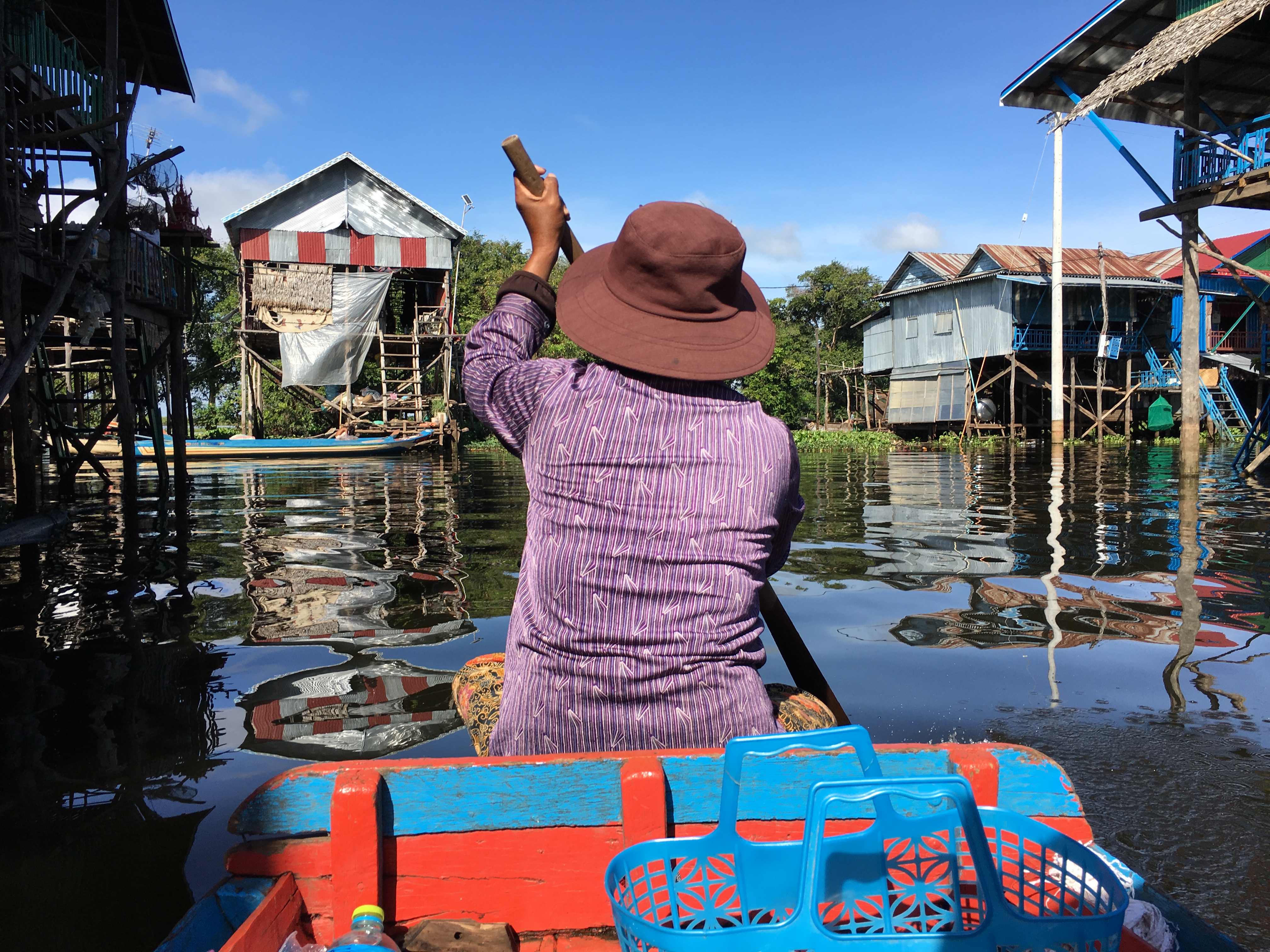
The third morning we hired a boat to take us on a tour of the floating villages on the edge of the Tonle Sap Lake, the largest fresh water lake in Southeast Asia. Inhabitants of these floating villages and the rural communities on the edge of the lake have depended on its natural resources for thousands of years.

At the lake’s outskirts, we boarded a large boat which deftly navigated the swamps to reach the area’s famed floating villages. From here we jumped on a small canoe piloted by a local guide. Time slowed as our canoe drifted out over the water. The shade of the freshwater mangrove trees cooled the air, bringing a stillness of contentment and peace.

It was not difficult to imagine why the Khmer ruled their empire from this lush, abundant region. We loved it here too.

Floating Villages on Tonle Sap Lake Cambodia
Floating Villages – Tonle Sap Lake

Our takeaway from our time in Cambodia: It is rare in the world of tourism to feel like you are discovering something for the first time. That sense of excitement at discovery and the yearning to uncover the mystery before you are gifts that Cambodia has remarkably preserved.

-Annie, Your Friend at Orange Backpack Travel

Woman Paddling Boat on Tonle Sap Lake Cambodia
Boat Tour on Tonle Sap Lake

India: Diving Into the Heart of a Culture

Traveling can often be a mixture of exhilarating and overwhelming sensations. The farther from home you go, the more out of your element you will be. But that is the beauty of traveling! We long to visit exotic places that are nothing like our own home. We want to see and experience something radically different, something awe-inspiring, that will make us say “Wow!”.

This need for diversity and a different perspective on beauty drove us to visit the sub-continent of India. We desired a travel experience that would both challenge us and open our eyes to the vibrancy of a culture that lay in such contrast to our own. We were not disappointed!

We flew into Delhi for a whirlwind day tour of the city, complete with snake charmers, gorgeous marble mosques, richly decorated mausoleums to distant emperors, and a terrifying bicycle rickshaw ride through the narrow, bustling streets of Old Delhi.

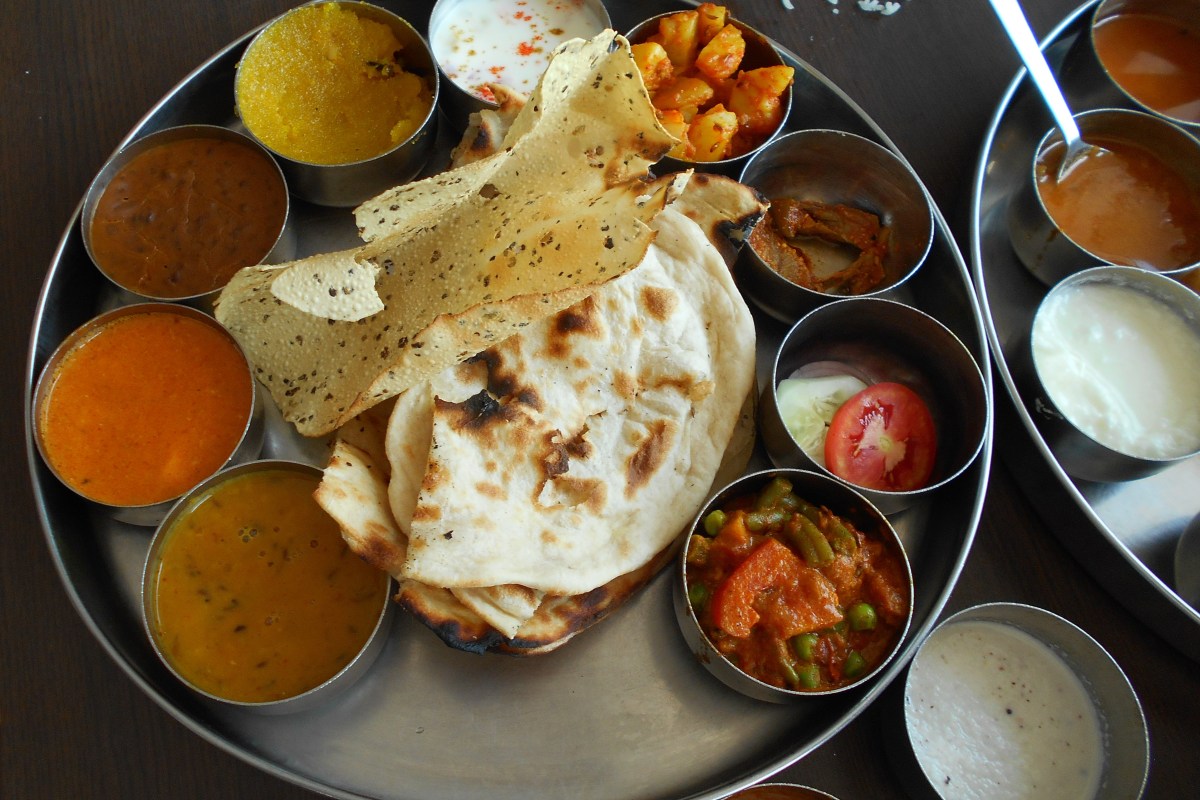
We ate our first authentic thali, a meal featuring a large tray decorated with either rice or naan and an assortment of spicy curries, creamy dill sauces, and sweet concoctions all on one plate! The thali was the first of many examples of India’s extremes: insane spice to unbearable sweetness, tremendous wealth to rampant poverty, and wondrous natural beauty to extreme pollution, to name a few.

The drive between Delhi and Jaipur, the capital city of Rajasthan, a desert state in the north-western part of the country, illustrated the extent of the diversity within India’s borders. The millions of motorcycles and rickshaws that zoomed over Delhi’s streets were replaced by camels pulling carts laden with farming supplies over dirt roads that connected rural communities. Industrious city jobs faded into the slower pace of families making a living by subsistence farming. Western clothing styles of the city became less common. Locals instead chose to adorn themselves with more traditional kurtas and vibrantly colored saris.

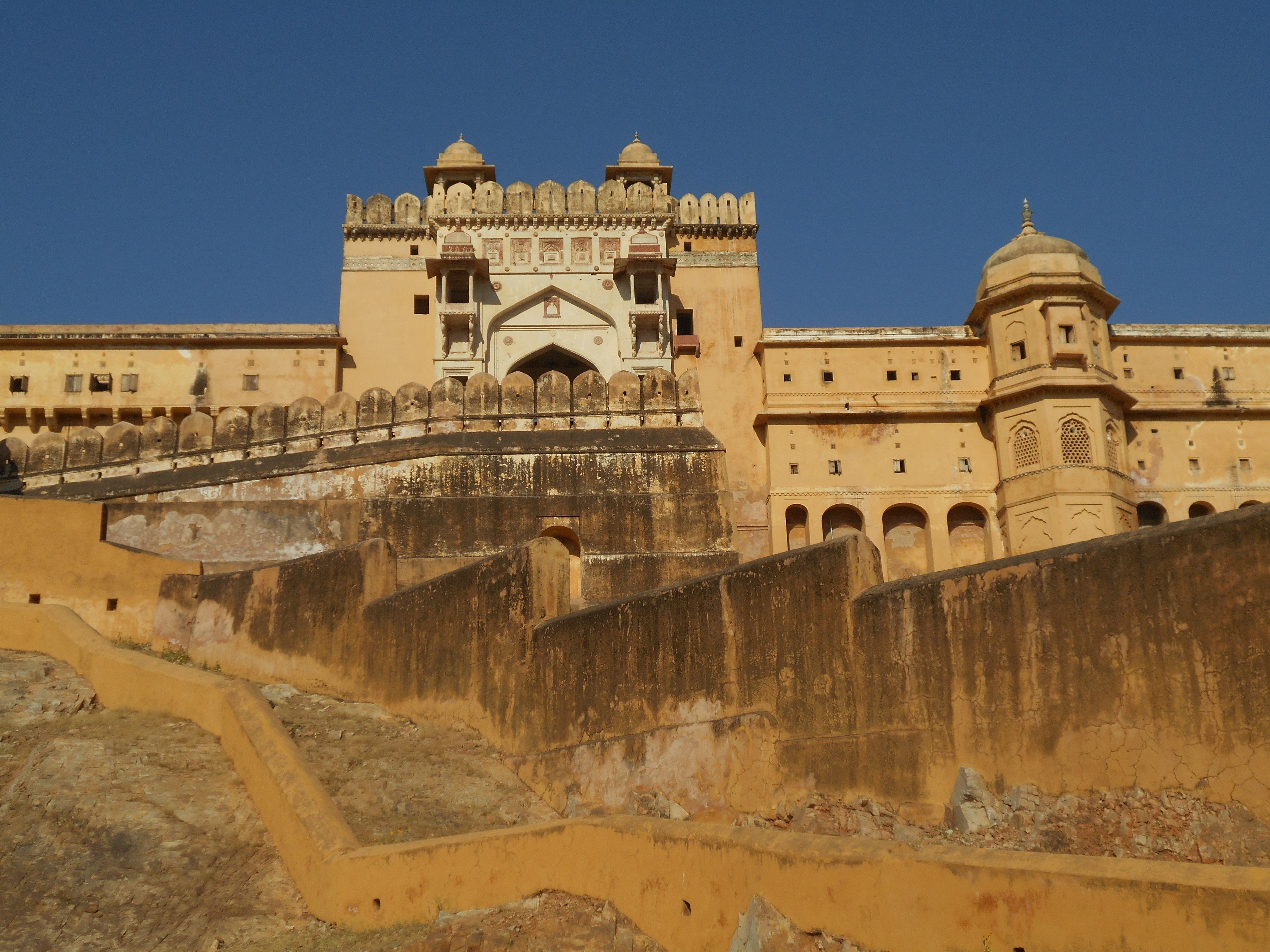
Jaipur is a tourist hot-spot in northern India, and rightly so. On our first day in Jaipur, we rode an elephant to the top of the formidable Amber Fort, visited a handicrafts market that supported local artists, and learned to tell time and determine horoscopes using phenomenally accurate sundials and astronomical instruments constructed in the 18th century.

Amber Fort - Jaipur, India

The overwhelming bustle of New Delhi and the desert majesty of Jaipur made our first 48 hours in India fly by in an intense cultural blur.

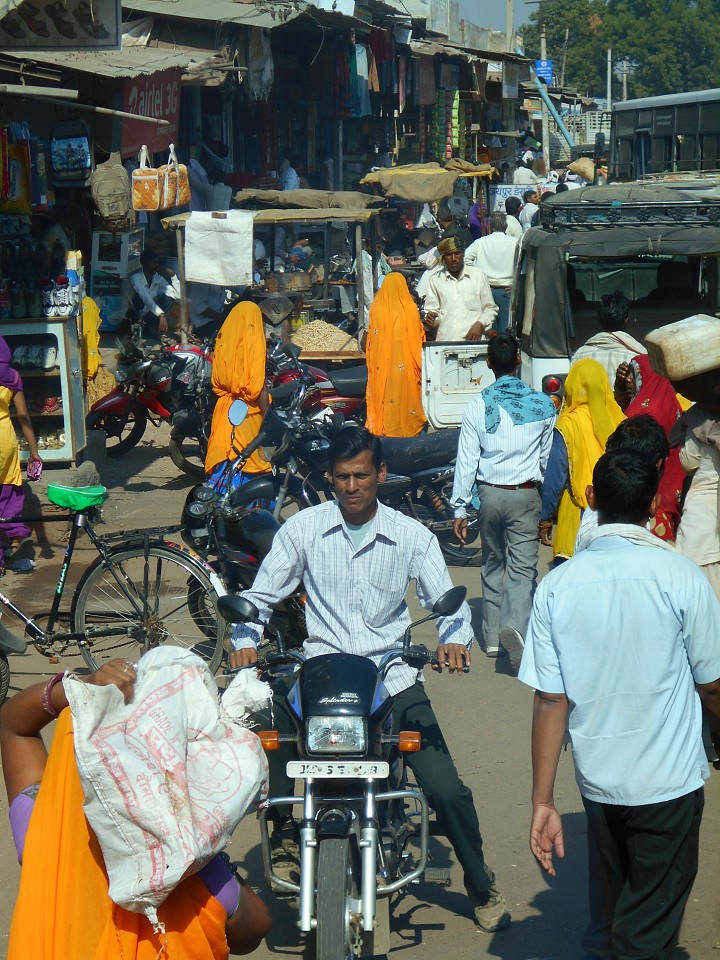
However, the reality of daily life in a large, overcrowded Indian city didn’t strike home for us until we ventured into an open-air marketplace late in the evening in Jaipur’s old city. The market was formed by two rows of shops on either side of a narrow alley, barely wide enough to fit one car or three motorcycles side-by-side.

The store owners competed with street vendors who either set up out on the sidewalk or meandered through the crowd carrying their wares in their arms. The atmosphere was vibrant, lively, fragrant, and loud. People were everywhere!

To say we were overwhelmed is an understatement! The sensory overload was almost paralyzing as we stumbled along the street.

Street Market - India

Fortunately, a kindly shopkeeper saw our bewilderment, took pity on us, and asked if we would like to step into his shop. We accepted, grateful to have direction, and found ourselves staring at a white wall 15ft long by 6ft tall bedecked with every color and style of arm bangles imaginable. Reds, golds, pinks, purples, blues, silvers all jumped out at us, competing for our gaze.

We took a few deep breaths, relieved by the soothing atmosphere inside the shop. We gladly bartered for a set of beautiful white bangles, thanked the shop owner profusely, and stepped back into the street, no longer affronted by the chaos but ready to embrace the flurry of activity.

We entered nearly every shop on the block, learning about the proprietors’ trade, bartering with a shrewd business sense, and gently fending off salesmen eager for our rupees.

We had begun the evening wary of our surroundings, but ended it by forging real connections and laughing with the locals.

The takeaway for us is that sometimes you have to plunge right in to an uncomfortable situation to truly see and experience the beauty and vibrancy of a foreign culture.

-Annie, Your Friend at Orange Backpack Travel