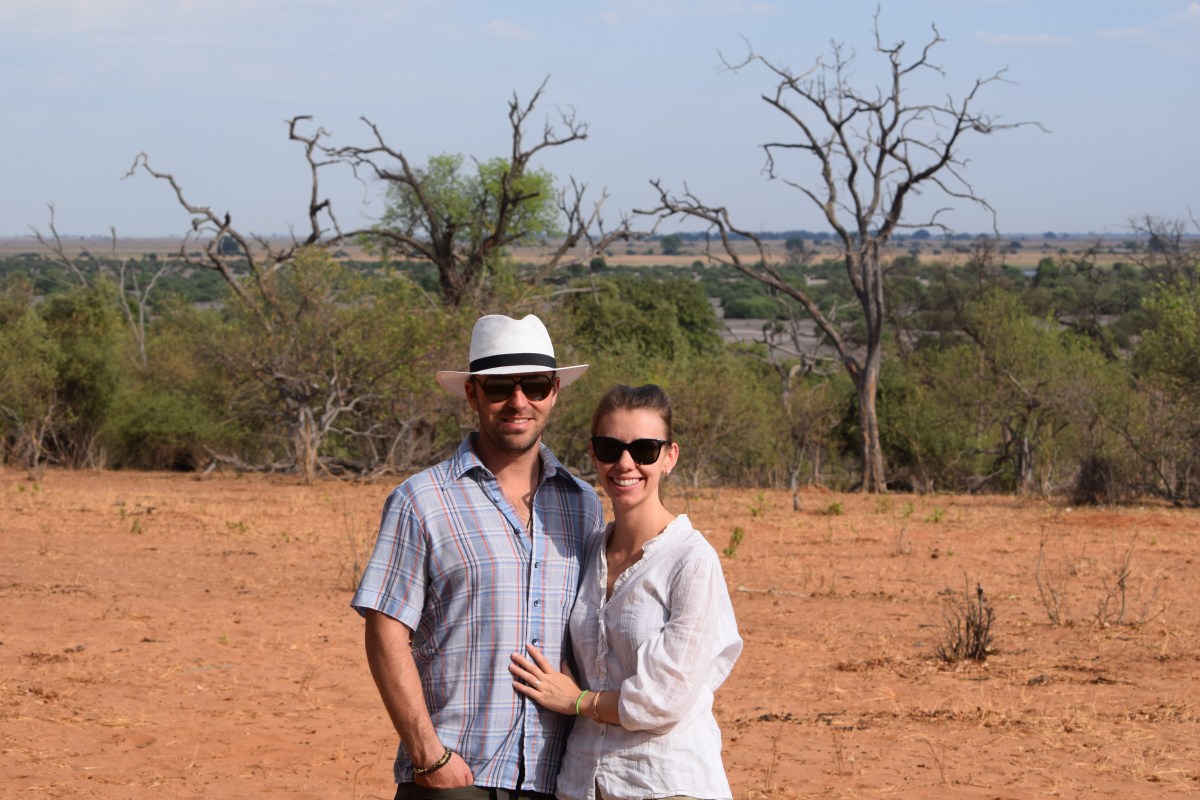
Chobe National Park:
Many people dream of going on safari. The idea of jumping in an open-sided safari vehicle and racing to see as many wild animals as possible is where most safari dreams begin.
As someone who had dreamed of experiencing a safari first hand for as long as I can remember, I was beyond thrilled when the stars finally aligned for us to take a trip to South Africa, Swaziland, Zimbabwe, and Botswana.
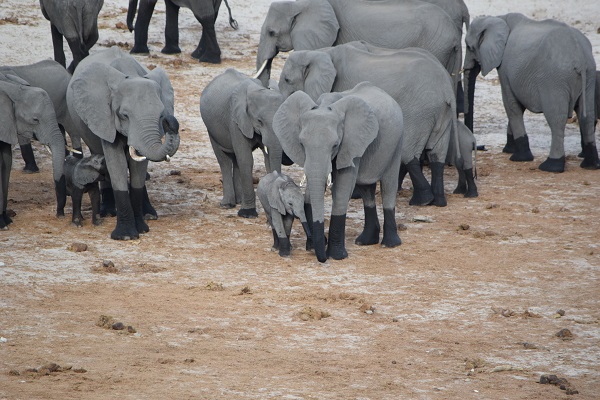
Safari Wake Up Call:
Most safaris begin long before dawn with a brutally early wake up call at 4:00am. When the alarm sounded, I groaned, rolled my eyes, and thought to myself “I can’t believe I paid for this type of vacation!”
Bleary-eyed with our camera slung over my shoulder, my husband and I made our way down to breakfast in the hotel lobby. It turned out that breakfast meant a cup of tea and a to-go box of breakfast treats that we could eat on the drive to the park.

Traveling to Chobe National Park:
Temperatures in the early morning out in the African bush lean toward the cool side. The air felt even cooler as the wind whipped against my skin while the open-sided safari vehicle raced toward the park entrance. All thoughts of eating my boxed breakfast disappeared as I threw on every layer I had thought to bring and huddled against the cold.
Fortunately, the adrenaline rush fueled by a promising day of wildlife photography was more than enough to remind me why I signed up for a safari vacation.
The Impala Lesson:
On our very first early morning safari drive, our first animal sighting was a small herd of impalas. We expressed our excitement with a series of “Ooohs, ahhhs, and Look at that!” and asked our driver to pull over so we could take photos.
He obliged, but he didn’t bother to hide his exasperation. He told us he would stop this one time specifically for impalas but that was it. He said they were so common that we would likely see hundreds more before the day was over.
We all happily snapped away, thrilled at photographing such a magnificent creature so close to the road.
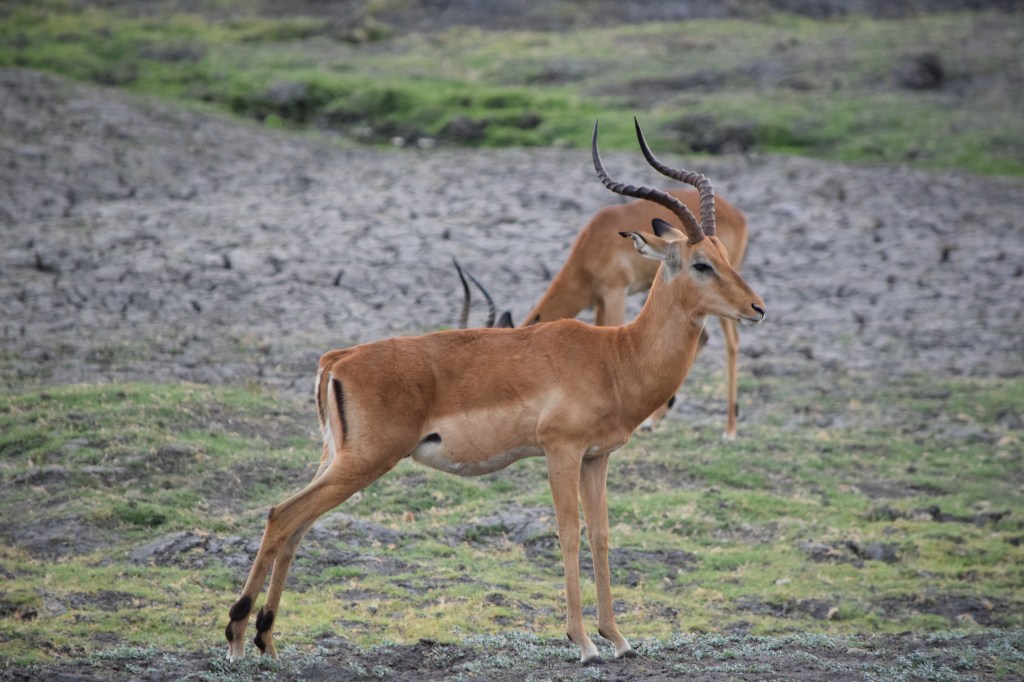
The further we drove into the park, the more we realized our guide was right. Impalas were everywhere!!! It dawned on us that our excitement over seeing our first impala was akin to being ecstatic over seeing a cow on the side of the road in the Midwest!
Breakfast on Safari:
When we finally did stop for-breakfast, it was the side-of-the-road quick bite variety. My appetite had long-since vanished with the excitement of the drive, but it was nice to enjoy a hot cup of tea provided by our guide.
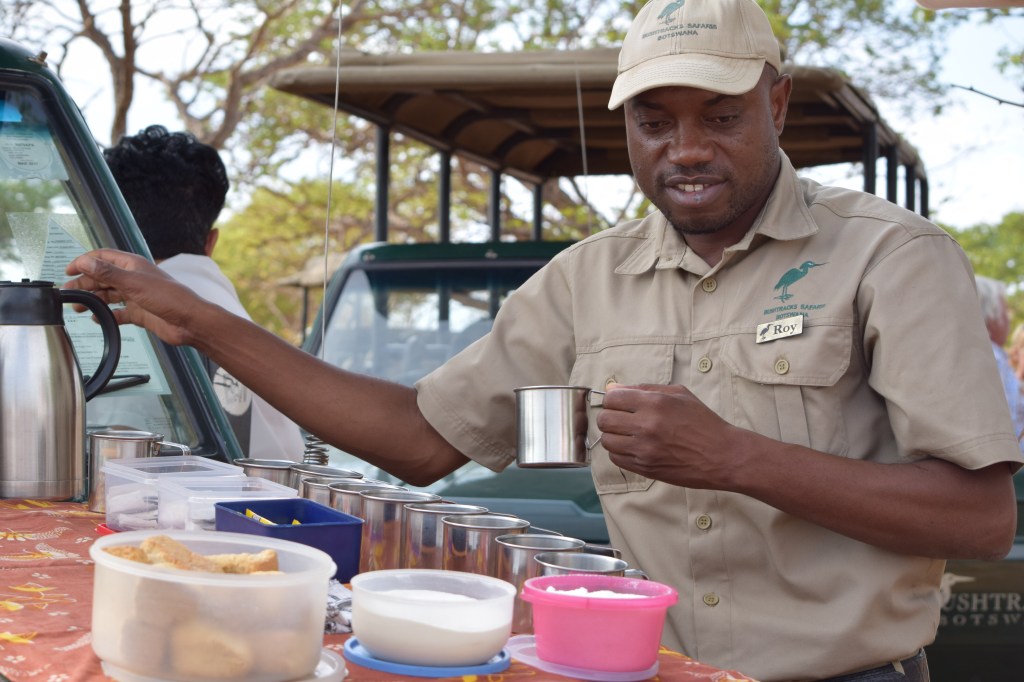
I will admit that the boxed breakfast provided by the hotel went untouched at the bottom of the safari vehicle. Oh well. I suppose the lesson here is that sometimes meals get forgotten in the excitement of travel.
Photography on Safari:
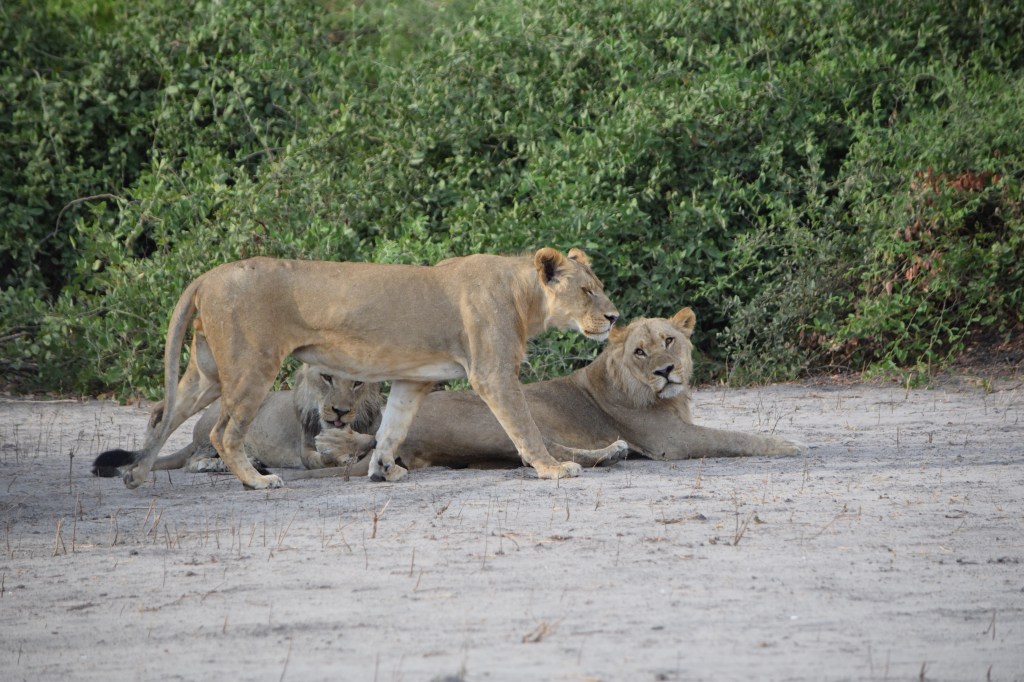
Before we left for Southern Africa, I invested in a brand new Nikon DSLR camera with an extra 200mm zoom lens. They were totally worth it. I can’t stress enough how important it was to have that extra zoom.
The reasons for this are twofold: First, the zoom lens allowed me to capture photos of animals at a respectful distance. Second, the zoom lens served as a pair of binoculars, magnifying the wildlife for the best views possible.
Safari Sunset Cruise:
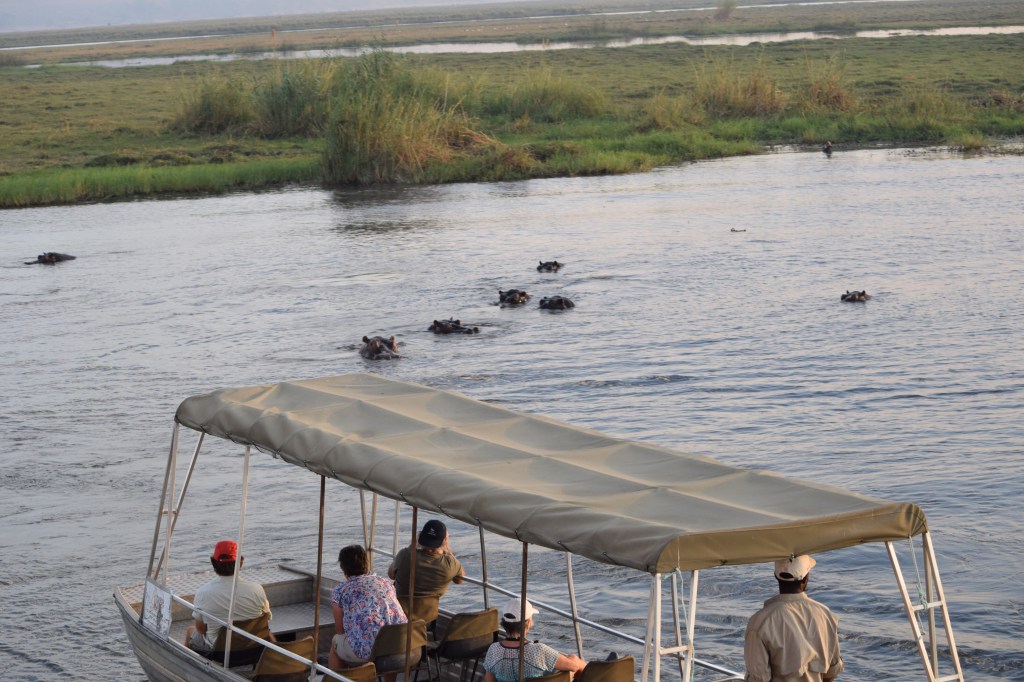
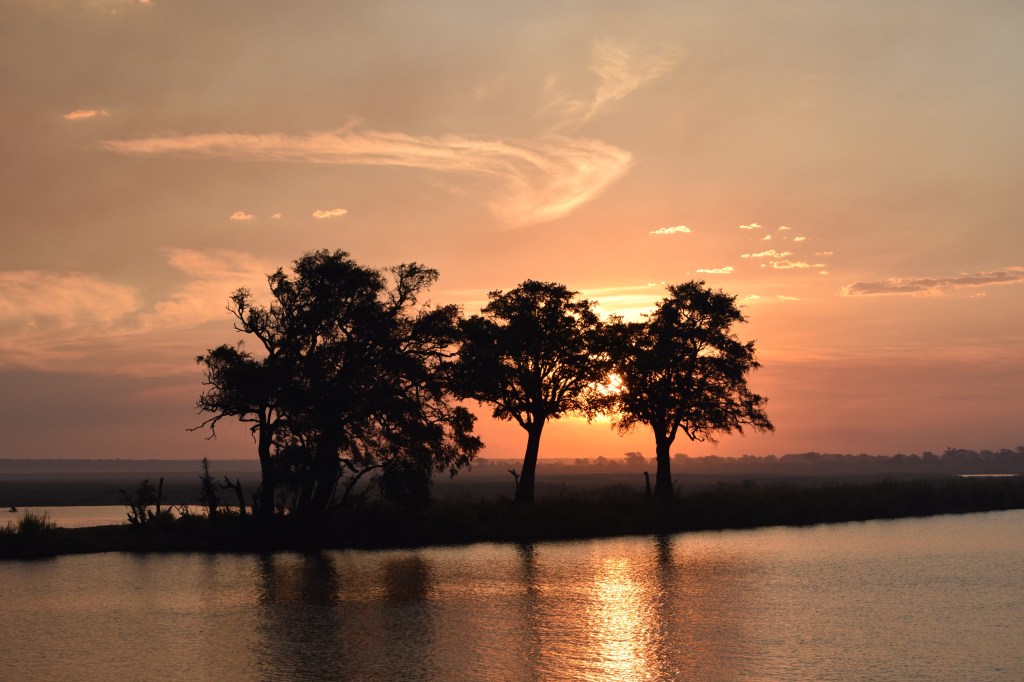
Another option for viewing Africa’s stunning wildlife is by boat on a safari cruise. In Botswana, we were able to take several sunset safari cruises on the Chobe River in Chobe National Park.
In my opinion, a safari cruise is more relaxed than a safari drive. When viewing animals overland the ride can get quite bumpy due to imperfections in the road. The locals called this an “African Massage.” Sailing serenely on a river alleviates those discomforts entirely. Plus, on a boat we had the option to get up and move around for better views.
Even though we saw many of the same animals on the cruise and drive, I appreciated the different perspective of each. For example, on the boat we were able to get much closer to hippos, and we witnessed elephants swimming across the river.
Safari is Worth It!
Overall, despite the early mornings and sometimes uncomfortable conditions, I wholeheartedly believe that going on a safari is well worth the money and effort! It is unforgettable. If taking a safari is on your bucket list, I say “Go for it!”
-Annie, Your Friend at Orange Backpack Travel
 Orange Backpack Travel